
What Exactly is ChatGPT?
The abbreviation ChatGPT stands for Chat-based Generative Pre-trained Transformer. It is a powerful, GPT-3-based language model trained on billions of words across the internet. It can understand, respond to, and generate text based on the user’s input. With its advanced intelligence and accuracy, ChatGPT easily handles vast amounts of data and complex tasks.Why Use a ChatGPT Alternative?
Although ChatGPT is an impressive AI model, over time, you may have noticed a few limitations that might prompt you to consider exploring ChatGPT alternatives. Here’s a closer look at some of these restrictions:- ChatGPT can often “hallucinate” responses, meaning it confidently gives concise answers that are, unfortunately, inaccurate. However, the newer version of ChatGPT shows improvement.
- When it comes to tasks like counting characters or running complex computations, ChatGPT falls short compared to something as simple as a Google Docs function or Excel. If you’re looking for AI-powered solutions in specific areas, other AI models are built for more specialized tasks.
- The training data for ChatGPT only goes up until late 2021, which means it lacks up-to-date information and can’t pull from live web data.
- Although it can be helpful with SEO functions, ChatGPT is built as a general-purpose AI assistant. Therefore, it’s not designed for specific use cases like content creation, SEO, or software development.
- Copyright concerns where intellectual property may be used in the text that is generated in conversations
- The price point of $20 per month for a consumer tool is too high for premium features
- Not everyone needs the full range of capabilities that ChatGPT offers. If you’re looking for a more straightforward tool, alternatives are available.
What Makes the Best ChatGPT Alternative?
Although ChatGPT excels in many areas, there are scenarios where alternative tools might be a better fit. Finding a better AI than ChatGPT depends on your use case. Luckily, ChatGPT isn’t the only AI tool doing amazing things for consumers and we have a list. ChatGPT alternatives are tools that offer similar or better functionalities, often specialized for particular use cases. When looking for an alternative to ChatGPT, there are several key features you should keep in mind to ensure you find the best fit for your needs. Here’s a breakdown of what to look for:- User Interface (UI): A clean, intuitive interface can make all the difference in how smoothly you can use the tool. Look for one that’s easy to navigate and doesn’t cause frustration.
- Functionality: Make sure the tool meets your specific requirements. Whether you need help answering questions, summarizing text, or assisting with writing tasks, ensure the tool offers these capabilities.
- Integration: Many tools work best when they can seamlessly integrate with other software you’re already using. This is especially important if you’re incorporating the tool into your work routine.
- Customization: For businesses or users with unique needs, having the option to customize how the tool behaves can be a game-changer. Some platforms offer personalized features to match your exact requirements.
- Cost: Always consider the pricing. Does the tool fit within your budget? Many alternatives offer different pricing plans, including free versions, so you can explore without breaking the bank.
- Community & Support: A strong user community and responsive customer support are invaluable. If you encounter any issues or need help, reliable support can make your experience much smoother.
1. Zight: Best ChatGPT Alternative for Video-Based Content Creation
 In the ever-growing world of AI-powered tools, Zight stands out as a unique alternative to traditional AI writing tools like ChatGPT. Zight AI doesn’t directly compete with ChatGPT’s text-based capabilities, it offers a unique approach to AI-powered productivity. ChatGPT excels in text-based communication and generating articles, blog posts, or even answering questions. On the other hand, Zight offers features specifically designed for video content creation and automation. This means it’s the best ChatGPT alternative for those who prioritize multimedia content. If you’re looking for an AI tool to simplify video workflows, Zight AI can be an excellent ChatGPT alternative. Here’s why:
 a). Automated Video Transcription & Captions
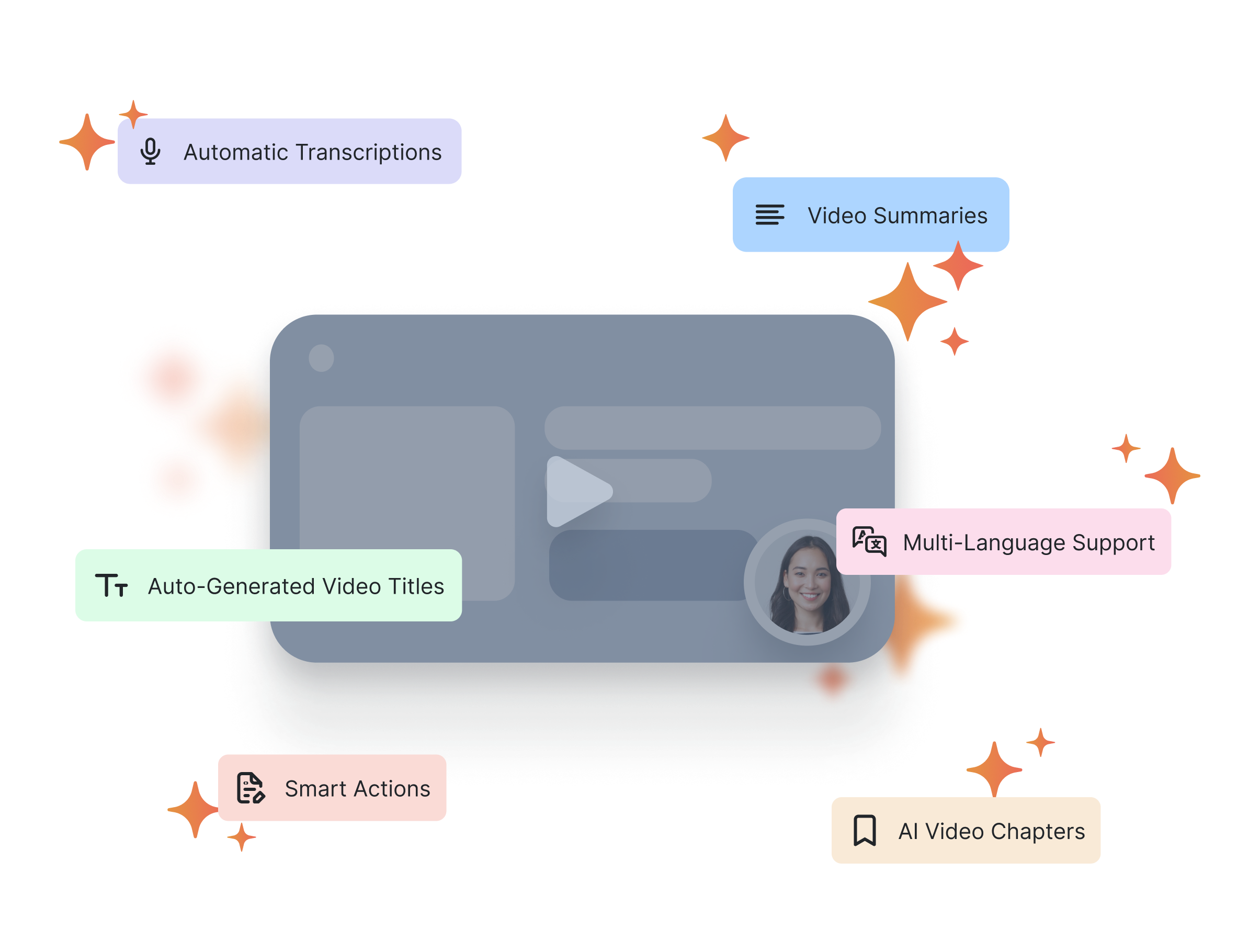
Zight AI’s ability to automatically transcribe videos and add captions makes video content more accessible and user-friendly. Unlike ChatGPT, which focuses on generating text-based responses, Zight’s transcription features are tailored for video creators. The auto-transcription feature also includes captions, which are ideal for those moments when you need to watch videos without audio, making it ideal for users who prefer reading along or need a quick overview of a video.b). Multilingual Support
With AI translation in over 50+ languages, Zight takes AI-powered translations to the next level, making your content global-ready. Whether your audience speaks French, Spanish, or Mandarin, Zight ensures that your video content can reach anyone, anywhere. This is a feature ChatGPT doesn’t fully offer on the same scale, especially for video content.c). Smart Titles & Smart Chapters
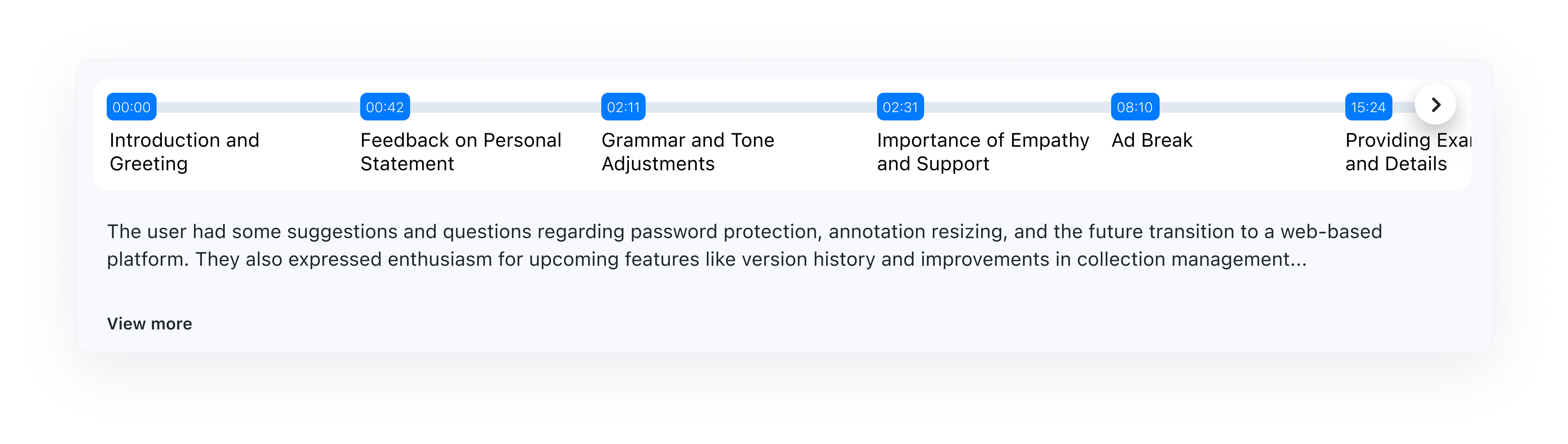 Zight’s smart titles instantly generate relevant titles based on the content of your video. No more brainstorming to come up with the perfect name; Zight AI does it for you with minimal input. Similarly, its smart chapters automatically break down your video into clear sections, allowing viewers to navigate through your content with ease. This is ideal for tutorials, training sessions, product demos, and more.
 d). Transform Video into Actionable Documents
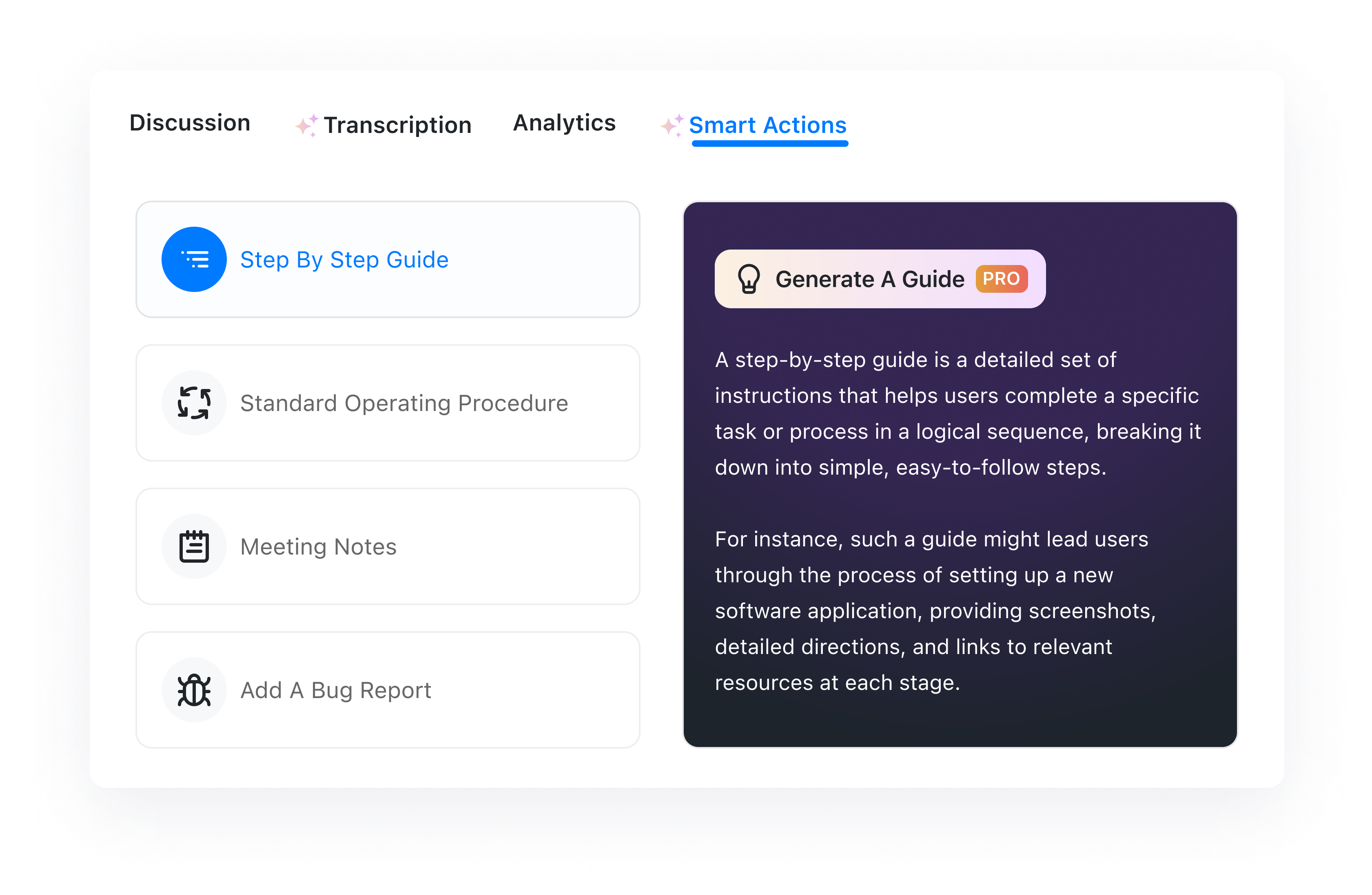 One of the most impressive features of Zight AI is its Smart Actions, which transforms videos into actionable documents like guides, meeting notes, bug reports, and training materials. Zight AI can automate tasks that would usually require extensive manual effort. This is particularly useful for content creators, customer service teams, or anyone involved in workflow automation, as Zight streamlines time-consuming tasks. It’s the ultimate tool for those who want to save time while enhancing productivity.
 e). Video Summarization with TLDW
If you’ve ever been sent a video without any context or struggled to summarize long videos, Zight’s TLDW (Too Long, Didn’t Watch) feature will be handy. Zight automatically creates a short description for your videos, saving you time and ensuring your team or audience has immediate context.f). Seamless Integration with Workflows
For businesses or teams that require integrations with tools like Google apps, Google Docs, or project management platforms, Zight’s ability to automate workflows with video content is indispensable. Whether you’re working on marketing content, customer updates, or technical documentation, Zight allows you to generate content efficiently and share it across platforms. This helps eliminate the manual work involved in creating written documentation from video recordings.g). Image & GIF Generation
Zight offers image generation, GIF making, and other creative tools, expanding your content creation capabilities. These features allow users to generate and annotate images or create engaging GIFs for social media, blog posts, or marketing campaigns. Whether you’re working on a product demo or customer service updates, Zight helps bring your content to life. Try Zight for Free!2. Claude: Best ChatGPT Alternative for Humanized Responses
 Claude describes itself as an “AI assistant” and is an AI chat platform similar to ChatGPT. It’s built on a different model called Constitutional AI. As a ChatGPT alternative, Claude is a large language model chatbot created by Anthropic, specifically designed for research and safe applications. Claude specializes in handling text and text documents and does an excellent job at it, all while maintaining a conversational tone. That said, like any AI, Claude isn’t perfect. When it encounters gaps in its knowledge, it can sometimes invent information, a phenomenon known as “hallucinating” facts. When I asked Claude to summarize articles or help brainstorm ideas, the AI tool provided detailed and clear responses that hit the mark. You can also use Claude for more creative tasks, like drafting blog outlines and reports, and it performed exceptionally well on both. For example, I asked Claude to come up with a table that showed how the Zight AI would be a good ChatGPT alternative. Initially, it wasn’t able to give tangible results.
  However, when I shared the key features and capabilities of Zight AI, Claude was able to analyze and create an accurate comparison table with ChatGPT as seen below.
3. Google Gemini (Formerly Known as Google Bard): Best for Interactive Communication
 Popular for its user-friendly interface and robust features, Google Gemini is a compelling alternative to ChatGPT. After Claude AI, Google’s Gemini stands out as one of the most powerful and widely used ChatGPT alternatives that don’t rely on OpenAI’s GPT language model. True to its name, this AI chatbot is now powered by Google’s Gemini family of large language models, marking a significant improvement from the earlier, less impressive PaLM 2 model. Google’s Gemini AI model shares a similar architecture with OpenAI’s GPT, but there are clear differences in their practical capabilities. That said, Google continues to enhance Gemini, striving to match ChatGPT’s performance. Recently, Gemini has been upgraded with impressive features, including generating stunning AI images, similar to ChatGPT. Like ChatGPT, you can type in text to get assistance writing code, crafting stories, researching information, and more. Plus, you can send an image, and it will analyze it, letting you ask questions about the photo. I asked Gemini to analyze this image:
  These were the results:
  While Gemini is undeniably powerful, ChatGPT benefits from being backed by a model that has undergone multiple iterations of focused refinement. Though Gemini has followed a similar development path, its pace and depth of improvement haven’t quite matched ChatGPT’s trajectory. Even so, Gemini has made remarkable improvements from its early versions. It now offers experimental audio and video processing capabilities, which could be revolutionary once fully implemented. Beyond that, it excels in tasks like crafting articles and emails, solving mathematical problems, assisting with programming, and even helping users learn a new language effectively.
 4. Copy AI: Best Alternative for Summarizing Text
 Looking for a powerful AI writing tool that does more than just text generation? Copy.ai might be the answer since it packs in countless features designed to supercharge your productivity. It empowers individuals and businesses to churn out engaging marketing material with no writing experience.
  Copy.ai excels at simplifying complex tasks. Its text summarization feature is a standout, perfect for those moments when you don’t have the time to read lengthy articles or essays in full. Just feed it a URL, and Copy.ai breaks it down into concise, easy-to-digest summaries. Whether it’s summarizing blog posts or extracting insights from long lists, you’ll save hours of reading and sifting through content. Luckily, its features go way beyond summaries. Here’s what truly impressed us:
 - You can create content in your unique brand voice, ensuring consistency across all your copy.
- Add vital information to your Infobase for easy content reference and reuse later.
- Transform content briefs into polished blog posts, complete with SEO-ready meta descriptions.
- Upload Word documents or PDFs to supercharge your projects.
- Keep everything neat and accessible with user-friendly project folders.
5. Microsoft Copilot: Best ChatGPT Alternative for Windows Users
 For many, Microsoft Copilot is the top alternative to ChatGPT. Luckily, there’s a chance you are already using the Microsoft Copilot if you are using the Microsoft 365 suite because it’s integrated directly into apps like Word, Excel, and PowerPoint, adding a layer of AI-powered assistance and refining everything from document drafting to data analysis. It runs on the GPT-4 Turbo model and can generate images for free using DALL-E, the same image generation model. Plus, it offers a sleek app available for both Android and iOS. It’s also integrated into Windows computers, meaning you might already have it without realizing it. For instance, I used this prompt on Microsoft Pilot:
  Here was the response I got:
  If you opt for a Copilot Pro subscription, you can connect it with Microsoft 365, generate more images, enjoy quicker responses, and access a host of additional features. For those willing to invest in an AI subscription, Microsoft Copilot stands out as one of the best options, many would even argue it’s a stronger choice than ChatGPT Plus.
 6. Perplexity AI: Best ChatGPT Alternative
 Perplexity combines the power of AI with advanced natural language processing and machine learning to serve as both a search engine and chatbot. It’s built to deliver precise answers to even the most complex questions.
  Unlike many AI chatbots that simply run on GPT without offering anything distinct, Perplexity stands out with some genuinely useful features. One key advantage is its ability to enhance GPT data by incorporating up-to-date information from the internet. It also excels at citing sources directly in its responses, complete with links for deeper research.
 7. xAI Grok: Best Alternative for a Humorous AI Assistant
 For those looking for an AI-powered tool with real-time accuracy and the ability to track unfolding events, Grok is a strong contender in the growing world of generative AI tools. So, Grok can be great for use cases like news reporting, keeping track of stock or crypto trading, or anything else that requires access to the latest news. Additionally, Grok takes a more relaxed approach to moderation compared to some other AI tools. For example, if you ask something vague like “How to break into a car,” it won’t immediately shut down the conversation (although it won’t actively encourage the action). On the other hand, ChatGPT would refuse to engage with such queries altogether.
 8. Jasper AI: Best Chatgpt Alternative for Marketers
 Jasper, popularly known as Jasper AI, was designed specifically for content creation with advanced features that streamline the process of crafting high-quality, engaging, and relevant content. Unlike the one-size-fits-all models, Jasper’s focus on specialized use cases makes it a great tool for those looking to produce top-tier content without the hassle.
  What sets Jasper AI apart is its deep contextual understanding, which allows it to adapt its tone and style based on your unique needs. This is particularly valuable for companies with strict brand guidelines or content creators who want to maintain a consistent voice across all platforms. Jasper’s “Brand Voice” feature ensures that every piece of content aligns with your company’s personality, whether you’re aiming for a warm, friendly tone or a more professional, concise approach. You don’t have to about manually tweaking every piece to match your brand’s voice, Jasper does it for you.
  For teams working together on content, Jasper’s collaboration features make it easy to scale up production without losing consistency. Multiple writers or editors can work on projects simultaneously, ensuring smooth workflows across the board. Whether you’re crafting blog posts, ad copy, email campaigns, or social media content, Jasper helps keep everything in line with your company’s tone and objectives. Jasper’s versatility doesn’t stop there. With over 50 pre-built templates, ranging from SEO-rich blogs to persuasive ad copy and eye-catching headlines, Jasper AI eliminates the need for constant brainstorming. These templates, combined with Jasper’s writing suggestions and content recommendations, streamline your workflow, saving you valuable time and effort, perfect for marketers juggling multiple projects or under tight deadlines.
  For global businesses or teams working with diverse audiences, Jasper has you covered with support for over 25 languages. Whether you’re targeting a local market or reaching out to a global one, Jasper ensures your message resonates with clarity and impact. With seamless integrations with Google Docs, Microsoft Word, and other platforms, Jasper fits naturally into your existing content pipeline, enhancing productivity with minimal disruption.
 9. Chatsonic: Best ChatGPT Alternative for Voice Output and Real Time Information
 Chatsonic stands out as a compelling alternative to ChatGPT, especially for those in search of an AI writing tool tailored for content creation and real-time information. Developed by the WriteSonic team, Chatsonic combines the power of GPT-4 with seamless integration of the Google search engine, offering users the ability to generate up-to-date information, a distinct advantage over ChatGPT’s 2021 knowledge cut-off. One of Chatsonic’s standout features is its versatility. It supports image generation, accepts inputs like documents, images, audio files, and URLs, and even offers custom directions to tailor responses to your brand voice. For those managing workflows across platforms, Chatsonic provides Zapier and WordPress integrations, making it a robust AI assistant for tasks ranging from writing blog articles to drafting social media content. A good example of a prompt I used is: Can you help me create a GIF table of Zight against ChatGPT? It first created a code:
  Then a preview of the comparison table:
  Unlike ChatGPT’s more structured and comprehensive responses, Chatsonic tends to lean towards concise answers, summarizing information in a way that may appeal to users looking for quick insights. However, this approach might not be ideal for those seeking long-form content or in-depth responses. Chatsonic’s AI-powered tools excel in content creation, thanks to features like a built-in plagiarism checker, the ability to download results as DOCX files, and the convenience of a Chrome extension for seamless use in apps like Gmail and X. What sets Chatsonic apart is its focus on integrating real-time information via the Google search engine. This ensures responses are current and supported by cited sources, making it ideal for users who value accuracy and up-to-date information in their work. Whether you’re managing social media, drafting blog posts, or exploring creative writing, Chatsonic’s diverse toolkit positions it as one of the best ChatGPT alternatives in the AI space.
 10. Phind: Best Chatgpt Alternative for Learning How to Code
 While ChatGPT is handy for troubleshooting broken code or answering programming questions, Phind goes a step further by offering continuous internet access for up-to-date help and customizable filters to tweak how results are ranked. Phind is an AI coding assistant that quickly figures out what you are trying to achieve, searches the web for the issue, and provides a fix. If you’re curious about how the solution was derived, there are additional sources provided that you can explore for more insight.
  You can even tell Phind to ignore the provided search results if you want a more focused response. It supports image input, too. By creating a user account, you unlock Code mode, which lets you chat alongside your Python code for a more interactive experience. Phind is an excellent tool for beginners and feels invaluable as you get more into software development. The platform is free, though there are pro plans for added flexibility.
 11. Meta AI: Best Chatgpt Alternative for Social Integrations
 Meta AI stands out as an efficient, innovative, and supportive alternative to ChatGPT, particularly for users immersed in Meta’s ecosystem. Designed to integrate seamlessly with platforms like Facebook, Instagram, and WhatsApp, Meta AI redefines convenience by offering users accessible, easy-to-use features without additional costs. Its ability to generate not just conversational text but also tailored visuals makes it a versatile tool, catering to a variety of user needs directly within the ecosystem. One of the most innovative aspects of Meta AI is its capability to produce visuals alongside text, a feature seldom matched by other AI tools, including ChatGPT. This visual integration can be especially valuable for businesses and creators aiming to enhance their content with engaging imagery, all without needing third-party applications. Meta AI positions itself strongly as a solution that saves both time and resources, empowering users to achieve more within a single platform. Meta AI can be accessed across Meta’s suite of apps, including Facebook, Instagram, WhatsApp, and Messenger. Here’s how to get started:
 - Within any supported app, type “@MetaAI” followed by your question or prompt.
- Instantly receive a response in the form of a comment, post, message, or even a custom-generated image.
12. AnonChatGPT: Best for Using ChatGPT Without an Account
 While ChatGPT offers powerful conversational abilities and an extensive knowledge base, it does come with specific drawbacks when compared to platforms like AnonChatGPT. One of the key concerns with ChatGPT is its reliance on user accounts, requiring individuals to log in and share personal data to access its services. This can raise privacy concerns for users who prefer an anonymous approach. Additionally, its retention of chat history may pose risks for those prioritizing confidentiality and secure conversations. Therefore, if you’d like to use ChatGPT without logging in, AnonChatGPT is a great option. It works by forwarding your prompts to OpenAI’s servers and displaying the responses. The best part? Your personal information isn’t shared with ChatGPT’s creators, so you get the key features without sacrificing privacy. AnonChatGPT runs on OpenAI’s GPT-3 model, but the interface is a bit different. It supports only one conversation at a time, and past responses aren’t saved for later reference. Want to start fresh? Just refresh the page, and you’re good to go. Another consideration is the interface, which, while robust, can feel overwhelming to users who desire a simpler, more streamlined experience. The inclusion of features such as account management and saved conversation logs, though helpful for some, may distract others seeking a focused, private, and distraction-free environment.
 13. YouChat: Best for General-Purpose conversational AI
 If you are interested in a free ChatGPT alternative that works along the same lines as Bing, YouChat could be a worthy contender. YouChat is easy to start using as there’s no need to join a waitlist, and you can begin without even signing up for an account. However, if you want to use custom prompts, you’ll need to log in. Like the other platforms we’ve mentioned, YouChat is powered by OpenAI’s GPT-3 model. One key feature that makes YouChat a compelling alternative to ChatGPT is its integration of web search results directly within the chat interface. This innovative approach allows users to access real-time, contextual information at their fingertips, enriching the quality of responses and making it particularly useful for research and fact-checking. Additionally, YouChat’s simplicity and accessibility, offering instant usage without registration eliminate barriers for those who prefer a hassle-free experience. While advanced features like custom prompts cater to power users, its intuitive design ensures that individuals of all technical levels can benefit from this tool. For anyone seeking a supportive and efficient AI assistant without the need for a premium subscription or sign-up, YouChat delivers practical and convenient functionality that rivals more complex platforms. The only downside is that its design isn’t as polished as ChatGPT or Bing. However, that’s a minor issue given that it functions well and is accessible right away. Plus, it conveniently displays a helpful list of web results alongside the chat interface.
 14. GitHub Copilot: Best ChatGPT Alternative for Coding Assistance
 When evaluating GitHub Copilot as an alternative to ChatGPT, it is clear that its specialized features make it an excellent choice for developers seeking targeted assistance. Unlike ChatGPT, which caters to a wide range of tasks, GitHub Copilot is finely tuned to the needs of programmers, enabling them to write, debug, and optimize code more effectively. Its ability to seamlessly integrate into development environments like Visual Studio Code and provide real-time code suggestions ensures a streamlined workflow. It is a handy ChatGPT alternative for those working on complex coding challenges, GitHub Copilot proves to be an efficient tool that goes beyond generic AI interactions, offering an innovative and supportive experience tailored to software development. While ChatGPT excels in its flexibility and conversational capabilities, GitHub Copilot stands out as a dedicated partner for programming projects. From a privacy perspective, GitHub Copilot operates without requiring extensive personal data, focusing exclusively on coding workflows. This makes it an excellent solution for professionals who value simplicity and do not want to engage with unrelated features or distractions. Its streamlined interface and specialized nature reinforce its role as a supportive companion designed for developers’ specific needs.
 15. Character.AI: Best for Character-Based Conversations
Last but not least is Character AI, another great alternative to ChatGPT, offering a unique and innovative approach to conversational AI. Designed specifically for engaging character-based interactions, Character.AI takes the chatbot experience to the next level by allowing users to chat with preconfigured agents modeled after celebrities, historical figures, and fictional characters. Whether you’re having a witty exchange with Shakespeare, exploring ideas with Einstein, or seeking financial insights from Bill Gates, the platform creates an immersive and tailored conversational experience. Beyond its entertainment value, Character.AI offers practical applications through “helper” characters that function as psychologists, creative mentors, trip planners, and even spirituality coaches.
  Users can explore topics like language learning, history, philosophy, and creativity in a highly engaging format. For those inclined to experiment, building your own character is quick and straightforward, and the platform supports creating unique voices from short audio clips. Custom creations can be set as private or shared publicly, fostering a vibrant community of character creators.
 Which ChatGPT Alternative is Right for You?
Businesses leveraging AI now are already seeing benefits like improved efficiency, higher quality, and faster turnaround times. Exploring ChatGPT alternatives ensures that your workflow aligns with the platform’s strengths. Here’s a summary to guide you:- For video creators, Zight delivers time-saving mechanisms like smart transcription and video-to-document conversions. So, pick Zight for unparalleled productivity tools combined with AI functionality.
- For marketers, platforms like Copy.ai streamline campaigns, ensuring quick delivery of engaging copy and creative content.
- For professionals in fast-paced industries, Microsoft Copilot integrates AI directly into everyday software, unlocking advanced features for data management and creation.
- Try Jasper if you want to scale content creation with advanced campaigns.
- Try Chatsonic if voice commands or AI-generated visual art appeals to you.
How to Choose the Best ChatGPT Alternative
If you know what exactly you need a ChatGPT alternative for, you have probably already found the best ChatGPT alternative from our list above. However, if you are unsure, here are a few steps that will help you narrow down your options to find the best alternative for your needs and make a more informed decision.1. Clarify Your Needs
Before diving into ChatGPT alternatives or AI chatbots, it’s essential to have a clear understanding of what you’re looking for. Identify your primary use cases for the chatbot, such as:- Content creation
- Emotional support
- Coding assistance
- Educational purposes
- Language learning
- Personal assistant tasks
- Memory features
- Generating graphics
- Creative writing