- Language barriers: Misunderstandings in multilingual teams can lead to errors and missed opportunities.
- Time zones: Scheduling across regions reduces productivity by 30%.
- Accessibility: 20% of the workforce faces disabilities, yet many tools fail to support them.
The Best AI Tool for Meeting Notes and Summaries (You’ll Thank Me!)
Communication Problems in Global Teams
Global teams often face hurdles that can disrupt productivity and collaboration. From language differences to time zone challenges, these obstacles can significantly impact how teams operate.Language Barriers and Multilingual Team Issues
Language differences are one of the biggest obstacles for global teams. When team members speak different native languages, misunderstandings, errors, and delays can creep into daily operations, making collaboration more difficult. It’s not just about translation – it’s about creating an environment where everyone feels confident and engaged. Without it, participation drops, and team dynamics suffer. In fact, nine out of 10 U.S. employers now depend on employees who can communicate in languages other than English. However, the reality is sobering: over 40% of respondents in a study reported that language barriers negatively impacted collaboration and productivity. Non-native speakers often hesitate to contribute, fearing miscommunication, which leads to missed opportunities. On top of that, differences in communication styles across cultures can lead to misinterpretations, further complicating teamwork. Miscommunication doesn’t just damage confidence – it’s costly. A poorly implemented language strategy can lead to significant inefficiencies. Real-time AI transcription offers a practical solution to these challenges, helping teams bridge communication gaps effectively.Time Zone Differences and Asynchronous Communication
Time zones add another layer of complexity for global teams. Even a one-hour difference can disrupt real-time collaboration, with 43% of synchronous communication happening when at least one team member is outside of their local business hours. The further the time difference, the harder it becomes to maintain cohesion. Research shows that synchronous communication drops by 11% for every additional hour of separation. Teams stretched across multiple time zones often see a 30% dip in productivity due to difficulties in scheduling meetings and aligning workflows. A Buffer study found that 20% of remote workers struggle with time zone-related challenges. These delays in communication can lead to frustration, especially when urgent matters go unresolved or decisions are made without everyone’s input.“There are many benefits to the individual and the company from embracing work-from-anywhere. But there are also challenges – and one of those is that when people are spread out across time zones, communication is affected.” – Prithwiraj Choudhury, Lumry Family Associate Professor at Harvard Business SchoolThe asynchronous nature of global collaboration often means some team members feel excluded from critical conversations. Real-time AI transcription helps mitigate these issues by making communication more seamless, regardless of time zones.
Accessibility and Inclusion Challenges
Accessibility is another critical area where communication gaps can arise. Around 20% of the U.S. workforce has a disability, yet many communication systems fail to address their needs adequately. When communication isn’t inclusive, team performance takes a hit. Research shows that fostering a sense of belonging can boost job performance by 56% and cut turnover rates by half. On the flip side, when team members feel excluded – whether due to hearing impairments, limited language proficiency, or other barriers – the entire team’s effectiveness suffers. Inclusive communication ensures everyone can actively participate in important discussions. For example, hearing impairments or language limitations can prevent individuals from contributing fully.“Accessibility should not be something people have to search for. It should be standard.” – Erin O’Reilly, Communications Manager, Leonard CheshireReal-time AI transcription plays a key role here, breaking down barriers and ensuring that everyone – regardless of their abilities – has a voice in the conversation.
How Real-Time AI Transcription Works
Understanding how real-time AI transcription operates can help teams make better decisions about adopting these tools. The technology combines several advanced processes to instantly convert spoken words into written text with impressive accuracy.Core Technologies Behind AI Transcription
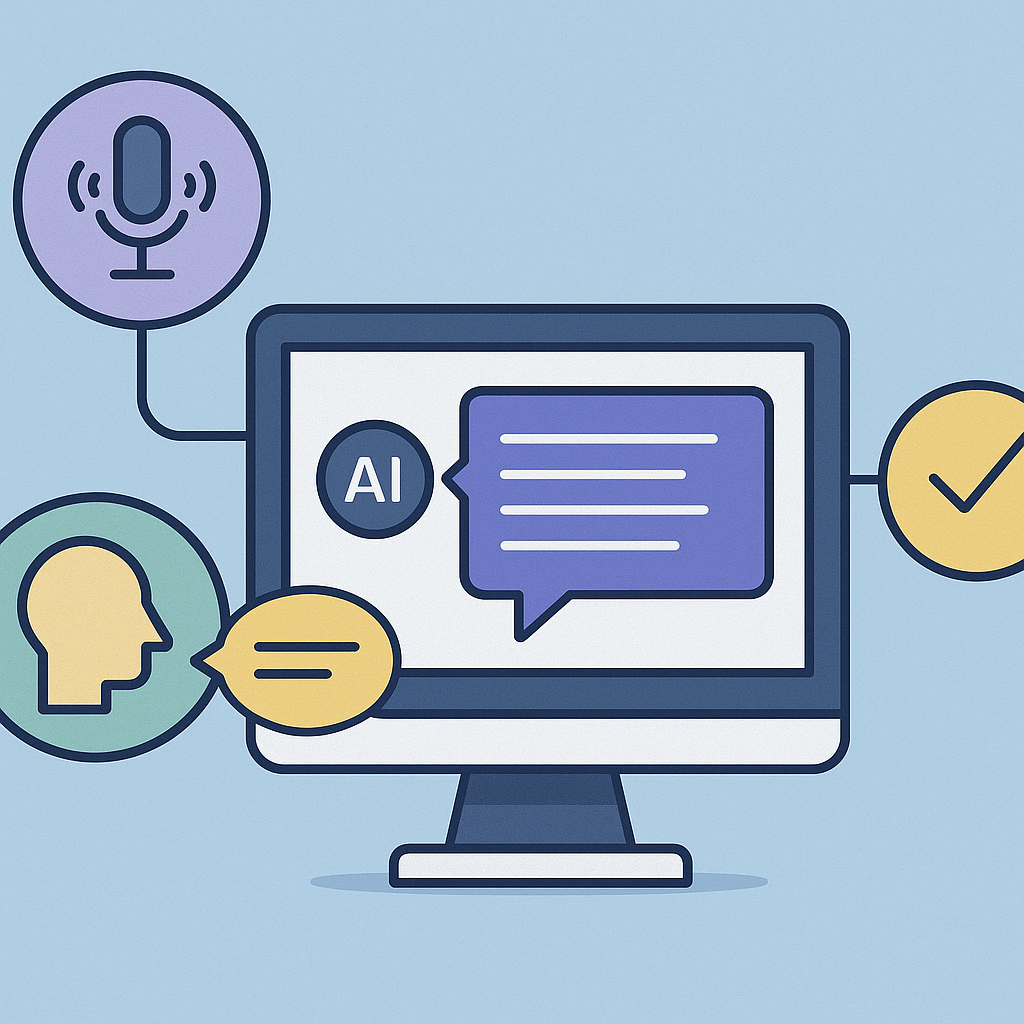
Real-time AI transcription relies on Automatic Speech Recognition (ASR), Natural Language Processing (NLP), and deep learning to transform audio into text. The process begins by cleaning up the audio – removing background noise, normalizing volume, and dividing it into segments for analysis. From there, feature extraction techniques identify key speech elements within the audio. Deep neural networks in acoustic modeling then map these features to sounds, while language modeling uses statistical methods and neural networks to interpret context and predict word sequences. Finally, the system merges data from the acoustic and language models during the decoding stage to produce the final transcription. These technologies not only convert speech into text but also allow the system to understand context, which is crucial for accuracy.Real-Time Transcription and Context Understanding
Accurate transcription requires more than just converting words – it demands an understanding of context. With NLP, transcription tools can grasp nuances and subtleties, improving performance even in challenging scenarios. This is becoming increasingly relevant as the speech-based NLP market is expected to grow from $16.95 billion in 2024 to $38.49 billion by 2030. However, challenges like homonyms, idiomatic expressions, and cultural references can still affect accuracy. To tackle these, teams can use context-specific language models and regularly update training data to reflect changes in language use. Advancements in NLP continue to enhance context understanding, paving the way for more accurate transcription and even real-time translation – an essential feature for multilingual teams.Support for Multilingual Teams
Global teams rely on accurate multilingual transcription and translation to bridge language gaps. Modern AI transcription tools offer features like automatic language detection and real-time translation, making it easier to handle mixed-language content. These systems can identify the dominant language in a recording or process multiple languages simultaneously, ensuring inclusivity for all team members. As demand for language translation grows, advanced tools are stepping up with capabilities like handling various accents and dialects, generating automatic subtitles, and supporting customizable vocabularies. For instance, Zight integrates AI-powered transcription within its screen recording and visual communication platform. This allows for automatic transcription of recorded meetings and presentations, enabling global teams to create content that can be reviewed anywhere, regardless of language barriers. When choosing a multilingual transcription tool, focus on accuracy, broad language support, and the ability to customize terminology for specific industries.Benefits of Real-Time AI Transcription
Real-time AI transcription is changing the way teams collaborate and communicate across the globe. By tackling challenges like language barriers, accessibility issues, and inefficient documentation, this technology is making workplaces more connected and productive.Better Accessibility and Inclusion
One of the standout advantages of real-time AI transcription is its ability to break down communication barriers, ensuring that everyone can fully participate. For individuals with hearing impairments, this technology provides immediate visual access to spoken conversations. For example, the University of Tennessee reported an 85% increase in participation among deaf and hard-of-hearing students when using real-time transcription. Similarly, IBM found that team members with hearing impairments saw a 30% boost in productivity. Language barriers are also minimized. Microsoft’s Business Program Manager, Masato Esaka, shared how real-time transcription helps him communicate more effectively:“I can think and speak at the speed of my first language. I can speak smoothly and articulate my thoughts clearly without worrying about what I sound like in English.”These tools are designed to handle complex accents and language variations. For instance, Google Meet‘s transcription service supports over 30 languages. Beyond accessibility, this technology creates dependable, searchable records that enhance organizational knowledge and inclusivity.
Better Knowledge Sharing and Documentation
Real-time AI transcription doesn’t just improve accessibility – it also simplifies record keeping. Relying on manual note-taking often leads to missed details and inconsistencies. AI transcription solves this by generating precise, searchable transcripts in real time, with accuracy rates often exceeding 98%. These searchable archives are game-changers for global teams. They allow team members to catch up on meeting details even if they couldn’t attend, making asynchronous collaboration seamless. For onboarding, detailed transcripts help new hires quickly get up to speed on project history and context. Platforms like Zight take this a step further by embedding AI transcription into screen recording and visual communication tools. When teams record presentations or training sessions, the automatic transcription creates a searchable resource that can be accessed across time zones and languages, ensuring no one is left out of the loop.Time Savings and Productivity Gains
AI transcription doesn’t just improve communication – it also saves time and boosts productivity. While human transcription can take about four hours to process one hour of audio, AI transcription operates at nearly a 1:1 speed or faster. This efficiency means AI tools are approximately 60 times faster, saving nearly five hours per hour of audio . The benefits extend beyond speed. Organizations using AI transcription report a 30% increase in productivity and a 50% reduction in project delivery times. These tools are also far more cost-effective, typically priced 75–90% lower than professional human transcription services. On the flip side, inefficient manual processes can cost businesses up to 30% of their annual revenue. The market for automated transcription is expected to grow significantly, with projections reaching $4.2 billion by 2025 at a 22% annual growth rate. For teams, the time saved through AI transcription can be reinvested in strategic work, analysis, and other activities that drive business success.sbb-itb-5d91f01
Setting Up Real-Time AI Transcription for Global Teams
To successfully implement real-time AI transcription, it’s crucial to integrate the technology seamlessly, train your teams effectively, and prioritize data security. The aim is to enhance communication processes without causing disruptions.Connecting AI Transcription with Collaboration Platforms
For AI transcription to deliver maximum value, it needs to integrate directly with the tools your team already uses. By syncing transcripts with project management systems, chat apps, and calendars, you can streamline workflows and boost productivity. For instance, connecting transcription tools to platforms like Zoom, Microsoft Teams, Slack, or Trello ensures that meeting insights are automatically shared with the team, reducing redundant communication and saving time. Studies reveal that such integrations can improve productivity by 15–18% and cut down back-and-forth communication by automating the capture and sharing of meeting insights. A great example is Zight, which automates transcript generation within its visual communication platform, making collaboration more efficient. When choosing a transcription solution, prioritize tools that are easy to configure and compatible with the platforms your team already relies on. Once these integrations are in place, the next step is preparing your team to make the most of these capabilities.Training and Onboarding for Team Adoption
To unlock the full potential of AI transcription, proper training is essential. Start by offering introductory sessions that walk your team through the tool’s features and demonstrate practical applications. Tailor these sessions to specific roles – for instance, show sales managers how transcription can capture client requirements or help project managers streamline documentation. Create user-friendly resources like quick-start guides, FAQs, and video tutorials to ensure team members have easy access to support materials. Schedule follow-up training sessions and set up dedicated support channels for ongoing questions and knowledge sharing. Peer-learning initiatives, such as “AI office hours”, encourage collaboration and help teams learn from each other’s experiences.“AI can change onboarding by handling administrative tasks, offering personalized experiences, and helping with better decision-making based on data” – Bernard MarrIncorporate AI adoption discussions into team meetings, highlight employees who effectively use the tools, and share internal success stories to build momentum. A phased rollout – starting with a small pilot group of enthusiastic users – allows you to gather feedback and refine both the technology and the training process before scaling up.
Protecting Data Security and Privacy
When using AI transcription tools for sensitive conversations, safeguarding data must be a top priority. Choose providers that implement strong security measures, such as end-to-end encryption and compliance with industry standards like GDPR and HIPAA. Role-based access controls can further limit who can view or edit transcripts, ensuring that only authorized personnel have access. Regular audits and continuous monitoring are essential for identifying and mitigating potential risks. Educate your team on best practices for handling sensitive information, such as recognizing phishing attempts or securely storing data. Data anonymization – removing or altering identifiable details – adds an extra layer of protection. Additionally, keep systems updated with the latest patches to guard against emerging threats.Limitations of AI Transcription
AI transcription has undoubtedly transformed how global teams handle communication, but it’s not without its shortcomings. Recognizing these limitations is crucial, as they can affect accuracy, compliance, and decision-making in critical scenarios.Accuracy Challenges with Accents and Technical Terms
One of the biggest hurdles for AI transcription systems is dealing with diverse accents, dialects, and specialized terminology. Studies indicate that error rates can range from 16% to 28% when processing non-native accents or regional pronunciations. In practical terms, this could mean nearly one in four words is misinterpreted when speakers have strong accents or use regional expressions. Several factors contribute to these errors: variations in pronunciation, fast or unclear speech, overlapping voices, and poor audio quality. For instance, environmental noise or technical distortions can account for up to 45% of transcription errors. The situation becomes even more complex when technical jargon, acronyms, or industry-specific terms come into play – these are often missing from standard AI dictionaries. Overlapping speech further complicates things, with accuracy dropping by as much as 25% in such cases.“Voice recognition struggles to be accurate in noisy environments or with varied accents and dialects. Factors like background noise, overlapping voices, or low-quality microphones affect performance. Additionally, understanding context and resolving ambiguous phrases remains a significant challenge. Homophones, which sound the same but have different meanings, require context to be interpreted correctly.” – milvus.ioTo improve results, consider using high-quality microphones and recording in quiet settings. You can also create a custom company dictionary to include frequently used or complex terms, ensuring better recognition of industry-specific language.
Data Privacy and Compliance Concerns
AI transcription tools come with serious compliance considerations, especially when handling sensitive information. Organizations must navigate data privacy laws like GDPR, CCPA, and the Australian Privacy Principles (APPs). Operating across regions such as the US, EU, and Australia complicates things further, as each jurisdiction has its own data-processing and consent requirements. Recording laws also differ by location; for example, some states mandate two-party consent, meaning all participants must agree to both recording and transcription. To stay compliant, organizations should establish clear policies for data storage, processing, and sharing. It’s essential to choose transcription providers with strong encryption and robust security features. Limit how long transcriptions are retained, and implement procedures to delete or anonymize data after a set timeframe. Always inform participants about recordings and obtain their consent. Encourage them to disable unauthorized transcription tools during meetings to protect confidential information. These measures highlight why critical conversations often require human validation alongside AI transcription.The Need for Human Review in Critical Situations
In high-stakes scenarios, relying solely on AI transcription can be risky. While AI systems achieve an average accuracy of 86%, human transcriptionists typically reach 96%, making them indispensable in fields like healthcare, legal, and compliance. For example, in healthcare, one in five patients may encounter errors in their medical records, with 40% of those errors classified as serious. Humans excel at interpreting nuances like tone, emotion, and context – elements that automated systems often miss. They’re also better at resolving ambiguities, such as distinguishing between homophones (words that sound the same but have different meanings) by considering the broader conversation.“The more AI and automation we add, the more we are faced with the ‘what if the AI is wrong’ question. To address that and be compliant with AI Act and similar regulations, we recommend having a human-in-the-loop to validate the final answer or action.” – Jakob Leander, Technology & Consulting Director, DevoteamA hybrid approach – where AI handles the initial transcription and human experts review and refine the output – can deliver the best results. Establishing clear protocols for when human review is required, particularly in legal, medical, or regulatory contexts, ensures accuracy and reliability.
Conclusion and Key Takeaways
Real-time AI transcription is transforming how global teams communicate, breaking down language barriers, improving accessibility, and addressing inefficiencies in documentation. Consider this: AI transcription can cut meeting time by 25% and increase productivity by 30%. This leap forward largely comes from eliminating the need for manual note-taking – a task that 62% of employees say disrupts their focus during meetings. Freed from this distraction, 71% of team members report feeling more engaged in discussions. The efficiency gains are staggering. While manual transcription can take up to six hours for just one hour of audio, AI-powered tools deliver 95–99% accuracy in real time. Beyond speed, these tools come with advanced features like participant identification, noise filtering, and timestamps, making them far more than just a time-saver.“AI is no longer a nice-to-have – it’s an indispensable companion for productivity, collaboration, and innovation.” – MicrosoftThe numbers back this up. The global AI meeting transcription market is expected to grow from $3.86 billion in 2025 to an impressive $29.45 billion by 2034, reflecting its increasing importance across industries. To make the most of AI transcription, start small. Identify specific use cases where it can streamline workflows, and ensure your team is well-trained on how to use the tools effectively. Map out your current meeting processes, set protocols for reviewing AI-generated content, and encourage participants to speak clearly while using quality audio equipment for better results. Transparency is also key – let everyone know when transcription is in use. Zight offers a comprehensive solution by combining screen recording, visual communication, and AI transcription in one platform. With features like real-time transcription, summaries, translations, and integrations with tools like Slack and Microsoft Teams, Zight helps teams overcome communication challenges while maintaining high standards for security and accessibility.