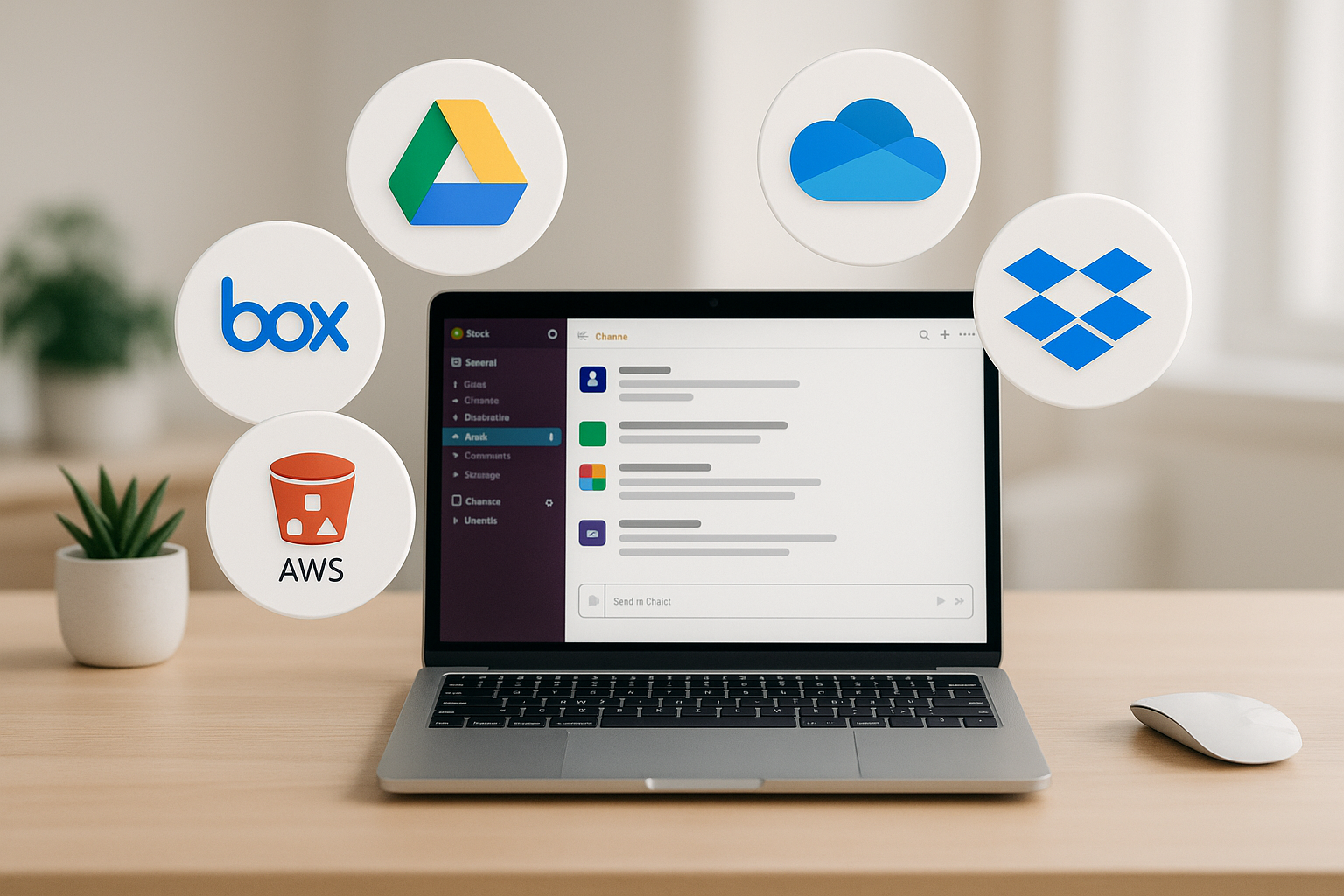
Want to boost your team’s productivity in Slack? Integrating cloud storage might be the answer. These integrations let you share, preview, and manage files directly in Slack, no more jumping between apps. From Google Drive to Dropbox, each option offers unique features like real-time collaboration, secure file sharing, and even visual tools like Zight for screen recordings and annotations. Here’s what you need to know:
- Google Drive: Share and edit Docs, Sheets, and Slides in Slack with real-time updates. Free up to 15GB; paid plans start at $1.99/month.
- Microsoft OneDrive: Ideal for Office 365 users; offers file previews, secure sharing, and 1TB storage at $9.99/month.
- Dropbox: Great for handling large files and remote teams; plans start at $9.99/month.
- Box: Designed for industries with strict compliance needs, offering unlimited storage and advanced security. Custom pricing.
- Amazon S3: Perfect for teams managing big data; pay-as-you-go pricing.
- Zight: Focuses on visual communication with tools for screen recordings, GIFs, and annotations. Starts at $9/month.
Each integration caters to specific needs, from real-time edits to secure collaboration. Use the comparison table below to find the right fit for your team.
How To Add Google Drive In Slack
Top Cloud Storage Integrations for Slack
Here’s a closer look at how some of the best cloud storage tools integrate with Slack to improve file sharing and teamwork.
Google Drive Integration
Google Drive pairs effortlessly with Slack, allowing teams to share Docs, Sheets, Slides, and Forms directly in their conversations and channels. When you share a file, Slack provides a preview and makes it searchable, so you can quickly find reports without leaving the app. This keeps the focus on collaboration while still offering easy access to essential documents.
For organizations already using Google Workspace, this integration feels like a natural extension. It not only ensures secure file sharing with end-to-end encryption but also allows real-time collaboration. Edits made to documents sync automatically across both platforms, creating a smooth workflow. This eliminates the hassle of switching between tools, letting teams spend more time working and less time managing files.
Microsoft OneDrive and SharePoint Integration
Microsoft OneDrive and SharePoint bring their enterprise-grade file management and security features directly into Slack. Teams can easily share files in channels, conversations, or even huddles, while maintaining Microsoft’s robust access controls and permissions.
Files shared via OneDrive display previews within Slack, enhancing accessibility. Advanced features like customizable data retention policies and secure remote storage make this integration a great fit for organizations using Office 365. For businesses that prioritize security and seamless collaboration, this setup allows team members to share and edit files without leaving Slack. It reduces the need for constant app-switching, speeding up workflows and helping projects move forward more efficiently.
Dropbox Integration
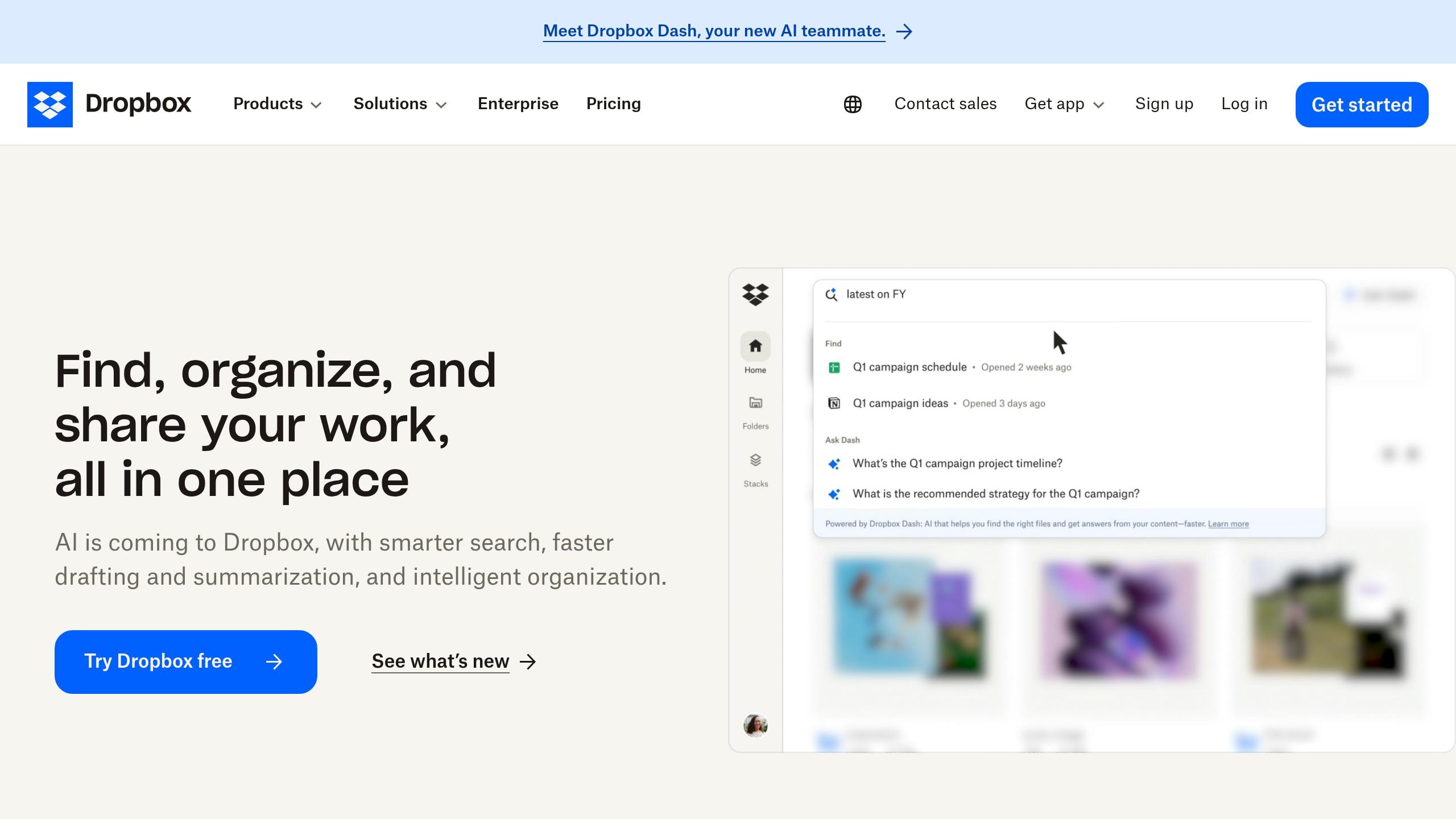
Dropbox’s integration with Slack focuses on ease of use and dependable functionality. Teams can preview files, search for documents, and manage permissions, all without leaving Slack. Its straightforward interface and reliable multi-device syncing make it especially valuable for remote teams who need consistent access to shared files.
Dropbox handles large files across various formats, supporting collaboration on everything from design projects to video assets. With strict access controls and a centralized space for all company files, teams can edit documents simultaneously while keeping them secure. For remote teams, Dropbox’s ability to stay synced across laptops, tablets, and phones ensures everyone is always working with the latest versions, minimizing confusion and keeping projects on track.
Box Integration
Box is designed for organizations with stringent security and compliance needs. Offering unlimited storage on business plans, Box includes advanced features like document signing and collaborative editing.
For industries like healthcare, finance, and government, Box’s integration with Slack is a standout choice. It meets rigorous security standards, including SOC 1/SOC 2/SOC 3 compliance, HIPAA certification, and FedRAMP High authorization. Automated controls and audit trails safeguard sensitive data, while unlimited external collaboration and round-the-clock support ensure smooth operations. Teams handling highly regulated data can collaborate confidently, knowing they’re meeting compliance requirements without adding extra manual work.
Amazon S3 and AWS Storage Integration
Amazon S3 and AWS storage integrations cater to teams with specialized storage or big data needs. These tools are ideal for organizations involved in data analytics, machine learning, or other large-scale projects requiring scalable infrastructure.
With AWS integrations, teams can receive Slack notifications about storage events, manage permissions, and share insights directly in channels. This setup is particularly useful for tech companies or data-driven enterprises. The pay-as-you-go pricing model ensures organizations only pay for what they use, making it a cost-effective solution.
Automated workflows can trigger real-time Slack notifications when data is uploaded or accessed, streamlining collaboration on data-heavy projects. For teams managing complex technical systems, this integration centralizes communication and reduces delays caused by disjointed workflows, improving overall efficiency and response times.
Zight Integration: Visual File Sharing in Slack
Zight takes Slack file sharing to the next level by focusing on visual communication. Unlike traditional cloud storage integrations that primarily handle static files, Zight adds a dynamic layer to collaboration. With Zight, teams can easily capture and share screen recordings, GIFs, and annotated screenshots directly within their Slack workspace, making communication clearer and more immediate.
The integration is simple and efficient, using the /Zight slash command. With just a quick command, users can record their entire screen, including audio, in up to 4K quality. These recordings are automatically saved to their Zight account and shared via unique, searchable URLs for easy access and organization.
Zight also offers powerful annotation tools, such as highlighting, arrows, and pixelation, to make visual content even more effective. On top of that, its AI features transcribe videos, generate titles, and create step-by-step guides from recordings, saving time and effort.
Kate Frappell, Senior Design Lead at Ofload, shared her experience:
“Zight has been great, I’ve used it for many years now. Primarily I use it as a visual reference in Slack messages. I will write up instructions/updates etc and link specific words to Zight screenshots to illustrate my point. As a designer this happens a lot, so I’m doing quick UI mocks to get concepts across fast.”
Zight’s asynchronous collaboration capabilities are another standout feature. Team members across different time zones can review demos, training materials, or explanations at their convenience. One user highlighted the value of the AI add-on:
“I’ve had the AI add-on for about a month now and the video transcriptions, the chapters in the video, and the summary data – wow, it’s great! I wasn’t sure it’d be worth it, but it absolutely is – I love those features!”
Compatible with Mac, Windows, Chrome, and iOS, Zight integrates seamlessly with tools like Microsoft Teams, Jira, and Zendesk, creating a well-rounded visual communication ecosystem.
Comparison Table of Integration Features
Explore the standout features of various integrations to find the best fit for your Slack workflow.
This table highlights the core differences; let’s dive deeper into how these features can streamline your Slack experience.
Key Integration Insights
Real-Time Collaboration
Google Drive and Dropbox excel in real-time, simultaneous editing directly within Slack. For teams already using Microsoft tools, OneDrive offers seamless collaboration across Office 365 applications.
Security and Compliance
Box stands out with its extensive certifications, including SOC 1/2/3 and HIPAA, making it a top choice for enterprises with strict regulatory requirements. Google Drive and Dropbox also deliver strong security suitable for most businesses, while OneDrive ensures secure encryption and multiple backup options.
Cross-Platform Compatibility
All major integrations, Google Drive, Dropbox, OneDrive, and Box, support a wide range of platforms, including Windows, Mac, iOS, Android, and web browsers. This ensures teams can access files regardless of their preferred devices.
Notifications and Alerts
Staying informed is effortless with these integrations. Google Drive sends real-time notifications for file edits and comments within Slack. Dropbox keeps team members updated on file changes and collaborative activities, while OneDrive provides alerts for file sharing within Slack channels.
Visual Communication with Zight
Unlike traditional document-focused tools, Zight enhances Slack’s communication capabilities by enabling teams to share and annotate visual content like screen recordings and GIFs. This makes it especially valuable for teams working asynchronously or relying on visual workflows.
Choosing the Right Cloud Storage Integration for Your Team
Selecting the best cloud storage integration depends on your team’s specific needs, the software tools you already use, and any security requirements you must meet. For example, teams using Google Workspace can seamlessly integrate with Google Drive, while those in the Microsoft 365 ecosystem might find OneDrive and SharePoint a better fit for collaboration within Office applications. It’s also important to factor in team size and budget when making your choice.
Team size and budget play a significant role. Google Workspace plans start at $6 per user per month, offering 30GB of storage per user, making it a great choice for small to mid-sized teams. On the other hand, OneDrive provides flexible options, including a $1.99 per month plan for 100GB or $9.99 per month for 1TB of storage. For larger enterprises needing unlimited storage, Box is an attractive option, offering this feature as part of its business plans, along with robust security certifications.
Security and compliance are crucial, especially for teams in regulated industries. Box stands out with certifications like SOC 1, SOC 2, SOC 3, HIPAA, and FedRAMP High, along with automated controls and 24/7 support. Google Drive ensures data protection through end-to-end encryption and strict security protocols, while OneDrive offers advanced security features and customizable data retention policies. If privacy is a priority, look for solutions that provide full encryption both during transfer and storage.
For smaller teams, sticking to a single primary integration can help maintain consistency. Larger organizations, however, might benefit from multiple integrations tailored to the specific needs of various departments.
Visual communication needs can also influence your decision. While most cloud storage solutions handle document management effectively, teams that rely on asynchronous workflows or visual explanations may need more. Pairing your storage solution with Zight can create a well-rounded system. Zight enhances collaboration with tools like screen recordings, annotated screenshots, and step-by-step guides. Its AI-powered transcription and translation features further support communication across distributed teams.
Before implementing a new integration, it’s wise to audit your current file storage to identify fragmented systems. Set up file organization and naming conventions to make files easier to find, especially if you’re using Slack. Configure permissions carefully and train your team on how to use the storage system effectively. Keep an eye on usage trends and adjust your storage plan as your team grows.
Ultimately, the right cloud storage integration should fit seamlessly into your team’s workflow. Whether your focus is on collaborative document editing or dynamic visual communication tools like Zight, choose an option that complements your software setup, meets your security standards, fits your budget, and supports how your team works together.
FAQs
How can I choose the best cloud storage integration for my team’s Slack workspace?
To find the right cloud storage integration for your team’s Slack workspace, start by pinpointing what your team truly needs. Think about how often files are shared, how much storage is required, and how important ease of use and collaboration features are. Look for integrations that simplify tasks directly within Slack, like offering file previews, quick sharing options, and easy search capabilities.
Take Zight, for instance. It integrates smoothly with Slack, letting you share videos, screenshots, GIFs, and more without ever leaving the app. Plus, it comes with advanced tools like AI-driven transcription and summaries, making it a handy choice for teams that heavily use visual communication. Identify your team’s top priorities, explore different options, and test them out to find the perfect match.
How do cloud storage integrations for Slack ensure data security and compliance?
Cloud storage integrations with Slack are designed to keep your data safe while ensuring compliance with industry regulations. They achieve this through features like encryption, access controls, and detailed audit logs, all of which work together to protect sensitive information during file sharing and team collaboration.
For instance, many of these integrations use encryption for data both in transit and at rest, adding an essential layer of protection against unauthorized access. They also include tools for managing user permissions, so teams can decide exactly who gets to view or edit specific files. Moreover, these integrations often adhere to strict regulatory standards such as GDPR, HIPAA, or SOC 2, making them reliable for handling sensitive and regulated data.
Can Zight’s tools support teams working across different time zones?
Zight offers visual communication tools that make working together in asynchronous environments easier. With features like screen recording, GIF creation, and file sharing, team members can quickly produce and share content that others can access and respond to whenever it suits them.
This approach is especially helpful for teams working across various time zones, allowing them to stay connected, share updates, and collaborate efficiently, no need to be online simultaneously.