
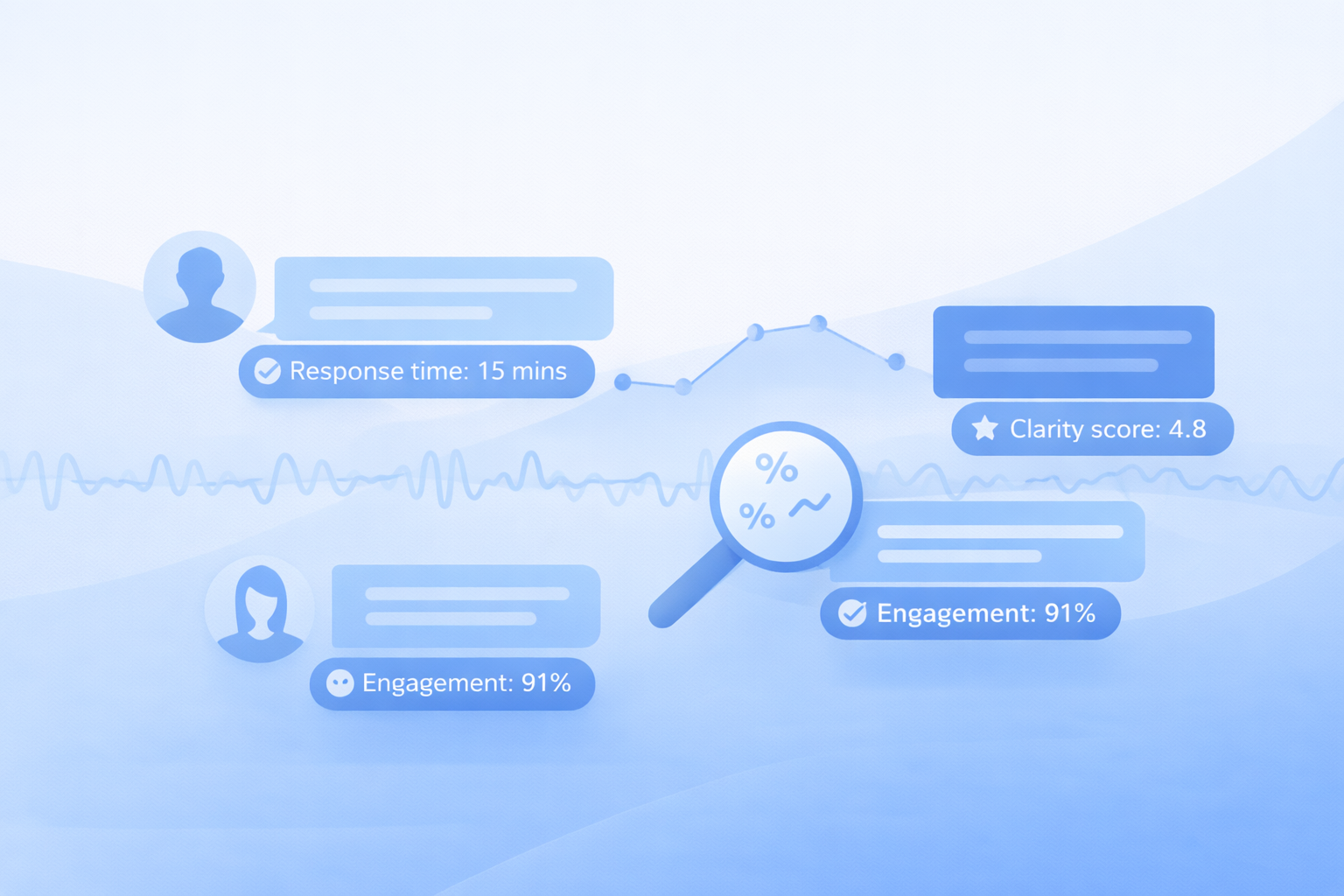
- Employee Engagement Scores: Gauge how emotionally invested employees are in their work and how well they understand company goals.
- Email Open and Click-Through Rates: Measure how effectively emails reach and engage employees.
- Communication Channel Usage Rates: Track which tools (e.g., Slack, email, intranet) employees prefer for communication.
- Message Response Times: Assess how quickly employees respond to messages and tasks.
- Employee Turnover Rates: Evaluate how communication impacts retention and employee satisfaction.
- Communication Quality Scores: Analyze clarity, relevance, and impact of messages.
- Employee Awareness and Feedback Rates: Measure how well employees understand key messages and provide input.
- Event and Program Participation Rates: Track attendance and engagement in company events or training.
- Manager Communication Scores: Assess how well managers communicate with their teams.
- External Communication Response Rates: Evaluate how effectively external stakeholders (customers, partners) respond to outreach.
How to Measure Internal Communication
1. Employee Engagement Scores
Employee engagement scores measure how emotionally invested and committed employees are to their work and the organization. These scores go beyond simple satisfaction, they reveal whether employees understand the company’s goals, feel connected to their roles, and actively participate in workplace discussions. This metric also serves as a foundation for leveraging digital tools to collect and act on engagement data.Relevance to Communication Effectiveness
Employee engagement scores are a powerful indicator of how well your internal communications are working. Engaged employees are more likely to participate in company initiatives, provide feedback, and align with organizational goals. Studies show that strong communication practices can significantly enhance business performance. High engagement scores suggest that your messaging is resonating, while low scores might highlight issues like unclear communication, poor timing, or ineffective channels.Ease of Measurement Using Standard Tools
Thanks to modern digital platforms, measuring employee engagement is now easier than ever. Tools like pulse surveys, feedback forms, and analytics dashboards built into communication systems can provide real-time insights. For example, platforms like Zight track video views, comments, and feedback to pinpoint which messages resonate most. Many companies also calculate overall engagement scores by analyzing survey results, participation rates, and usage stats from internal tools.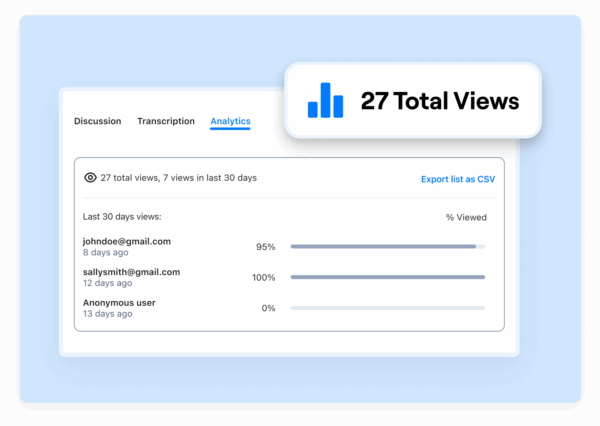
Actionability of Insights Derived from the Metric
These insights can drive meaningful changes in communication strategies. Employee engagement scores help identify areas for improvement. For instance, if engagement drops after a major announcement, it might signal the need to refine the clarity or timing of your messaging. Similarly, if certain departments consistently show lower engagement, targeted campaigns or interactive content can address their specific needs. One retail company used an internal communications app with analytics dashboards to identify low engagement areas. By launching targeted initiatives, they saw measurable improvements in participation and better alignment with their sales goals.Impact on Business Decision-Making
The financial impact of high employee engagement is hard to ignore. Companies with highly engaged teams can see a 21% boost in profitability and a 17% increase in productivity. These numbers make a strong case for investing in better communication tools, training, or new strategies. For example, one organization implemented a new employee experience platform that significantly reduced task completion times, saving thousands of labor hours and increasing profitability. Insights from engagement scores also help leadership allocate resources wisely, prioritize projects, and clearly demonstrate the value of internal communications to stakeholders.2. Email Open and Click-Through Rates
Email open and click-through rates are essential for understanding whether your messages are reaching and engaging employees. Open rates reflect how many people view your email, while click-through rates (CTR) measure how effectively the content inspires action or interaction.Why These Metrics Matter
A high open rate often points to effective subject lines and a strong sender reputation. On the other hand, if your CTR is low, it indicates that while employees may open the email, the content itself isn’t compelling enough to drive engagement. These metrics are like a feedback loop, helping you fine-tune your communication strategies.Tools That Make Tracking Simple
Platforms like Microsoft Outlook, Gmail, and Mailchimp come with built-in analytics, offering instant insights into email performance. For deeper engagement tracking, tools like Zight allow you to add visuals and monitor interactions, giving you a more comprehensive view of how employees interact with your messages.Turning Insights Into Action
Industry benchmarks suggest open rates should fall between 60–80%, with CTRs ranging from 10–20%. If your metrics are below these ranges, it’s a sign to rethink your subject lines, adjust your timing, or improve the quality of your content. These small tweaks can lead to significant improvements in how employees engage with your emails.Driving Smarter Business Decisions
According to the 2025 Gallagher report, while 71% of companies track engagement metrics, only 20% have the skills to act on them. For example, a decline in open rates could indicate it’s time to revamp your communication strategy, whereas a spike in CTR might justify continuing or scaling similar campaigns. These insights not only help allocate resources more effectively but also demonstrate the return on investment (ROI) of internal communication efforts, making it easier to show stakeholders the value of your strategies.3. Communication Channel Usage Rates
Tracking how employees use communication channels is a key piece of the puzzle when analyzing communication effectiveness. It complements metrics like engagement scores and email performance by showing how employees interact with tools like email, chat, intranets, video platforms, and collaboration apps. This data helps pinpoint which channels are effective for delivering messages and which might need a different approach.Relevance to Communication Effectiveness
Understanding how employees use communication channels allows you to align your messaging with their habits and preferences. For instance, if your team is highly active on Slack but rarely visits the company intranet, posting critical updates on the intranet might not be the best move. High usage of a channel suggests it connects well with your team, while low usage signals it might be time to rethink your strategy. Breaking down the data by department, location, or tenure can provide even more clarity, helping you fine-tune your communication efforts.Ease of Measurement Using Standard Tools
The good news is, tracking these usage rates is relatively simple. Most communication tools come with built-in analytics to make the process easier. Email platforms offer metrics like open rates and click-through rates, while tools like Slack and Microsoft Teams provide insights into active users and message traffic. Intranet systems track logins and page visits, giving you a sense of how often employees access key resources. For visual communication, platforms like Zight offer analytics on video views, screenshot shares, and guide interactions, all of which can integrate with tools like Slack, Teams, and Jira.Actionability of Insights Derived from the Metric
The data you gather on channel usage can directly inform your communication strategy. For example, if email open rates are low but Slack engagement is high, it makes sense to prioritize Slack for important updates. Similarly, if employees engage more with video content than text-based messages, it may be worth investing more in visual tools.In 2022, Beekeeper shared a case study where a retail client boosted their employee app adoption rate from 45% to 82% in just six months. They achieved this by rolling out a targeted onboarding campaign and offering incentives for active participation. This effort led to a 30% increase in internal survey responses and improved alignment within the sales team.This example highlights how analyzing usage rates can drive meaningful changes. By identifying underused channels and taking steps to increase adoption, organizations can expand their communication reach and improve overall effectiveness.
Impact on Business Decision-Making
Channel usage data is invaluable for making informed decisions about resource allocation. It helps identify which channels deserve further investment and which may need retooling, or even phasing out. These insights also guide training priorities, ensuring employees are equipped to use the tools that matter most. Keeping a close eye on these metrics allows leadership to adapt as employee preferences shift, ensuring communication strategies remain effective over time.4. Message Response Times
Message response times reveal how quickly employees respond to internal communications like emails, messages, or surveys. These times serve as a barometer of engagement levels or potential communication overload. Alongside engagement scores and channel usage, they provide a critical piece of the communication puzzle. Quick responses often signify high engagement and smooth communication, while delays may suggest message fatigue or disengagement.Why Response Times Matter for Communication
Response times offer a direct measure of how effectively your team interacts. They provide a real-time view of your communication strategy’s strengths and weaknesses. Faster responses often align with higher productivity and better alignment with company goals. By analyzing response times across different message types, departments, or times of day, you can identify which communications need immediate attention and which can wait.How to Track Response Times Easily
Modern tools make it simple to measure response times. Many email clients, messaging apps, and CRM systems come with built-in analytics to track how quickly employees reply. Similarly, survey platforms automatically record how long it takes for team members to respond to polls or feedback requests. These tools provide valuable insights into engagement levels without requiring extra effort.Turning Insights into Action
Response time data isn’t just informative, it’s actionable. If certain messages consistently receive slow responses, it might be time to rethink your approach. Adjusting the content, format, or timing of your messages can lead to better engagement. For instance, if visual content gets quicker replies than lengthy emails, consider investing in visual communication tools. Additionally, offer targeted support to teams with slower response rates to help them improve.Influence on Business Outcomes
The impact of response times goes beyond communication, they directly affect business performance. Companies with faster internal communication cycles see operating margins 30–50% higher than those with slower processes. Research shows that improving response times can lead to noticeable productivity gains, making it a metric worth prioritizing.5. Employee Turnover Rates
Employee turnover rates shed light on how well your communication strategy keeps employees engaged and connected to your organization. High turnover often points to communication gaps.Relevance to Communication Effectiveness
Turnover rates, like engagement scores, reflect the role communication plays in overall organizational success. When communication falters, employees can feel out of the loop regarding company changes, disconnected from leadership, or unclear about their roles and growth opportunities. Research shows that companies with highly engaged employees experience 59% less turnover than those with low engagement levels. This highlights how clear and timely communication can directly impact retention.Ease of Measurement Using Standard Tools
Tracking turnover rates is straightforward with modern HR tools. Most HR information systems (HRIS) and payroll platforms automatically record hires and separations, providing the data you need. To calculate turnover, divide the number of separations during a period by the average number of employees, then multiply by 100. For instance, if 25 employees left out of an average of 200 during a quarter, the turnover rate would be 12.5%.Actionability of Insights Derived from the Metric
Turnover data becomes valuable when you dig into the details. If certain departments or teams show higher turnover rates, it’s worth examining their communication practices. Are managers giving regular and meaningful feedback? Do employees have a clear understanding of company updates? Are team meetings effective? For example, in 2022, the London Borough of Tower Hamlets tackled high turnover among frontline staff with targeted internal communication campaigns. By improving leadership messaging and tailoring communication strategies, they achieved an 18% reduction in turnover within a year. Exit interviews can also provide valuable insights, if departing employees frequently cite a lack of clarity around career progression, you can address this by improving communication about advancement opportunities. Additionally, tools like Zight can enhance remote team communication by creating visually engaging updates and training materials, which can lead to better retention. Analyzing turnover data alongside other communication metrics helps pinpoint areas for improvement, both in messaging and managerial approaches.Impact on Business Decision-Making
Turnover metrics provide a clear financial lens for decision-making. Employee turnover is costly, U.S. companies spend an average of $4,000 or more per hire to replace employees. By examining periods of high turnover and connecting them to specific events, such as leadership changes or communication missteps, organizations can identify and address problem areas. For context, the average annual turnover rate across U.S. industries was about 47% in 2021, with voluntary departures accounting for roughly 25%. These insights help leaders allocate resources more effectively. For example, investing in manager communication training, adopting better communication tools, or restructuring how information flows within the organization can address underlying issues. According to the Work Institute, 22% of employees who left cited career development as the main reason, while 12% pointed to work-life balance and 11% to manager behavior. This data underscores the strong link between communication quality and employee retention, giving businesses a roadmap for improving both engagement and retention.6. Communication Quality Scores
Communication Quality Scores go beyond basic engagement metrics to evaluate how well messages are communicated. By focusing on clarity, relevance, accuracy, and impact, these scores reveal whether your messages not only grab attention but also drive understanding and action. While engagement metrics might tell you how many people opened an email, quality scores dig deeper, showing if your communication effectively prompts the desired behavior.Relevance to Communication Effectiveness
Quality scores are a direct measure of how well your internal communications resonate with employees. When messages are clear and actionable, employees are more likely to absorb the information and act on it. On the flip side, poor communication quality can drain productivity, as employees waste time searching for missing or unclear information. The link between communication quality and business outcomes is undeniable. Companies that focus on improving communication quality often see measurable productivity gains and time savings. This proves that refining how you communicate internally can have a direct and positive impact on your bottom line.Ease of Measurement Using Standard Tools
Measuring communication quality is easier than ever, thanks to modern tools that combine both quantitative and qualitative methods. For example, employee surveys and feedback forms can provide direct insights into how clear and relevant your messages are. Anonymous pulse surveys are particularly useful for gathering honest feedback on communication effectiveness. Real-time sentiment analysis tools, often integrated into platforms like Microsoft Teams and Slack, can help you gauge how messages are received. Tools like Zight take it a step further by enabling feedback on visual content through AI-powered transcription and summaries. Key metrics to track include clarity ratings, relevance scores, sentiment analysis results, and the percentage of employees who can accurately recall key information from communications.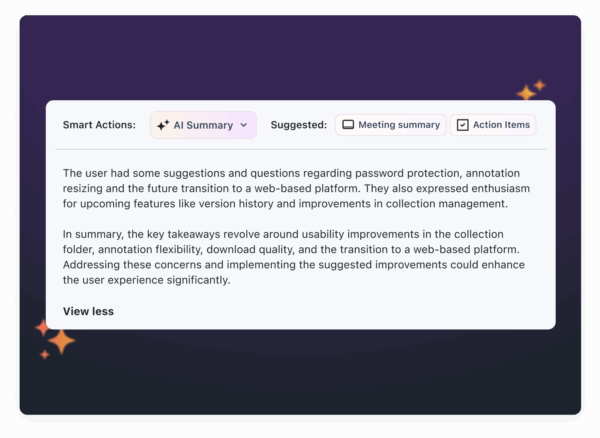 However, there’s a hurdle: according to the 2025 Gallagher report, only 20% of organizations possess the data literacy needed to analyze these metrics effectively. Despite this challenge, these tools provide valuable insights that can guide improvements in how messages are crafted and delivered.
 Actionability of Insights Derived from the Metric
The real power of Communication Quality Scores lies in their ability to drive actionable change. For instance, if scores highlight a lack of clarity in certain messages, you can pinpoint which topics need better explanations or determine which communication formats work best for specific audiences. One retail company used pulse surveys to evaluate their internal communications around new product launches. They discovered that messages featuring embedded videos and step-by-step guides were far more effective, leading to better understanding and quicker adoption by staff. This insight prompted them to prioritize visual communication tools for similar updates. If employees consistently rate video messages higher than text-based emails, it’s a clear sign to shift toward more visual formats. Similarly, tracking comprehension rates across departments can help identify areas where additional training or tailored communication strategies are needed. These insights not only improve communication but also sharpen your overall strategy.Impact on Business Decision-Making
Communication Quality Scores provide hard data that can influence major business decisions. For example, if you can demonstrate that better communication leads to increased productivity, it becomes easier to justify investments in advanced tools or training programs. If certain communication channels consistently underperform, reallocating resources to more effective methods becomes a logical next step. Likewise, if visual formats like videos or infographics outperform text-based communications, investing in platforms that support rich media becomes a smart strategic move. These scores give you the leverage to make informed decisions that align with both employee needs and organizational goals.7. Employee Awareness and Feedback Rates
Employee Awareness and Feedback Rates measure how well employees understand key messages and whether they actively provide input. These metrics are crucial for ensuring communication resonates with the workforce and fosters engagement. When employees feel connected and heard, it creates the foundation for organizational success.Relevance to Communication Effectiveness
These rates act as a litmus test for communication effectiveness. Awareness rates reveal if messages are reaching employees and being understood, while feedback rates show whether employees feel encouraged to respond. A Gallup study highlights the importance of this connection, showing that companies with highly engaged employees see a 21% boost in profitability. When employees clearly understand policies, initiatives, and goals, they make better decisions. On the flip side, low awareness often signals communication gaps, leading to confusion, misaligned priorities, and a drop in productivity. Feedback rates, meanwhile, indicate whether employees feel valued and heard, which directly impacts engagement and retention. Acting on feedback regularly strengthens employee loyalty and aligns priorities. These metrics enhance earlier communication measures by offering a deeper understanding of how messages are received and acted upon.Ease of Measurement Using Standard Tools
Thanks to modern tools, measuring employee awareness and feedback is easier than ever. A 2023 survey by Staffbase revealed that 72% of internal communicators rely on feedback surveys as their primary method for evaluating communication effectiveness. Common tools include pulse surveys, read receipts, feedback forms, and intranet analytics. Platforms like Zight take it a step further by using screen recording and visual guides to deliver information and capture immediate feedback. With features like AI-powered transcription and analysis, Zight simplifies the process of turning feedback into actionable insights.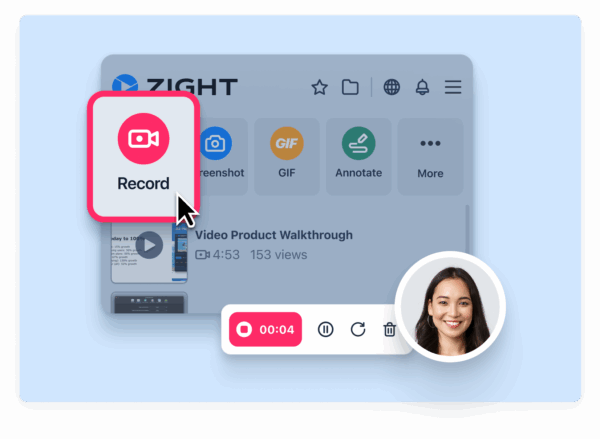 Key metrics to track include survey participation rates, acknowledgment of important messages, the volume and quality of feedback, and sentiment analysis of comments. Real-time dashboards allow for continuous monitoring, making it easier to spot trends and adjust strategies as needed. This integration of tools not only simplifies data collection but also emphasizes a focus on data-driven communication.
 Actionability of Insights Derived from the Metric
Insights from awareness and feedback rates directly inform communication strategies. For example, low awareness scores on specific topics highlight areas where messaging needs to be clearer or additional training is required. Feedback trends, on the other hand, reveal employee concerns and preferences, guiding leadership on where to focus attention. In 2022, the London Council of Tower Hamlets used employee feedback during an organizational transformation to adjust messaging, resulting in a 30% increase in awareness scores. If feedback shows employees favor visual formats over text-heavy emails, it’s a clear sign to invest in video communication tools. Similarly, lower awareness rates in certain departments might signal the need for tailored communication strategies or follow-up sessions.Impact on Business Decision-Making
These metrics provide leaders with the insights needed to refine strategies and make informed decisions. High awareness and strong feedback rates ensure that major initiatives, policy changes, and resource allocations are based on real employee understanding and engagement rather than assumptions. For new programs, pre- and post-launch surveys can identify communication gaps. For instance, if initial awareness is at 60%, targeted Q&A sessions and follow-up communications can raise understanding to 90% or higher, leading to better adoption and satisfaction. Additionally, these metrics help justify investments in communication tools and training. Demonstrating that improved communication leads to measurable gains in productivity or reduced turnover makes it easier to secure budgets for advanced platforms. The data proves that better communication delivers tangible business results.8. Event and Program Participation Rates
Event and Program Participation Rates track how many employees register for and attend company events, training sessions, town halls, wellness programs, and other initiatives. These rates provide a clear signal of how well your communications inspire employees to engage with what the company offers.Relevance to Communication Effectiveness
Participation rates reveal whether your messaging is both reaching employees and motivating them to act. High participation suggests your communications are hitting the mark, being clear, engaging, and relevant. On the other hand, low participation could indicate a breakdown in how the message aligns with employee needs or interests. According to a Staffbase survey, companies with strong internal event participation see 20% higher employee engagement scores compared to those with low participation. Similarly, a Gallup study shows that organizations with above-average participation rates experience 59% lower turnover and 41% lower absenteeism. These numbers underscore how participation rates can act as a litmus test for employee satisfaction and organizational well-being. Different event types can reveal specific insights. For instance, low attendance at mandatory training might point to unclear messaging or scheduling issues, while high turnout for wellness programs could indicate effective communication about benefits and company culture. This metric offers a practical way to evaluate and refine your communication strategies.Ease of Measurement Using Standard Tools
Tracking participation is straightforward with tools like digital sign-ups, attendance logs, and event management software. Platforms like Zight make this process even smoother by enabling visually appealing invitations, step-by-step event guides, and follow-up videos, all integrated with tools like Slack and Microsoft Teams. To measure effectively, track registration numbers, actual attendance, no-show rates, and post-event engagement. Surveys can add depth, helping you understand what motivates participation and what might be holding it back.
 Actionability of Insights Derived from the Metric
Participation data provides actionable insights for improving communication strategies and event planning. For instance, if a specific department shows low participation, it might mean your messaging isn’t reaching them effectively. On the flip side, high engagement in certain event types can point to formats and topics that resonate best with your workforce. Breaking down participation data by department, location, or role can help you refine your approach. Additionally, analyzing trends, like which days or times see the highest attendance, can guide better scheduling decisions to maximize engagement.Impact on Business Decision-Making
Participation rates are a valuable tool for making informed decisions about resource allocation. High engagement in certain programs can justify increased funding, while underperforming initiatives might need restructuring or better promotion. This data also strengthens the case for investing in communication tools and platforms. When you can show that improved event promotion leads to measurable increases in participation and engagement, it’s easier to secure funding for advanced technologies. Participation trends can also predict the success of new initiatives. High turnout for a pilot event suggests strong interest and a good chance of success in a wider rollout. Conversely, low participation signals the need to tweak your messaging, format, or content. Organizations generally aim for participation rates of 60–70% for mandatory events and 30–50% for optional programs. Comparing your rates to industry benchmarks and past performance helps set realistic goals and ensures ongoing improvements in communication effectiveness.9. Manager Communication Scores
Manager Communication Scores assess how well managers interact with their teams, using both quantitative and qualitative data from employee surveys, feedback forms, and reviews. These scores focus on essential elements like message clarity, response times, transparency, and empathy during manager interactions. This metric zeroes in on the quality of communication from leadership, going beyond general communication assessments. It highlights the gap between what managers think they’re conveying and what employees actually perceive, offering a clear lens to evaluate manager-specific communication effectiveness.Relevance to Communication Effectiveness
Managers play a crucial role in bridging organizational goals and employee understanding. When managers communicate effectively, employees gain a clearer sense of their responsibilities and how their work aligns with company objectives. On the flip side, poor communication from managers can leave teams feeling confused and disconnected, undermining overall performance.Measuring Manager Communication Scores
Tools like pulse surveys and 360° feedback are commonly used to measure the clarity, frequency, and empathy of manager communications. For example, 360° feedback allows employees to anonymously evaluate managers on these criteria, providing a well-rounded view. Platforms like Zight offer video updates and analytics for real-time feedback, while integrations with tools like Slack and Microsoft Teams simplify the process of gathering insights. By combining quantitative data, such as how often managers provide updates, their response times, and meeting participation rates, with qualitative feedback on empathy and transparency, organizations can gain a comprehensive understanding of communication quality.Turning Insights into Action
Manager communication scores offer actionable insights for targeted improvements. If scores reveal that employees feel left in the dark or misunderstood, organizations can implement solutions like communication workshops, active listening training, or one-on-one coaching for managers. For instance, a large tech company used pulse surveys to evaluate manager communication and found low scores in message clarity and responsiveness. In response, they launched a training program focused on clear messaging and active listening. Within six months, scores improved by 18%, employee engagement increased, and turnover dropped by 10%. Drilling down into these scores, by department, management level, or specific skills, can help pinpoint areas needing attention. If newer managers consistently score lower on transparency, for example, tailored mentoring programs or training modules can address these gaps effectively.Influence on Business Decisions
Strong manager communication has a direct impact on employee morale, productivity, and retention. By tracking these scores, leadership can make informed choices about investing in coaching programs, leadership development, or communication tools. High or improving scores may justify further investment in internal communication platforms, while declining scores can serve as an early warning for issues affecting employee engagement. Organizations often find a strong link between poor manager communication scores and high turnover rates. This makes the metric invaluable for identifying retention challenges and addressing their root causes. It also plays a role in succession planning and promotions: managers with consistently high communication scores are often seen as strong candidates for broader leadership roles, while those with lower scores may require further development before taking on greater responsibilities. These insights ensure that managerial communication remains a cornerstone of effective internal engagement strategies.10. External Communication Response Rates
External Communication Response Rates track how quickly and often external stakeholders, like customers, partners, vendors, and prospects, respond to your outreach efforts. This includes emails, social media interactions, support tickets, and direct messages. Essentially, this metric helps you gauge whether your communication is clear, engaging, and relevant to its audience. Unlike internal communication metrics that focus on employee interactions, this measurement zeroes in on how effective your customer-facing strategies are. High response rates often mean your messaging resonates and prompts action. On the flip side, consistently low rates could point to issues with timing, content, or even the communication channels you’re using.Why This Matters for Communication Success
The speed and frequency of responses are directly tied to the success of your communication efforts. For example, research from HubSpot reveals that companies responding to customer service queries within an hour are seven times more likely to qualify leads than those who take longer. This highlights how response rates can serve as a barometer for both communication effectiveness and overall business health. Quick responses often reflect strong engagement and satisfaction, showing that your messaging encourages immediate action. On the other hand, sluggish or low response rates might signal deeper issues, such as unclear messaging or poor audience targeting, which can hurt relationships and revenue. The demand for fast responses has skyrocketed. Studies show that 82% of consumers expect prompt replies to sales or marketing inquiries, with 90% considering an “immediate” response (defined as 10 minutes or less) critical for customer service. This growing expectation makes it essential to have tools that track and analyze response rates efficiently.Tools Make Tracking Easier Than Ever
Thanks to modern analytics platforms, measuring external communication response rates is more straightforward than ever. Email marketing tools can automatically track metrics like open rates, click-through rates, and reply rates, breaking them down by campaign, audience segment, and time frame. CRM systems go a step further, logging customer interactions and response patterns to create a full communication history for each contact. Platforms like Zight integrate analytics across formats, showing not just whether someone responded but also how they engaged with your content. Social media management tools provide insights into response rates for posts, direct messages, and comments, while customer support systems track ticket response times and resolution rates. Many businesses rely on unified dashboards to pull all this data together, offering a complete view of external communication performance.Turning Metrics Into Actionable Changes
With detailed response rate data, businesses can make targeted improvements to their outreach strategies. For example, one software company found that customer support emails with video explanations had a 30% higher response rate than text-only messages. By incorporating more visual content using tools like Zight, they sped up issue resolution and boosted customer satisfaction scores. Response rate metrics also reveal trends that can guide strategic decisions. If emails sent in the morning consistently perform better than those sent in the afternoon, you can adjust your timing. If personalized messages get more traction than generic ones, prioritizing customization becomes a clear next step. Additionally, these insights can highlight problem areas. Messages going unanswered might indicate irrelevant content, poor targeting, or even technical issues with delivery. With this information, teams can experiment with new approaches, refine messaging, or try different channels to address gaps before they escalate.Shaping Business Decisions
External communication response rates play a key role in decisions about resources, technology, and customer relations. For instance, companies can use this data to identify which channels deserve more investment and which ones might need a rethink. Research shows that only a small percentage of businesses respond within 15 minutes, and slower response times are often linked to lower customer satisfaction. By benchmarking against these stats, organizations can make smarter decisions about staffing, automation tools, and response time goals. When improvements in response rates lead to higher customer satisfaction scores, the case for refining your communication strategy becomes clear, and measurable. This metric isn’t just about messaging; it’s about creating stronger connections and driving better business outcomes.Tools for Tracking Communication Metrics
Analytics platforms have completely reshaped how organizations measure and refine communication. Modern tools deliver detailed insights into everything from employee engagement to external response rates. The trick is finding platforms that seamlessly fit into your current workflow while providing data you can act on. For instance, all-in-one platforms like Zight combine powerful visual tools with actionable analytics. All-in-one visual communication platforms such as Zight are game-changers for tracking communication effectiveness. With features like screen recording, screenshots, and GIF creation, Zight enables teams to craft engaging content while monitoring its impact. Its AI-driven transcription and summary tools provide deeper analysis of communication quality, while integrations with popular tools like Slack, Microsoft Teams, and Jira allow teams to track engagement across their go-to channels.“Zight has been great, I’ve used it for many years now. Primarily I use it as a visual reference in Slack messages. I will write up instructions/updates etc and link specific words to Zight screenshots to illustrate my point. As a designer, this happens a lot, so I’m doing quick UI mocks to get concepts across fast.” – Kate Frappell, Senior Design Lead at OfloadThis type of visual communication creates measurable touchpoints that text-based messaging simply can’t replicate. Enterprise communication platforms take things further by offering advanced analytics dashboards that track a wide range of metrics simultaneously. Research highlights that knowledge workers spend 19% of their time searching for and gathering information, which underscores the importance of streamlining communication and tracking how information is accessed. Real-time analytics are another must-have for businesses aiming to stay agile. Companies with strong communication practices are 3.5 times more likely to outperform their competitors. Real-time data provides a critical edge, helping organizations spot issues early and adjust strategies on the fly. This immediacy builds on traditional metrics, enabling businesses to maintain high levels of communication efficiency. When adopting communication analytics tools, prioritize platforms with customizable KPIs that align with your organization’s goals. The best tools provide both quantitative data, like open rates and response times, and qualitative insights, such as sentiment analysis and feedback collection. This dual approach not only tracks what’s happening but also uncovers why certain messages succeed or fall short, paving the way for data-driven strategies. Data security and privacy are critical considerations, especially for US-based businesses. Look for platforms that comply with CCPA, offer encryption, and support role-based access controls. These features are vital for protecting sensitive employee and customer information across integrated systems. To get started, consider launching a pilot program focused on key metrics. This approach helps address challenges like staff resistance and data overload, ensuring smoother adoption. By starting small, you can validate your chosen KPIs and refine your strategy before scaling it organization-wide. This methodical rollout ensures long-term success with your communication analytics tools.