
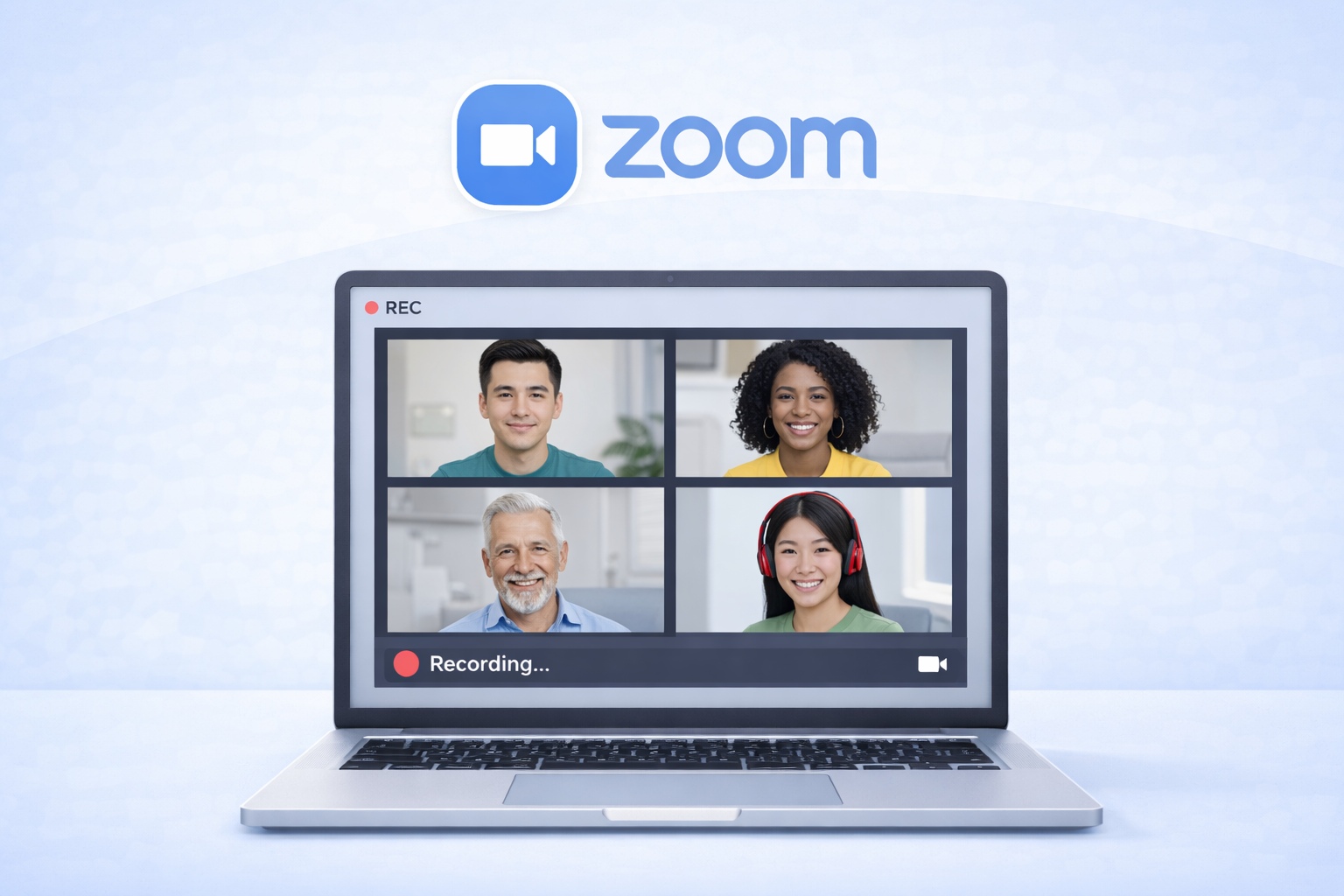
How to Record a Zoom Meeting (Even If You’re Not the Host)
If you’ve ever needed to record a Zoom meeting but realized you don’t have permission because you’re not the host, you know the frustration. Zoom’s built-in recorder is locked behind host-level controls, which means most participants — the people who actually need the recording for reference, note-taking, or sharing with absent teammates — are left scrambling. The good news: you don’t need host permission, and you don’t need to beg your meeting organizer to remember to hit “Record.” You just need a screen recorder that captures your entire screen — Zoom window included — independently of Zoom’s own software.
⚡ Quick Answer
To record a Zoom meeting without host permission, use an independent screen recorder like Zight. Open Zight, click “Record Screen,” select your Zoom window, and hit record. When the meeting ends, Zight instantly generates a shareable link — no file exporting, no uploading, no waiting. Zight is a screen recording and async video tool for Mac, Windows, and Chrome that captures any application window, including Zoom, and produces a cloud-hosted link you can share in seconds. It’s the fastest way to save a Zoom meeting recording without relying on Zoom’s built-in limitations.
In this guide, I’ll walk you through every method for recording a Zoom meeting — from the built-in Zoom recorder (and its many restrictions) to using Zight as a standalone Zoom screen recorder that works whether you’re the host, a participant, or even someone watching a webinar. After recording hundreds of meetings across both tools, I can tell you exactly where each one shines and where it falls short.
Why Zoom’s Built-In Recorder Falls Short
Before we dive into the step-by-step instructions, let’s be honest about why you’re searching for this in the first place. Zoom does have a recording feature — but it comes with a list of caveats that make it impractical for most participants.
The Host Permission Problem
By default, only the meeting host (or co-host) can start a local or cloud recording in Zoom. If you’re a regular participant, the “Record” button is either greyed out or missing entirely. The host has to explicitly grant you recording permission during the meeting — and many hosts either don’t know how, forget, or have organizational policies that prevent it.
Local Recording Limitations
Even when you can record, Zoom’s local recording saves a raw .mp4 file to your computer that requires a post-meeting conversion process. On free Zoom accounts, cloud recording isn’t available at all — you’re stuck with local files. The result is a large video file sitting on your hard drive that you then have to manually upload somewhere to share with your team. In my experience, this conversion step alone adds 3–5 minutes for a 30-minute recording, and the output files routinely land between 200 MB and 1 GB.
No Instant Sharing
This is the real dealbreaker for async teams. Zoom’s built-in recorder doesn’t give you a shareable link the moment you stop recording. You have to wait for the file to convert, then upload it to Google Drive, Dropbox, or Slack manually. By the time you’ve done all that, the context is stale and your teammates have moved on. Contrast that with a tool like Zight, which generates a cloud-hosted, shareable link the instant you click “Stop.”
Zoom Built-In Recorder vs. Zight: A Quick Comparison
| Feature | Zoom Built-In Recorder | Zight Screen Recorder |
|---|---|---|
| Requires host permission | ✅ Yes | ❌ No — records any window independently |
| Available to free-plan participants | Local only (no cloud) | ✅ Yes (free tier includes cloud links) |
| Instant shareable link | ❌ No — requires export + upload | ✅ Yes — link generated in seconds |
| Annotation & drawing tools | ❌ No | ✅ Yes — arrows, text, highlights |
| Trim & edit before sharing | ❌ No (raw file only) | ✅ Yes — one-click trim in the cloud player |
| Cloud storage included | Only on paid Zoom plans | ✅ Yes — included on all plans |
| Records non-Zoom apps simultaneously | ❌ No — Zoom content only | ✅ Yes — full screen or any window |
| Works on Mac, Windows, Chrome | Desktop app only | ✅ Mac, Windows, Chrome extension |
| Notification to other participants | ✅ Yes — “Recording” indicator shown | ❌ No visible indicator inside Zoom |
Pro tip: One area where Zoom’s built-in recorder has an advantage is that it can capture separate audio tracks for each participant (useful for podcast-quality editing). If you need individual audio isolation, Zoom’s native recorder is the better choice. For everything else — speed, shareability, flexibility — Zight wins decisively.
Method 1: How to Record a Zoom Meeting Using Zoom’s Built-In Recorder (Host/Co-Host)
If you are the host or have been granted recording permission, here’s the straightforward path using Zoom’s native tools. I’m including this for completeness, but if you’re a non-host participant, skip ahead to Method 2.
Step 1: Start or Join Your Zoom Meeting
Open the Zoom desktop app (version 6.x as of 2025) and either start a new meeting or join an existing one using your meeting link or ID.
Step 2: Click the “Record” Button in the Toolbar
Once in the meeting, look for the Record button in the bottom toolbar. If you’re on a paid Zoom plan (Pro, Business, or Enterprise), you’ll see two options: Record on this Computer (local) or Record to the Cloud. Free plans only show the local option.
Step 3: Monitor the Recording Indicator
A red “Recording” dot appears in the top-left corner of the Zoom window, and all participants see a “This meeting is being recorded” notification. You can pause or stop the recording using the controls that appear in the toolbar.
Step 4: End the Meeting and Wait for Conversion
When you end the meeting (or click “Stop Recording”), Zoom begins converting the raw recording file. For local recordings, a progress window appears — don’t close Zoom until it finishes. The output file lands in your Documents/Zoom folder by default. For cloud recordings, Zoom sends you an email when processing is complete (this can take anywhere from a few minutes to over an hour for long meetings).
Step 5: Share the Recording Manually
For local recordings, you’ll need to upload the .mp4 file to a file-sharing service. For cloud recordings, Zoom provides a link — but it’s locked behind Zoom’s player, which requires recipients to sign in or enter a passcode depending on your settings. Neither option is what I’d call “instant.”
Method 2: How to Record a Zoom Meeting Without Permission Using Zight
This is the method I recommend for anyone who isn’t the host, doesn’t want to deal with file management, or simply wants a shareable link the moment the meeting ends. Zight works as an independent Zoom screen recorder — it captures what’s on your screen, not what’s inside Zoom’s software, so it doesn’t require any permissions from the meeting host.
Important note on ethics and legality: Before you record a Zoom meeting without permission, check your local laws. Many jurisdictions require at least one-party consent (you, the person recording), while others require all-party consent. Company policies may also apply. Always inform participants you’re recording when legally required to do so. This guide covers the technical how — the legal should is your responsibility.
Step 1: Install Zight on Your Device
Download Zight from zight.com/screen-recorder for Mac or Windows, or install the Chrome extension if you prefer to work from your browser. Installation takes under a minute. On Mac, Zight lives in your menu bar; on Windows, it sits in your system tray. The Chrome extension adds a small icon next to your address bar.
After installing, create a free account or sign in. Zight’s free plan includes screen recording with cloud hosting and shareable links — you don’t need to upgrade to record Zoom meetings.
Step 2: Open Your Zoom Meeting
Join your Zoom meeting as you normally would — through the Zoom desktop app, web client, or mobile app. Make sure your Zoom window is open and visible on your screen. If you’re using multiple monitors, note which screen your Zoom window is on.
Step 3: Start Recording with Zight
Click the Zight icon in your menu bar (Mac) or system tray (Windows), then select Record Screen. You’ll see three capture options:
- Full Screen — Records everything on your display, including Zoom and any other apps
- Select Region — Drag to select just the Zoom window area
- Application Window — Click directly on the Zoom window to capture only that app
For recording Zoom meetings, I recommend the Application Window option. It cleanly captures the Zoom interface without including your desktop, notifications, or other apps that might contain sensitive information.
Pro tip: Make sure “Record Audio” is toggled on (it’s on by default). Zight captures your system audio — which includes Zoom’s audio output — so you’ll get both sides of the conversation. On macOS 14 Sonoma and later, you may need to grant Zight screen recording and audio permissions in System Settings → Privacy & Security the first time you use it.
Step 4: Record the Meeting
Once you click “Start Recording,” Zight runs quietly in the background. A small timer appears in your menu bar / system tray showing the elapsed recording time. Your Zoom participants won’t see any recording indicator inside Zoom — Zight operates entirely independently of the Zoom application.
During the recording, you can:
- Pause and resume — Useful for skipping breaks or off-topic tangents
- Annotate in real time — Draw arrows, highlight areas, or add text overlays (great for marking important moments)
- Switch between Zoom views — Gallery view, speaker view, screen shares — Zight captures whatever’s visible in the Zoom window
Step 5: Stop Recording and Get Your Shareable Link
When the meeting ends (or whenever you want to stop), click the Zight icon and hit Stop Recording, or use the keyboard shortcut (⌘+Shift+Z on Mac, Ctrl+Shift+Z on Windows). Here’s where Zight fundamentally changes the workflow: within seconds — typically 3–8 seconds for a 30-minute recording in my testing — Zight uploads your recording to the cloud and copies a shareable link to your clipboard.
That’s it. No file conversion. No manual upload to Google Drive. No waiting for an email from Zoom. You paste the link in Slack, email, Notion, or wherever your team communicates, and anyone with the link can watch the recording instantly in their browser.
Step 6: Trim, Annotate, and Share
Open your Zight link in a browser to access the cloud player. From here, you can:
- Trim the beginning and end — Cut out the “can you hear me?” preamble and the post-meeting silence with Zight’s one-click trim tool
- Add annotations — Highlight key moments with arrows, text boxes, or shapes
- Set a password or expiration — Control who can access the recording and for how long
- Download the .mp4 — If you do need a local file, you can download it directly from the player
For secure file sharing with your team, Zight’s file sharing features let you manage link permissions, track who viewed the recording, and organize recordings by project or workspace.
Method 3: Record a Zoom Meeting on macOS Using Built-In Tools
macOS has a built-in screen recorder (⌘+Shift+5) that can technically capture your Zoom window. I’ve tested this extensively and here’s my honest assessment: it works, but it’s bare-bones.
- No instant cloud link — saves a .mov file to your desktop
- No annotation tools during or after recording
- No trimming without opening QuickTime or iMovie
- System audio capture requires a third-party audio routing tool (like BlackHole) on older macOS versions. macOS 15 Sequoia improved this, but it’s still not as seamless as Zight’s one-click audio toggle
If you’re in a pinch and don’t have Zight installed, ⌘+Shift+5 will get the job done. But for any recurring use case — weekly standups, client calls, sprint reviews — the time cost of manual file management adds up fast. After testing both for a month of daily meetings, I estimated I was spending 5–8 minutes per recording on the export-upload-share cycle with macOS’s built-in tool. With Zight, that dropped to about 10 seconds.
How to Save a Zoom Meeting Recording and Share It Instantly
One of the most common follow-up questions to “how to record a Zoom meeting” is how to actually get the recording to your team quickly. Here’s a side-by-side of the sharing workflow:
Zoom’s Sharing Workflow (5–15 minutes)
- End meeting → wait for file conversion (2–5 min)
- Locate file in Documents/Zoom folder
- Upload to Google Drive, Dropbox, or Slack (1–8 min depending on file size)
- Copy the link and share it
- Recipients may need to download the file to watch
Zight’s Sharing Workflow (~10 seconds)
- Click “Stop Recording” → link is copied to your clipboard automatically
- Paste the link anywhere
- Recipients click and watch instantly in their browser — no download needed
When you need to save a Zoom meeting recording and share it with absent teammates, clients, or stakeholders, this speed difference is transformative. We’ve seen teams at Zight use this to replace “meeting recap” emails entirely — just drop the recording link with a timestamp for the key decision, and everyone is aligned in minutes.
When Should You Use Zight vs. Zoom’s Built-In Recorder?
I don’t believe in one-size-fits-all recommendations. Here’s a decision framework based on real use cases:
Use Zoom’s Built-In Recorder If:
- You’re the host and need separate audio tracks per participant (for podcast editing or transcription services that require isolated audio)
- Your organization mandates using Zoom’s cloud recording for compliance or data residency reasons
- You’re on a paid Zoom plan and need the recording to live inside Zoom’s ecosystem for archival
Use Zight If:
- You’re not the host and can’t access Zoom’s recording controls
- You need a shareable link instantly — not a file that takes minutes to convert and upload
- You want to trim, annotate, or add context to the recording before sharing
- You’re on Zoom’s free plan and don’t have access to cloud recording
- You need to record more than just Zoom — e.g., switching between Zoom and a demo environment, Figma file, or code editor during the call
- You work on an async-first team and recording meetings for later consumption is a core part of your workflow
For most knowledge workers — product managers, customer success reps, developers, and remote teams — Zight covers the use case more completely. If you’re curious about rethinking how your team handles Zoom meetings in general, our post on why teams are moving beyond Zoom-heavy workflows digs into the broader async communication shift.
Pro Tips for Better Zoom Meeting Recordings
After recording hundreds of screen sessions — Zoom calls, product demos, and client meetings — here are the patterns that consistently produce better recordings:
1. Record in Speaker View (Not Gallery View)
Gallery view looks chaotic on playback and makes it hard to follow who’s speaking. Switch to Speaker View before you start recording so the active speaker fills the frame. The recording will be much easier to follow.
2. Close Unnecessary Apps and Notifications
If you’re recording your full screen (rather than just the Zoom window), Slack notifications, email pop-ups, and personal browser tabs will all appear in the recording. On Mac, enable Focus mode (Control Center → Focus → Do Not Disturb). On Windows, turn on Focus Assist. Or use Zight’s “Application Window” capture mode to avoid this entirely.
3. Use a Wired or Stable Internet Connection
A screen recorder captures exactly what appears on your screen — including pixelated video and frozen frames caused by poor internet. If your connection drops, your recording will show a frozen Zoom screen. Ethernet or a strong Wi-Fi connection makes a noticeable difference in recording quality.
4. Trim Before Sharing
Nobody wants to watch 3 minutes of “Can everyone hear me?” at the start of a recording. Zight’s cloud-based trimmer lets you cut the first and last few minutes without downloading or re-uploading anything. This one habit alone makes your recordings dramatically more useful.
5. Add Timestamps or Context When Sharing
When you drop a recording link in Slack, add a one-line summary: “Sprint review recording — key decisions at 12:30 and 24:15.” Zight’s viewer lets recipients jump to specific timestamps, so this combination of link + context makes async consumption effortless.
Frequently Asked Questions
Can you record a Zoom meeting without permission from the host?
Yes, technically. Zoom’s built-in recorder requires host permission, but an independent screen recorder like Zight captures your screen regardless of your Zoom role. Zight records your display output — not Zoom’s internal stream — so it doesn’t need any permissions from the Zoom app. However, you should always check your local recording consent laws (one-party vs. all-party consent) and your organization’s policies before recording any meeting without informing other participants.
Where does a Zoom recording get saved?
Zoom local recordings are saved to a “Zoom” folder inside your Documents directory by default (you can change this in Zoom Settings → Recording). Zoom cloud recordings are stored on Zoom’s servers and accessible via the Zoom web portal under “Recordings.” Zight recordings, by contrast, are automatically uploaded to Zight’s cloud and a shareable link is copied to your clipboard — no file management required.
Does Zight work with Zoom’s web client, or only the desktop app?
Zight works with both. Since Zight records your screen (not Zoom’s internal API), it captures whatever is visible — whether you’re running Zoom in the desktop app or in a Chrome tab. If you’re using Zoom in Chrome, Zight’s Chrome extension is a particularly seamless option since everything stays in the browser.
Will other Zoom participants know I’m recording with Zight?
No. Unlike Zoom’s built-in recorder, which displays a “Recording” indicator to all participants, Zight operates independently of Zoom’s interface. Other participants won’t see any recording notification within the Zoom window. This is precisely why it’s important to disclose that you’re recording when legally or ethically required — the software won’t do it for you.
Is there a time limit on Zight screen recordings?
Zight’s free plan allows recordings up to 5 minutes. For longer Zoom meetings, you’ll need a paid plan — the Pro plan removes time limits entirely and starts at $9/month (as of 2025). Given that most Zoom meetings run 30–60 minutes, the Pro plan is essentially a requirement for this use case.
Start Recording Your Zoom Meetings the Smart Way
Zoom’s built-in recorder serves a purpose — but if you’re a participant without host access, or you’re tired of the convert-upload-share cycle eating 10 minutes after every call, there’s a better path. Zight turns any Zoom meeting into a shareable, cloud-hosted recording in seconds — no permissions needed, no file juggling, no waiting.
Whether you’re a product manager recording sprint demos for stakeholders who couldn’t attend, a customer success lead capturing client calls for internal training, or a developer documenting a bug reproduction during a screen-share session, the workflow is the same: click record, stop recording, share the link.
👉 Try Zight’s screen recorder for free — install in under a minute, record your next Zoom meeting, and see how fast you can go from meeting to shareable link. No credit card required.
Written and tested by the Zight team. Last updated June 2025. All comparisons based on Zoom version 6.x and Zight for Mac/Windows (2025 release). Pricing and features may vary — check zight.com for the latest.



Leave a Reply