If you’re working on a C++ application, troubleshooting some bugs, or struggling to make C and C++ code work together, we’re here to help. In this article, we’re taking a look into the inner workings of C++. There are some simple C++ best practices and principles, like understanding compilation and linking processes, that can make your code cleaner, save you time and make working on your project a whole lot more enjoyable. We cover:

C++ Best Practices for Getting Started with Compilers
If you’re just getting started with C++, the first step will be working with a compiler. The purpose of C++ compilers is to read programs and convert it into object code. Compilers are simply programs that work through command-line interfaces, also known as CLIs. When compilers convert your program’s code into object code, it’s merely translating it so the computer can execute it directly.
Guide to C++ Compilation and Linking Processes
Understanding the purpose of C++ compilation and linking is simple, yet, surprisingly few developers have a comprehensive understanding of the process. Each C++ source file must be compiled into an object file. Once compiled into an object file, numerous source files are then able to be linked into a shared or static library or an executable file.
- Preprocessing
- Compilation
- Linking
How to Export C Functions
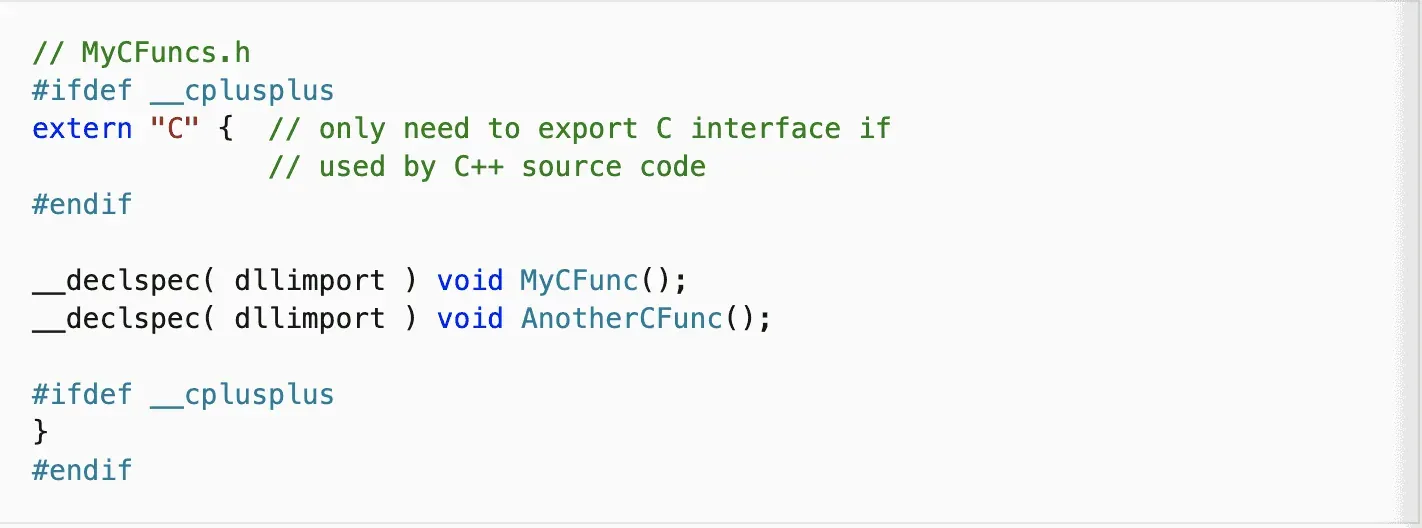
While you can export C functions for use in C, you can also export them to use in C++ language executables. In order to do this, you’ll want to use the _cplusplus preprocessor macro. That’ll automatically determine which language is being compiled, and then declare and link it.
When to Use C++ Header Guards
If you’ve been coding with C++ for any amount of time, you likely know not to include your headers twice from the same source file. However, the same header can be included more than once indirectly if one of your headers includes other headers. It’s incredibly easy to end up with multiple declarations since header content is put in from the place where it was included.
Top 10 Most Common C++ Mistakes That Developers Make
C++ developers of all skill levels and years of experience have some common pitfalls to be wary of. The more you can follow C++ best practices, the easier (and less expensive) your code will be to maintain. There’s a lot to learn in C++. Simply understanding the language syntax, or thinking that you have enough transferable knowledge from similar programming languages like JavaScript or C isn’t enough to write good, clean code in C++. We recommend avoiding these top 10 most common C++ mistakes that developers make. If you need expert assistance, you can hire C developers to help ensure your code is efficient and error-free.
#1 Not Following Consistent Naming Conventions
Let’s be honest. We’ve all been there. Whether it’s frustration at your past self, or when jumping onto someone else’s project, using inconsistent naming conventions can cause a lot of unnecessary work decoding what your code actually means. Keep your code clean by establishing proper naming conventions right at the start of your project. A Few C++ best practices for naming include:
- Use CamelCase for Types (MyClass)
- Functions and variables should start with lowercase (myMethod)
- Keep constants in all caps (const int PI=3.141592)
#2 Passing an Object By Value
Passing objects by value will impact your program’s performance. Many C++ developers take this shortcut to save on typing a few extra characters, or with the intent of returning later to fix it. And, if we’re honest with ourselves, the likelihood of actually going back to fix it is pretty slim.
#3 Using Name Hiding Incorrectly
Many developers wonder when to use C++ name hiding. It can be useful in some instances, but can also cause some challenging bugs, especially if you’re using name hiding for declarations. However, these mistakes can be avoided by using the right coding rules. For instance, deciding that identifiers of an inner scope won’t hide an outer scope identifier can help avoid bugs in your code.
#4 Type Conversions
C++ offers developers a lot of flexibility; this can be both a strength and a weakness. If misunderstood, it can lead to value-sensitive bugs when using type conversions. Take, for instance, the coding example below:

#5 Referencing a Deleted Resource
If you’re using a multithreaded application, you’ve likely encountered this issue more times than you care to admit. If you have more than one thread that uses the same connection ID, your program will end up with undefined behavior.