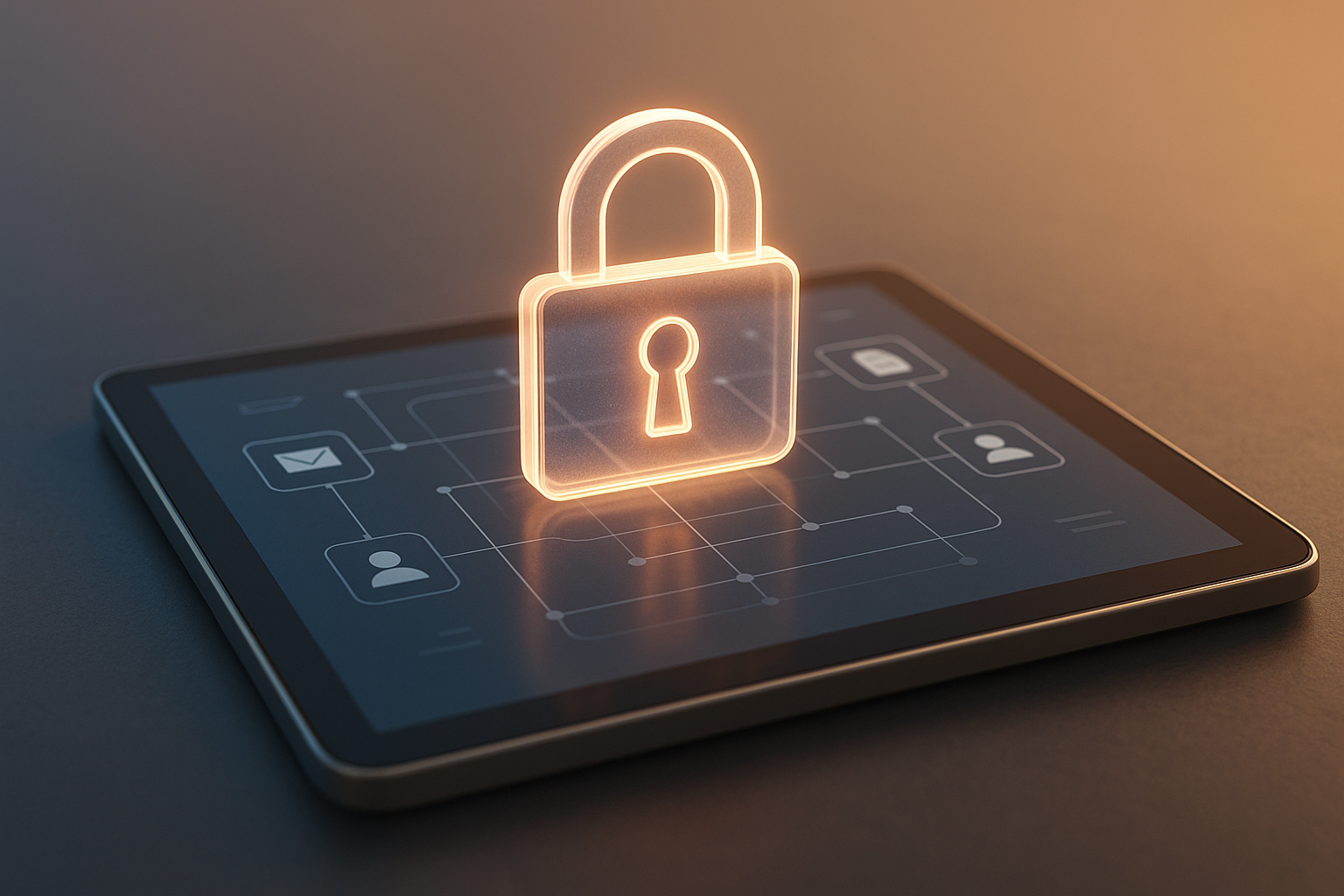
- What It Does: Encrypts data on the sender’s device and decrypts it only on the recipient’s device.
- How It Works: Uses public and private key cryptography to encrypt and decrypt data securely.
- Why It Matters: Protects business-critical data like financial reports, contracts, and confidential discussions.
- Benefits: Strong privacy, regulatory compliance, and protection against breaches.
- Challenges: Limited IT oversight, slower performance on older systems, and risks tied to key management.
What Is End-to-End Encryption (E2EE) And How Does It Work? | E2EE Explained
How End-to-End Encryption Works
To understand why end-to-end encryption (E2EE) is so effective at securing visual communication, it’s helpful to break down how the technology works. While the math behind it is complex, the basic principles are straightforward.Public and Private Key Cryptography
At the core of E2EE is asymmetric cryptography, often called public-key cryptography. This system relies on two keys for each user: a public key and a private key. Think of it as a secure mailbox system, your public key is like the mailbox where others can drop off encrypted messages, while your private key is the only thing that can unlock and read them. When you start using an E2EE-enabled tool, your device generates a unique key pair. Your public key is shared with others who want to send you encrypted data, like a video call or a screen recording. Meanwhile, your private key stays securely on your device and never leaves it. These keys are mathematically linked in a way that ensures data encrypted with your public key can only be decrypted by your private key. Even if someone intercepts your public key, they can’t use it to crack the messages intended for you. For example, if you’re using a platform like Zight to share screenshots, videos, or files, your recipient’s public key encrypts the data before it’s sent. This ensures that only their private key can decrypt and access the content.Encryption and Decryption Process
Once the keys are in place, the system secures your visual content through encryption. When you send something, a screen recording, image, or document – your device first compresses and packages the data for transmission. Then comes the encryption step. Using the recipient’s public key, the data is transformed into ciphertext, a scrambled format that’s unreadable without the matching private key. This encrypted content travels across the internet, passing through servers and networks. Here’s the key difference: during this journey, the data remains completely secure. Even if hackers intercept it or servers try to access it, they’ll only see meaningless ciphertext. Unlike older encryption methods where servers might temporarily decrypt data for processing, E2EE keeps everything locked. When the encrypted data arrives at the recipient’s device, their private key decrypts it back into its original form. This process happens seamlessly, users don’t see the cryptographic magic happening behind the scenes. The result? Your content stays confidential and intact.Digital Signatures and Hash Functions
E2EE doesn’t just protect your data’s privacy, it also ensures its authenticity and integrity using digital signatures and hash functions. These tools answer two key questions: “Is this data from the person I think it’s from?” and “Has the content been tampered with?” Digital signatures act like a seal of authenticity. When you send visual content, your device uses your private key to create a unique digital signature. This signature travels with the encrypted data. The recipient’s device can then verify the signature using your public key, confirming the data is genuinely from you and hasn’t been altered. Hash functions add another layer of security by creating a unique “fingerprint” for your data. Before encryption, your device generates a hash, a short string of characters that represents your file or message. Even the smallest change to the content would result in a completely different hash. When the recipient decrypts the data, their device regenerates the hash and compares it to the original. If the two don’t match, it’s a clear sign the data was tampered with during transit. These features are especially important for sensitive content. For instance, if you’re sharing a screen recording of financial data or a confidential presentation, digital signatures and hash functions ensure the recipient can trust both the source and the integrity of the information.How E2EE Secures Visual Communication Data
Let’s break down how end-to-end encryption (E2EE) keeps your visual content secure during transmission. This process involves three key stages that work together to safeguard your data.Key Generation and Exchange
Before visual content like screen recordings, screenshots, or video calls can be securely transmitted, a secure communication channel must be established. This happens through a process called key generation and exchange, which is initiated automatically when you connect with another user on an E2EE-enabled platform. Every session starts with your device creating a new pair of encryption keys. These keys are unique to each session and are regularly refreshed to maintain high security. During this initial handshake, cryptographic protocols ensure that the keys are shared securely with the intended recipient. Both devices verify each other’s identities and set up a secure channel in a matter of moments. This process ensures that private keys remain protected and are never exposed. For platforms like Zight, this entire key exchange happens behind the scenes, so you can focus on sharing your visual content without worrying about security.Data Encryption and Secure Transmission
Once the secure channel is established, your visual content is encrypted before it leaves your device. Encryption transforms your data into ciphertext, a scrambled, unreadable format, using advanced cryptographic algorithms and the recipient’s public key. As your encrypted data travels across the internet, through routers, servers, and data centers, it remains protected and indecipherable to anyone who might intercept it. This is particularly crucial for visual communication tools, where sensitive information like financial reports or confidential presentations might be shared. The encryption ensures that your data stays unreadable until it reaches the intended recipient.Decryption and Privacy Protection
When the encrypted data arrives at the recipient’s device, the final step is decryption. Using the recipient’s private key, the ciphertext is converted back into its original, readable form. This decryption happens locally on the recipient’s device, ensuring that the unencrypted data never exists elsewhere. Only the recipient’s private key can unlock the data, making unauthorized access impossible. Additionally, many E2EE systems use digital signatures and hash functions to verify the integrity and authenticity of the data. These tools confirm that the content hasn’t been tampered with and that it came from the expected sender.Benefits and Drawbacks of E2EE in Visual Tools
Encryption plays a crucial role in securing data transmission, but how does it impact the use of visual tools? Understanding the advantages and challenges of end-to-end encryption (E2EE) can help you decide if it’s the right choice for your visual workflows.Key Benefits of E2EE
E2EE offers several practical advantages that enhance security and privacy in visual communication tools:- Stronger Privacy Protections: Whether it’s screen recordings, video calls, or shared visuals, E2EE ensures that only the intended recipient can decrypt the content, keeping it safe from prying eyes.
- Compliance with Regulations: By securing sensitive visual data, E2EE helps organizations meet privacy standards like HIPAA, GDPR, and SOX.
- Defense Against Data Breaches: Even if a breach occurs, encrypted data remains unreadable, adding an extra layer of protection.
- Boosts Trust and Credibility: Protecting visual content with E2EE demonstrates a commitment to security, which can strengthen relationships with clients and partners.

Drawbacks and Operational Challenges
While E2EE offers robust security, it does come with some trade-offs that may affect usability and operations:- Limited Administrative Oversight: IT teams face challenges in monitoring or auditing encrypted communications, making compliance and quality assurance more difficult.
- Feature Limitations: Some advanced functionalities, like real-time transcription or cloud-based analysis, might not be compatible with encrypted content.
- Performance Issues: Encryption can slow down video streaming or file uploads, particularly on older devices or slower networks.
- Key Management Risks: Losing private keys can result in permanent data loss, creating significant recovery challenges.
- Authentication Hurdles: Verifying the identities of participants in encrypted sessions can be more complicated.
Comparison Table: Benefits vs. Drawbacks
Here’s a quick look at how the advantages and challenges of E2EE stack up:| Benefits | Drawbacks |
|---|---|
| Complete privacy – Content stays secure, even during server breaches | Limited IT control – Makes compliance monitoring difficult |
| Regulatory compliance – Supports HIPAA, GDPR, and similar standards | Feature restrictions – Some tools like transcription may not work |
| Protection against breaches – Data remains safe even if intercepted | Performance issues – Slower uploads and streaming on older systems |
| Improved credibility – Builds client trust through strong security | Key management risks – Lost keys can result in permanent data loss |
| Zero-knowledge encryption – Providers cannot access your data | Authentication challenges – Harder to verify participant identities |
Enterprise Security Standards and Best Practices for E2EE
In today’s business world, safeguarding sensitive visual communications is non-negotiable. Enterprises not only need to protect their data but also comply with stringent regulations. End-to-end encryption (E2EE) plays a key role in maintaining privacy, meeting compliance standards, and ensuring data integrity. However, its success hinges on careful and precise implementation.Compliance with Security and Privacy Regulations
For businesses, compliance goes beyond simply ticking regulatory boxes, it’s also about earning and maintaining customer trust. E2EE helps organizations achieve this by shielding data from unauthorized access. To meet these high security standards, companies must adopt specific practices tailored to their needs.Best Practices for Implementing E2EE
Rolling out E2EE effectively requires addressing several crucial factors. A well-thought-out strategy is the backbone of successful implementation. Here are some key practices to prioritize:- User Authentication and Device Security: Implement strong multi-factor authentication (MFA) and ensure device security protocols are regularly updated. This helps verify user identities and minimizes vulnerabilities.
- Key Management: Securely manage encryption keys through proper generation, distribution, rotation, and revocation procedures. Effective key handling is the cornerstone of reliable encryption.
- Network Security: Build E2EE into a secure network framework by using techniques like network segmentation and continuous monitoring to detect and address potential threats.
- User Awareness: Educate users on safe practices for handling encrypted communications. Regular training can help them recognize and respond to potential risks.
- Incident Response: Prepare for the unexpected with a well-defined incident response plan. This should cover scenarios like lost or compromised encryption keys and other security breaches.
Conclusion: How E2EE Improves Visual Communication Security
End-to-end encryption (E2EE) transforms the security landscape for sensitive visual communications by ensuring that data remains accessible only to the sender and the intended recipient. Unlike older encryption methods that leave data vulnerable at various points, E2EE offers a higher level of protection for screen recordings, video calls, and file transfers as they travel through networks. This encryption method not only blocks unauthorized access but also builds confidence among clients and stakeholders in industries where confidentiality is critical, such as healthcare, finance, and legal services. Real-world examples underscore E2EE’s effectiveness. Platforms like Signal, with an estimated 70 million users, and RingCentral, which employs dynamic E2EE for business meetings, show that strong security can go hand in hand with ease of use. The rising adoption of E2EE reflects growing awareness of privacy risks and the need to comply with stricter regulations. Security professionals consistently recommend E2EE as a standard for safeguarding sensitive communications, especially in remote and hybrid work settings where visual collaboration plays a crucial role. For organizations exploring visual communication tools, selecting platforms like Zight, which emphasize security and compliance, ensures that confidential business data stays protected while enabling smooth collaboration. Using E2EE-enabled tools not only strengthens trust but also aligns with regulatory requirements and defends against potential breaches. As visual communication continues to advance, E2EE remains a critical pillar of digital privacy, enabling secure and seamless collaboration without compromise. This is the role end-to-end encryption plays in reshaping secure communication in the digital age.FAQs
How does end-to-end encryption in visual tools help meet privacy regulations like GDPR and HIPAA?
End-to-end encryption (E2EE) is a method of securing data so that it’s encrypted at the source and can only be decrypted by the intended recipient. This ensures that sensitive information, such as personal data or Protected Health Information (PHI), remains safe from unauthorized access during transmission. When it comes to HIPAA compliance, encryption protocols like AES-128 or higher are used to protect PHI both while it’s stored and when it’s being transmitted. Similarly, the GDPR encourages encryption as a key practice to protect personal data and minimize the risk of breaches. By implementing E2EE, visual tools can help organizations uphold these regulations, ensuring data privacy and meeting legal obligations.
What are the risks of managing encryption keys in end-to-end encryption, and how can they be avoided?
Managing encryption keys in end-to-end encryption carries its own set of challenges. Issues like using weak keys, storing them improperly, reusing keys, neglecting to rotate or destroy them, and having lax access controls can all lead to sensitive data being exposed or decrypted by unauthorized parties. To mitigate these risks, it’s crucial to adopt secure key generation techniques, store keys in safe environments like hardware security modules (HSMs), and enforce regular key rotation. Tight access controls are equally important to restrict who can handle these keys. Additionally, managing the entire key lifecycle – right from creation to destruction – while adhering to established security standards ensures that keys remain secure at every stage. By implementing these measures, you can greatly minimize vulnerabilities tied to encryption keys.
How does end-to-end encryption affect the performance of visual tools, and how can it be optimized on older devices?
End-to-end encryption, while essential for securing data, can sometimes strain the performance of visual tools. This is particularly noticeable on older devices, as the process of encrypting and decrypting data demands considerable CPU power. The result? Slower speeds and increased latency. To keep things running smoothly, one approach is to use hardware-accelerated encryption algorithms like AES-128. These algorithms are designed for efficiency, ensuring they perform well on both newer and older systems. Additionally, tweaking encryption processes to reduce bottlenecks and relying on software-optimized techniques can help maintain speed and responsiveness, even on devices with limited processing power.