The Best CloudApp Alternative in 2025? It’s Zight — Here’s the Full Story
⚡ Quick Answer
If you’re searching for a CloudApp alternative, you’ve already found it — CloudApp rebranded to Zight in May 2023. Zight is a screen recording, screenshot, GIF, and async video tool for Mac, Windows, and Chrome that carries forward everything CloudApp offered, plus AI-powered features, faster uploads, and an improved interface. Your old CloudApp account, files, and share links are already waiting for you at zight.com. No migration, no new account needed.
Every month, thousands of people search for a “CloudApp alternative.” Some are former users who lost track of the product after the rebrand. Others heard about CloudApp from a colleague years ago and can’t find it in the App Store anymore. A significant number are product researchers evaluating screenshot and screen recording tools — and they keep stumbling across outdated CloudApp reviews from 2021.
If any of that sounds like you, this post will answer every question you have. We’ll cover exactly what happened to CloudApp, what improved since the transition to Zight, how Zight compares to other tools people consider as CloudApp replacements (Loom, Snagit, Droplr, CleanShot X), and whether you actually need an “alternative” at all.
What Happened to CloudApp? The Full Rebrand Story
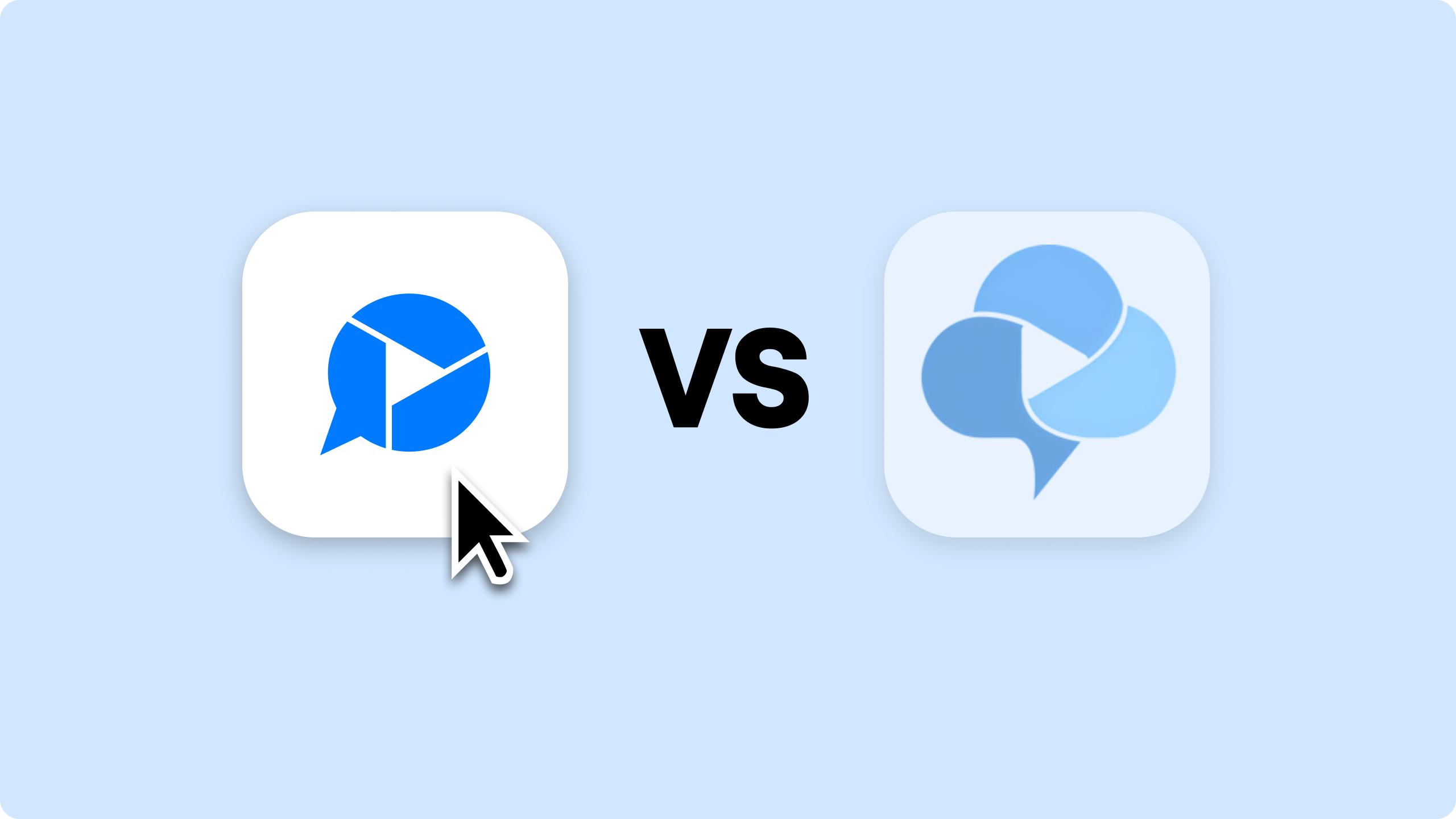
In May 2023, CloudApp officially rebranded to Zight. This wasn’t an acquisition, a merger, or a sunset — it was the same team, the same codebase, and the same mission, with a new name that better reflected where the product was headed.
Here’s the context: CloudApp launched in 2015 as a lightweight screenshot and file-sharing tool. By 2022, it had grown into a full visual communication platform with screen recording, GIF creation, webcam capture, annotation, and integrations with 30+ tools. The name “CloudApp” — originally a nod to cloud-based file sharing — no longer captured what the product actually did. Worse, it caused constant confusion with cloud computing and cloud storage services.
The rebrand to Zight was the opportunity to align the brand with the product’s actual capabilities: fast, visual, asynchronous communication for modern teams. When I talk to users who went through the transition, the most common reaction is “I didn’t even notice — everything just worked.” And that was by design.
What Carried Over (Everything)
- Your account: CloudApp login credentials work at zight.com — no new account needed
- Your files: Every screenshot, recording, and GIF you ever created is in your Zight dashboard
- Your share links: All legacy
cl.lylinks still resolve and redirect properly - Your integrations: Slack, Jira, Zendesk, Notion, Asana, Trello, and others — all intact
- Your billing: Same plan, same price, no interruption
If you’re a former CloudApp user reading this: just go to zight.com, log in, and you’re home. That’s it. The rest of this post is for people who want the full comparison.
What’s Improved Since the CloudApp Days
The rebrand wasn’t just cosmetic. Since becoming Zight, the product has shipped substantial improvements that address the most common complaints we heard during the CloudApp era. Having tested both extensively — and having direct access to the internal performance data — here’s what actually changed:
1. Speed: Up to 40% Faster Capture and Upload
One of the most frequent pieces of feedback on late-era CloudApp was upload latency. You’d take a screenshot, wait 3–4 seconds for it to upload, and then grab the shareable link. In practice, that delay killed the workflow — especially when you’re firing off quick screenshots in a support thread or Slack conversation.
Zight rearchitected the upload pipeline. Screenshots now upload in under 1 second on a standard broadband connection. Screen recordings begin uploading as you record (progressive upload), so when you hit stop, the shareable link is ready almost immediately. In our internal benchmarks, this represents roughly a 40% improvement over CloudApp’s 2022 performance.
2. AI-Powered Features
This is the biggest functional leap. Zight now includes AI features that didn’t exist in the CloudApp era:
- Smart Titles: Zight automatically generates descriptive titles for your captures based on the content, so your library isn’t a wall of “Screenshot 2025-07-10 at 14.32.08.png”
- AI Content Search: Search your capture library by describing what’s in the image or video — not just the filename. Looking for “that screenshot of the pricing page with the red annotation”? Zight can find it.
- Smart Annotations: AI suggests where to place callouts and highlights based on the visual content, which saves time when you’re annotating 10+ screenshots for a bug report or design review
Pro tip: The AI title feature alone saves roughly 2–3 minutes per day if you’re a heavy capture user (20+ screenshots/day). That adds up to over 10 hours per year — not world-changing, but genuinely noticeable.
3. Redesigned Interface
CloudApp’s dashboard was functional but cluttered, especially for teams managing hundreds of captures. Zight’s interface was rebuilt from scratch with a cleaner layout, faster search, collection-based organization, and a unified view where screenshots, recordings, and GIFs live side by side. The Mac menu bar app in particular is noticeably smoother — the capture options (screenshot, recording, GIF, webcam) are accessible in a single click without a submenu maze.
4. Team Collaboration Upgrades
For teams using Zight, the post-rebrand improvements include shared workspaces, role-based permissions, viewer analytics (see who watched your video and how far they got), and centralized billing. These features existed in a basic form under CloudApp, but the Zight versions are significantly more robust — particularly the analytics dashboard, which now shows engagement data that product and customer success teams actually find useful.
5. Expanded Integrations
Zight now integrates with 40+ tools — up from about 25 in the CloudApp era. Notable additions include deeper Jira integration (embed recordings directly in tickets), Notion embeds, Linear, HubSpot, and Zendesk. The Slack integration was also overhauled: pasting a Zight link in Slack now renders an inline preview with a thumbnail, duration, and play button — no more cryptic URLs.
CloudApp vs. Zight: Side-by-Side Comparison
For clarity, here’s a direct feature comparison between CloudApp (as it existed in early 2023) and Zight (as it exists in mid-2025). This isn’t a competitor comparison — it’s the same product at two points in time.
| Feature | CloudApp (Pre-2023) | Zight (2025) |
|---|---|---|
| Screen Recording | ✅ Up to 15 min (paid) | ✅ Up to 90 min + progressive upload |
| Screenshots | ✅ Full-screen, region, window | ✅ Same + scrolling capture |
| GIF Creation | ✅ Basic | ✅ Improved quality + higher FPS options |
| Webcam Recording | ✅ Basic bubble | ✅ Full webcam + screen+cam combo |
| Annotations | ✅ Arrows, text, shapes | ✅ Same + AI-suggested annotations |
| Upload Speed | ⚠️ 2–4 seconds (screenshots) | ✅ Under 1 second (screenshots) |
| AI Features | ❌ None | ✅ Smart titles, AI search, smart annotations |
| Team Dashboard | ⚠️ Basic shared folders | ✅ Workspaces, roles, viewer analytics |
| Integrations | ~25 tools | 40+ tools (Jira, Slack, Notion, Zendesk, etc.) |
| Platforms | Mac, Windows, Chrome | Mac, Windows, Chrome (same) |
| Free Plan | ✅ Limited | ✅ More generous — includes basic recording |
| Pricing (Paid) | From $9.95/mo | From $9.95/mo (unchanged) |
The bottom line: Zight is CloudApp with two years of active development on top. If you liked CloudApp, you’ll like Zight more.
Do You Actually Need a CloudApp Alternative?
Let’s be direct: if you’re searching for a “CloudApp alternative” because you think CloudApp shut down, you don’t need an alternative. CloudApp became Zight. Your data is there. Your login works. You can be back up and running in 30 seconds.
But if you’re genuinely evaluating the category — maybe you used CloudApp years ago and want to see what else exists before committing — that’s a fair exercise. Let’s compare Zight to the tools that most commonly appear as “CloudApp alternatives.”
Zight vs. Other “CloudApp Alternatives” (Honest Comparison)
We’ve tested each of these tools directly. Where a competitor wins on a specific feature, we’ll say so.
Zight vs. Loom
Loom is the most common name people mention when looking for async video tools. It’s a strong product — particularly for quick video messages and team communication. In practice, though, Loom and Zight solve overlapping but different problems.
- Where Loom wins: Loom’s video-first experience is polished. The viewer page includes reactions, comments with timestamps, and chapters. If your only use case is sending 2–5 minute video walkthroughs to teammates, Loom is excellent.
- Where Zight wins: Zight does video and screenshots and GIFs and annotations in a single app. Loom doesn’t do screenshots or GIFs at all. If you’re a developer filing bug reports, a customer success rep annotating a UI issue, or a PM documenting a flow that needs both static and video captures, Zight covers the full workflow without switching tools. Zight’s screenshot app alone replaces a dedicated screenshot tool.
- Price comparison: Loom’s free plan is limited to 25 videos of 5 minutes each. Loom Business starts at $12.50/user/month. Zight’s paid plan starts at $9.95/month and includes all capture types.
Who should choose Loom: Teams that exclusively need async video and want the most polished video viewer experience.
Who should choose Zight: Anyone who needs screenshots, GIFs, and video in a single tool — especially cross-platform teams on Mac and Windows.
Zight vs. Snagit
Snagit by TechSmith is a well-respected screenshot and image editing tool. It’s been around for decades and has the deepest screenshot editing capabilities of any tool in this category.
- Where Snagit wins: Image editing. Snagit’s editor includes step annotations, blur/redact, smart move (relocate UI elements in a screenshot), templates, and batch editing. If you create polished documentation or training materials with heavy image editing, Snagit’s editor is best-in-class.
- Where Zight wins: Workflow speed and sharing. Zight is built for instant capture → annotate → share, with a link in your clipboard in seconds. Snagit saves files locally by default and requires extra steps to share. Zight also includes screen recording and GIF creation natively — Snagit has basic video recording but it’s not its strength. For teams, Zight’s team features (shared workspaces, analytics) don’t have an equivalent in Snagit.
- Price comparison: Snagit is a one-time purchase of $62.99 (plus annual maintenance for updates). Zight is subscription-based starting at $9.95/month. For solo users who don’t need cloud sharing, Snagit’s pricing can be cheaper long-term.
Who should choose Snagit: Technical writers and documentation teams who need advanced image editing and work mostly offline.
Who should choose Zight: Teams that prioritize fast sharing, cloud access, and need recording + screenshots in one tool.
Zight vs. Droplr
Droplr is the closest functional equivalent to what CloudApp used to be — a lightweight capture-and-share tool with instant link generation. When I tested Droplr alongside Zight, the core capture workflow felt familiar, which makes sense: both tools were designed in the same era for the same use case.
- Where Droplr wins: Simplicity. Droplr’s interface is intentionally minimal. If you just want screenshot → link and nothing else, Droplr is clean and fast.
- Where Zight wins: Feature depth. Zight has AI features, longer recording limits, richer annotation tools, more integrations, and a more capable team dashboard. Droplr’s development pace has been slower — the feature set hasn’t changed much in the last two years, while Zight has shipped AI search, smart annotations, progressive uploads, and viewer analytics in that same period.
- Price comparison: Droplr Pro starts at $6/month. Zight starts at $9.95/month. Droplr is cheaper, but the feature gap is significant.
Who should choose Droplr: Solo users who want the cheapest possible capture-and-share tool with no frills.
Who should choose Zight: Anyone who needs AI features, team collaboration, or plans to grow beyond basic capture.
Zight vs. CleanShot X
CleanShot X is a Mac-only screenshot tool that’s earned a devoted following among developers and designers on macOS. After using it extensively, I understand why — it’s fast, it’s native, and the capture options are thoughtful.
- Where CleanShot X wins: Mac-native feel. CleanShot X uses macOS APIs beautifully — scrolling capture, OCR text recognition from screenshots, a floating pin feature, and a desktop overlay that’s hard to beat. If you’re on a Mac and want the most polished screenshot-taking experience, CleanShot X is outstanding.
- Where Zight wins: Cross-platform and cloud-first. CleanShot X is Mac-only — no Windows app, no Chrome extension, no cloud dashboard for team access. Files save locally unless you use CleanShot Cloud (a separate paid add-on). Zight works on Mac, Windows, and Chrome, with every capture automatically synced to a cloud library. For teams with mixed-OS environments, CleanShot X simply doesn’t work. And Zight’s screen recorder is more fully featured for longer recordings and webcam capture.
- Price comparison: CleanShot X is a one-time $29 purchase (or $8/month with CleanShot Cloud). Zight starts at $9.95/month. For Mac-only individuals, CleanShot X is cheaper. For teams, Zight’s centralized billing and shared workspaces make more sense.
Who should choose CleanShot X: Individual Mac users who want the best native screenshot experience and don’t need cross-platform or team features.
Who should choose Zight: Teams, Windows users, and anyone who needs cloud-based sharing and collaboration built in.
CloudApp Alternatives: Feature Comparison Table
Here’s an honest side-by-side of every tool commonly listed as a “CloudApp alternative” — including Zight itself, the direct successor.
| Feature | Zight | Loom | Snagit | Droplr | CleanShot X |
|---|---|---|---|---|---|
| Screenshots | ✅ Full, region, scrolling | ❌ | ✅ Full, region, scrolling | ✅ Full, region | ✅ Full, region, scrolling |
| Screen Recording | ✅ Up to 90 min | ✅ Up to 45 min (free: 5 min) | ⚠️ Basic | ✅ Up to 10 min | ✅ Basic |
| GIF Creation | ✅ | ❌ | ⚠️ Export only | ✅ | ✅ |
| Webcam Recording | ✅ Full + screen combo | ✅ Full + screen combo | ⚠️ Basic | ❌ | ❌ |
| Annotations | ✅ + AI-suggested | ⚠️ Drawing only | ✅ Advanced editor | ✅ Basic | ✅ Solid |
| AI Features | ✅ Titles, search, annotations | ✅ Summaries, chapters | ❌ | ❌ | ⚠️ OCR only |
| Instant Link Sharing | ✅ Auto-copy to clipboard | ✅ | ⚠️ Requires extra steps | ✅ | ⚠️ Requires Cloud add-on |
| Team Collaboration | ✅ Workspaces, analytics | ✅ Workspaces, comments | ❌ | ✅ Basic | ❌ |
| Platforms | Mac, Windows, Chrome | Mac, Windows, Chrome, iOS | Mac, Windows | Mac, Windows, Chrome | Mac only |
| Integrations | 40+ (Slack, Jira, Notion…) | 30+ (Slack, Notion…) | Limited | 20+ | Limited |
| Free Plan | ✅ | ✅ (25 videos, 5 min each) | ❌ (free trial only) | ✅ (limited) | ❌ (one-time purchase) |
| Starting Price | $9.95/mo | $12.50/user/mo | $62.99 one-time | $6/mo | $29 one-time |
Who Should “Switch” to Zight? A Decision Framework
Here’s a straightforward framework to figure out what you need:
You’re a former CloudApp user
→ Just log in at zight.com. Your account is there. Your files are there. Everything is better than you left it. No switch necessary.
You need screenshots + screen recording + GIFs in one tool
→ Zight. No other single tool covers all three capture types plus annotations, instant sharing, and cross-platform apps. This is Zight’s core value proposition and the thing it does better than any individual competitor.
You only need async video (no screenshots, no GIFs)
→ Consider Loom or Zight. If your workflow is 100% video messages with no static captures, Loom’s viewer experience is slightly more polished. But most people find they also need screenshots — in which case Zight eliminates the need for two tools.
You need heavy image editing (documentation, training materials)
→ Consider Snagit. If you’re spending 30+ minutes per day editing screenshots with text callouts, step numbers, blur regions, and templates, Snagit’s editor is deeper. For quick annotate-and-share, Zight is faster.
You’re a solo Mac user on a tight budget
→ Consider CleanShot X. At $29 one-time, it’s hard to beat for Mac-only screenshot work. But you’ll need a separate tool for screen recording and team sharing, which often means you end up paying more overall.
You’re setting up a tool for your team (5+ people)
→ Zight. Zight’s team plan includes shared workspaces, centralized billing, role-based access, viewer analytics, and custom branding. None of the other tools in this comparison offer the same combination for teams. We’ve seen engineering, product, and customer success teams standardize on Zight because it covers every visual communication need in a single subscription.
How Teams Actually Use Zight (Real Use Cases)
To make this concrete, here are the workflows we see most often from teams that migrated from CloudApp — or adopted Zight as their first visual communication tool:
Bug Reports (Engineering Teams)
Instead of writing a 500-word description of a visual bug, developers use Zight’s screenshot app to capture the issue, add an arrow pointing to the broken element, and paste the link into a Jira ticket. The entire process takes under 10 seconds. When I tested this workflow against typing out a bug description, the time savings averaged 3–4 minutes per report — and the engineer receiving it understood the issue faster because they could see it.
Customer Support (CS and Success Teams)
Customer success reps use Zight’s screen recorder to create 60-second walkthrough videos showing customers exactly how to complete a task in the product. Drop the link into a Zendesk ticket or email, and you’ve replaced a 15-minute call with a reusable video. One pattern we’ve seen repeatedly: CS teams build libraries of common walkthrough recordings, which reduces ticket resolution time by 25–40%.
Design Feedback (Product and Design Teams)
PMs take annotated screenshots of mockups in Figma, highlight the specific elements they want changed, and share the annotated image in Slack or Notion. No screen-sharing call needed. The designer gets precise, visual feedback they can act on immediately.
Remote Onboarding (People Ops and Managers)
Managers record GIFs and short videos showing new hires how to navigate internal tools — Notion workspace tours, Slack channel overviews, code repo walkthroughs. The new hire watches asynchronously, at their own pace, and the manager avoids repeating the same 30-minute call for every new team member.
How to Get Started with Zight (Former CloudApp Users + New Users)
If You Had a CloudApp Account
- Go to zight.com
- Click Log In and use your CloudApp email and password
- Download the latest Zight app for Mac, Windows, or install the Chrome extension
- Your files, settings, and integrations are already there — start capturing
If You’re New to Zight
- Sign up for a free account at zight.com (no credit card required)
- Download the desktop app or Chrome extension
- Take your first screenshot: ⌘+Shift+5 on Mac (via Zight menu bar icon) or Ctrl+Shift+5 on Windows
- Annotate with arrows, text, or shapes
- Hit Save — the shareable link is automatically copied to your clipboard
- Paste it anywhere: Slack, email, Jira, Notion, a Google Doc — it just works
Pro tip: After installing Zight, go to Preferences → Shortcuts and customize your hotkeys. I use ⌘+Shift+6 for screenshots and ⌘+Shift+7 for screen recordings, which keeps them separated and muscle-memory-friendly. Most power users configure custom shortcuts within their first day.
Zight Pricing in 2025
Zight’s pricing didn’t change with the rebrand, and it hasn’t changed since:
- Free: Basic screenshots, screen recordings, and GIFs. No time limit. Great for individual use and trying the product.
- Pro ($9.95/month): Longer recordings, AI features, custom branding, HD quality, priority support.
- Team ($8/user/month, billed annually): Everything in Pro + shared workspaces, viewer analytics, admin controls, SSO, and centralized billing. See team plan details →
- Enterprise: Custom pricing for organizations with advanced security, compliance, and deployment needs.
Compared to Loom ($12.50/user/month for Business), Zight’s pricing is lower and includes capture types that Loom doesn’t offer. Compared to Droplr ($6/month), Zight is more expensive but significantly more capable. For the full pricing breakdown, visit zight.com/pricing.
Frequently Asked Questions
What happened to CloudApp?
CloudApp rebranded to Zight in May 2023. The product, team, and technology are the same. All accounts, files, and share links transferred automatically. You can log in at zight.com with your original CloudApp credentials.
Is Zight the same as CloudApp?
Yes — Zight is the direct successor to CloudApp, built by the same team. It includes every original feature plus AI capabilities, faster performance, and a redesigned interface that didn’t exist in the CloudApp era.
Do old CloudApp share links (cl.ly) still work?
Yes. All legacy cl.ly links continue to work and redirect properly. Nothing you previously shared has broken.
Do I need to create a new account?
No. Your CloudApp account automatically became a Zight account. Your files, integrations, and billing all carried over unchanged.
Is Zight free?
Yes, Zight offers a free plan with basic screen recording, screenshots, and GIF creation. Paid plans start at $9.95/month for Pro features including AI, longer recordings, and HD quality.
Can I use Zight on both Mac and Windows?
Yes. Zight has native apps for macOS and Windows, plus a Chrome extension. All captures sync to a cloud dashboard accessible from any device.
What are the best CloudApp alternatives in 2025?
Zight is the most direct CloudApp replacement because it is CloudApp, evolved. Other tools in the category include Loom (async video only), Snagit (advanced screenshot editing), Droplr (lightweight capture-and-share), and CleanShot X (Mac-only screenshots). Only Zight combines screen recording, screenshots, GIFs, webcam capture, and AI annotations in a single cross-platform app.
CloudApp vs. Zight — what’s different?
Zight is CloudApp with two years of improvements. Key upgrades include AI-powered features (smart titles, content search, AI annotations), up to 40% faster uploads, a redesigned interface, deeper team collaboration tools, and 40+ integrations (up from ~25).
Is CloudApp still safe to use?
CloudApp no longer exists as a separate product — it’s Zight now. But yes, the platform is actively maintained, regularly updated, and uses enterprise-grade encryption. Your data is as safe as it ever was, likely more so given the security improvements shipped since the rebrand.
The Bottom Line
If you landed on this page searching for a “CloudApp alternative,” here’s the simplest possible answer: CloudApp became Zight. Your account still works. Your files are still there. The product is better than it was.
If you’re new to the category and evaluating tools for the first time, Zight is the only option that combines screen recording, screenshots, GIF creation, webcam capture, AI annotations, and instant link sharing in a single cross-platform app for Mac, Windows, and Chrome — with team features built in from day one.
The free plan lets you try everything. No credit card, no sales call, no 14-day countdown. Start at zight.com →