Async Communication for Healthcare Teams: How to Eliminate Meeting Overload and Streamline Operations
Healthcare teams are drowning in meetings, message threads, and redundant calls — and most of it has nothing to do with patient care. Async communication for healthcare teams is quickly emerging as the most effective way to reclaim lost hours, reduce miscommunication, and keep distributed staff aligned without pulling everyone into a room at the same time. Whether your organization manages a single facility or coordinates across multiple sites, the cost of synchronous overload is staggering: delayed IT resolutions, inconsistent onboarding, misaligned departments, and staff burnout that compounds every quarter.
The reality is that most internal communication in healthcare — from IT troubleshooting walkthroughs to compliance training updates to operational announcements — does not need to happen in real time. It needs to happen clearly, securely, and on a schedule that respects the demanding workflows healthcare professionals already navigate. That is exactly where asynchronous communication healthcare tools, particularly async video and screen recording, change the game entirely.
In this guide, we will break down why synchronous communication is failing healthcare operations teams, how async video solves coordination problems across IT, training, and administration, and the practical use cases that make HIPAA-compliant video tools for healthcare a strategic investment rather than just another piece of software.
Why Async Communication Matters for Healthcare Teams
Healthcare is one of the most operationally complex industries in the world. Staff work in shifts. Departments operate on different schedules. IT teams support infrastructure across multiple locations. Training coordinators onboard new hires while simultaneously rolling out updated procedures to existing staff. And nearly all of this coordination still relies on synchronous communication: live meetings, phone calls, and real-time chat threads that demand immediate attention.
The problem is not that these teams lack communication tools. The problem is that the tools they use force everyone into the same moment, which is the one resource healthcare teams have the least of: uninterrupted time.
Consider the math. A 30-minute meeting with eight people is not a 30-minute cost — it is a four-hour cost to the organization. Multiply that across the weekly cadence of standups, training sessions, IT reviews, cross-departmental syncs, and ad hoc calls, and you are looking at hundreds of hours per month lost to meetings that could have been a two-minute video message.
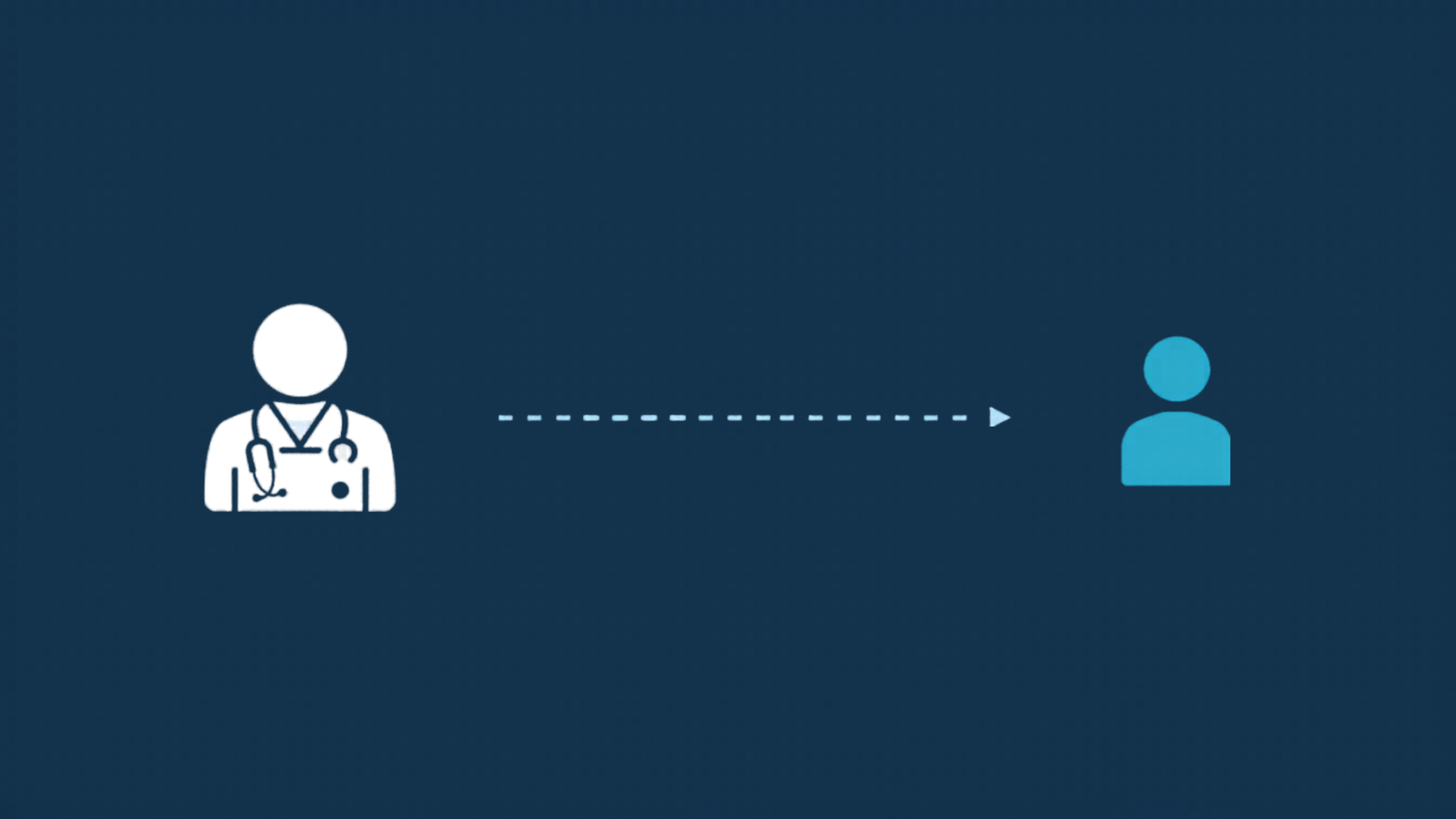
Asynchronous communication healthcare workflows fix this by decoupling the creation of a message from its consumption. The person sharing information records it once. Everyone who needs that information watches it when their schedule allows. No calendar juggling. No waiting for the next available slot. No repeating the same explanation five times to five different people.
For healthcare organizations specifically, async communication also addresses a structural challenge that most industries do not face: shift-based work. When your IT team operates during business hours but the nursing staff they support works nights and weekends, synchronous communication is not just inefficient — it is fundamentally incompatible with how work actually gets done. Video messaging for healthcare staff bridges this gap by allowing information to travel across shifts without losing fidelity or context.
Common Challenges With Synchronous Communication in Healthcare
Before we explore the solution, it is worth cataloging the specific pain points that make synchronous communication so costly in healthcare environments. These are not hypothetical — they are the daily realities reported by IT directors, training managers, and operations leaders across health systems of every size.
Back-and-Forth Communication That Never Resolves
A staff member submits a help desk ticket describing a software issue. IT responds asking for a screenshot. The staff member sends one, but it does not capture the actual error. IT asks for more details. The staff member tries to describe the sequence of clicks that triggered the problem — in a text message. Three days and twelve messages later, the issue still is not resolved, and both parties are frustrated.
This pattern repeats across every department. Compliance teams ask for clarification on submitted forms. Training coordinators try to explain new software workflows over email. Operations managers send policy updates that generate more questions than answers. The fundamental issue is that text-based, synchronous back-and-forth strips away the visual and contextual information that would resolve the issue in a single exchange.
Misalignment Across Sites and Departments
Multi-site healthcare organizations face a coordination problem that compounds with every additional location. When a new EHR workflow is introduced, the team at the main campus gets a live walkthrough from the IT department. The satellite clinic gets a forwarded PDF. The remote administrative staff gets nothing until someone remembers to loop them in two weeks later.
This inconsistency is not caused by negligence — it is caused by the limitations of synchronous communication. You cannot run the same live training session for every shift, at every site, on every schedule. The result is a patchwork of understanding where some teams execute the new workflow correctly, some adapt their own version, and some never adopt it at all. The operational cost of this misalignment — in errors, rework, and support tickets — is enormous.
Repetitive Explanations and Re-Training
Every healthcare IT director knows the experience: explaining the same VPN setup process to the fifteenth new hire this quarter. Every training coordinator knows it too: walking through the same compliance module update with every department individually because there is no scalable way to deliver the information once and have it stick.
Repetitive explanation is one of the most insidious productivity drains in healthcare operations because it does not show up on any report. Nobody tracks the cumulative hours spent re-explaining things that could have been recorded once. But those hours are real, and they pull your most knowledgeable people away from higher-value work every single day.
How Async Video Solves Communication Problems for Healthcare Teams
Async video — specifically screen recording and video messaging — is the efficiency unlock that healthcare operations teams have been waiting for. It combines the clarity of a live demonstration with the scalability of written documentation, and it does so in a format that respects the time constraints of every person involved.
Here is why it works so well in healthcare environments:
It captures context that text cannot. A two-minute screen recording showing exactly where an error occurs, what the screen looks like, and what steps led to the problem conveys more useful information than a paragraph of written description. This is true whether you are reporting a software bug, demonstrating a workflow, or explaining a policy change. Visual context eliminates ambiguity, which eliminates back-and-forth.
It scales without multiplying effort. When you record a training walkthrough once, it can be watched by ten people or ten thousand people without any additional time investment from the creator. New hires six months from now get the same quality explanation as the first cohort. Staff at every site and on every shift have equal access to the same information. One recording replaces dozens of live sessions.
It respects shift-based schedules. Async video does not require the sender and receiver to be available at the same time. An IT specialist can record a troubleshooting walkthrough at 2 PM, and the night-shift staff member experiencing the issue can watch it at 11 PM. This is not a minor convenience — for healthcare organizations, it is a structural necessity that synchronous tools simply cannot accommodate.
It creates a searchable knowledge base over time. Every async video message or screen recording becomes an artifact that can be stored, organized, tagged, and retrieved. Over months, your team builds a library of institutional knowledge — onboarding walkthroughs, software tutorials, process documentation, troubleshooting guides — that reduces dependency on any single person and accelerates every future interaction.
It reduces meetings by replacing them. The goal is not to eliminate all meetings — some conversations genuinely require real-time interaction. The goal is to reduce meetings for healthcare teams by identifying which ones are actually just information transfers disguised as collaboration. Status updates, process explanations, software demos, and training modules can all be delivered asynchronously, freeing meeting time for the discussions that actually benefit from live interaction.
Zight is purpose-built for exactly these workflows. As a HIPAA-compliant async video and screen recording tool, Zight enables healthcare teams to communicate, train, and troubleshoot securely — without adding complexity to already-demanding schedules. Every recording is encrypted, access is controlled, and the platform supports the compliance requirements that healthcare organizations cannot compromise on.
Practical Use Cases: Async Communication for Healthcare Teams in Action
Theory is useful. Practical application is what gets buy-in. Here are three high-impact use cases where async video delivers measurable results for healthcare operations, IT, and training teams.
IT Troubleshooting and Support
Healthcare IT teams support some of the most complex software environments in any industry: EHR systems, scheduling platforms, billing software, telehealth infrastructure, security tools, and dozens of department-specific applications. When something breaks — or when a staff member simply cannot figure out how to complete a task — the traditional support workflow involves tickets, calls, screen-share sessions, and endless back-and-forth.
Async video transforms this workflow in both directions. Staff members can record their screen showing the exact issue — the error message, the sequence of actions, the unexpected behavior — and send it to IT without scheduling a call. The IT team can then record a walkthrough of the fix, narrating each step while showing their screen, and send it back. The entire exchange might take five minutes of total recording time instead of a 30-minute live session that required coordinating two calendars.
Better yet, if the same issue comes up again with a different staff member, the IT team already has the resolution recorded. They share the existing video instead of repeating the walkthrough. Over time, this builds a troubleshooting library that deflects tickets before they are even submitted.
With Zight for healthcare teams, every recording is HIPAA-compliant, so IT staff do not need to worry about accidentally capturing protected information during a screen recording. Access controls ensure that only authorized personnel can view the content, and recordings can be set to expire after a defined period if your compliance policies require it.
Staff Training and Onboarding
Onboarding in healthcare is notoriously time-intensive. New hires need to learn organizational policies, software systems, departmental workflows, compliance procedures, and site-specific protocols — often within their first few weeks. The traditional approach relies heavily on live training sessions, shadowing, and printed manuals, all of which are either resource-intensive, inconsistent, or both.
Async video changes the economics of training entirely. A training coordinator records a walkthrough of the scheduling system once, and every future new hire watches that same high-quality tutorial on their own time. A department manager records a video explaining team norms, communication expectations, and key contacts, and it becomes part of a standardized onboarding playlist. A compliance officer records the annual security awareness update, and every employee across every site completes it without a single live session being scheduled.
The benefits extend beyond efficiency. Async training videos can be paused, rewound, and rewatched — something that is impossible in a live session and invaluable for complex material. New hires who learn at different speeds are not penalized by the pace of a group session. And training coordinators can see who has watched each video and who has not, enabling follow-up that is targeted rather than blanket.
For organizations scaling onboarding across multiple sites, the consistency advantage alone justifies the investment. Every new hire, at every location, receives exactly the same training — no variation based on which trainer was available or which site they happened to join.
Internal Documentation and Process Communication
Healthcare organizations update processes constantly: new software versions, revised compliance requirements, updated scheduling procedures, changed billing codes, modified access protocols. Communicating these changes effectively across a large, distributed, shift-based workforce is one of the most persistent operational challenges in the industry.
Email announcements get buried. PDF attachments go unread. All-hands meetings are impossible to schedule when staff work around the clock. The result is that process changes are communicated unevenly, adopted inconsistently, and generate a wave of support requests from confused staff.
Async video solves this by making process communication visual, concise, and accessible on demand. Instead of writing a 500-word email explaining a new EHR workflow, an operations manager records a three-minute screen recording showing the exact steps. Instead of scheduling a meeting to walk through updated compliance documentation, the compliance team records a narrated overview and distributes the link. The information is clear, the delivery is consistent, and staff can access it whenever they transition onto shift.
This approach also creates a living documentation library. When the process changes again six months later, you record an updated video and archive the old one. Your documentation stays current without the maintenance burden of rewriting manuals or updating slide decks. Zight for teams makes this particularly straightforward, with shared workspaces where recordings can be organized by department, topic, or date for easy retrieval.
Best Practices for Async Communication in Healthcare Operations
Adopting async video is not just about buying a tool — it is about building habits and norms that make asynchronous workflows stick. Here are the operational best practices that healthcare teams should follow to maximize the impact of async communication.
1. Default to Async, Escalate to Sync
Establish a team norm: before scheduling a meeting or jumping on a call, ask whether the information could be delivered as a video message or screen recording. If it is a one-way information transfer — a demo, an update, an explanation, a tutorial — it almost certainly can. Reserve synchronous communication for genuine discussions that require real-time input from multiple people: brainstorming, decision-making with trade-offs, sensitive personnel conversations.
This single shift in default behavior can reduce meetings for healthcare teams by 30-50%, based on the simple reality that most meetings are information delivery, not collaborative discussion.
2. Keep Recordings Focused and Short
The most effective async videos are two to five minutes long and address a single topic. Resist the temptation to record a 20-minute walkthrough covering multiple workflows. Instead, break it into discrete videos — one per topic, one per process, one per issue. Short, focused recordings are easier to find, easier to watch, and easier to update when something changes.
Start each recording with a brief verbal summary of what it covers: “This video walks through how to reset your VPN credentials using the new self-service portal.” This gives the viewer immediate context and makes recordings more useful when browsing a library.
3. Organize Recordings Into Searchable Libraries
A single async video is useful. A library of organized, searchable videos is transformational. Create a folder structure that mirrors your organizational needs: by department, by software system, by process category. Tag recordings with consistent naming conventions. When a new hire joins the IT help desk, they should be able to find every troubleshooting walkthrough their predecessor recorded — without asking anyone where to look.
4. Use HIPAA-Compliant Tools Exclusively
This is non-negotiable in healthcare. Any screen recording or video messaging tool used by healthcare teams must meet HIPAA compliance requirements, including encryption in transit and at rest, access controls, audit logging, and a signed Business Associate Agreement (BAA). Consumer-grade screen recorders and video tools are not sufficient, regardless of how convenient they may be.
Zight provides HIPAA-ready infrastructure specifically designed for secure video workflows for healthcare teams, ensuring that every recording meets the compliance standards your organization requires without adding friction to the recording or sharing process.
5. Set Expectations for Response Times
Async communication only works if the team understands the social contract: you are not expected to respond immediately, but you are expected to respond within a defined window. Establish team norms around response times — for example, async video messages should be viewed within 24 hours on weekdays. This prevents async from feeling like a black hole where messages go unanswered while also preserving the flexibility that makes it valuable.
6. Audit and Refresh Your Library Quarterly
Processes change. Software gets updated. Policies evolve. A recording that was accurate six months ago may now contain outdated information that causes confusion rather than clarity. Build a quarterly review cadence where team leads scan their video libraries, archive outdated recordings, and flag gaps where new recordings are needed. This maintenance keeps your async library trustworthy — which is what drives adoption over time.
Why Zight Is the Right Async Video Tool for Healthcare Teams
Not all screen recording tools are built for healthcare. Most are designed for sales teams, product demos, or casual communication — environments where compliance is an afterthought, not a requirement. Healthcare teams need a tool that delivers the efficiency benefits of async video without compromising on the security and compliance standards that govern their operations.
Zight is a HIPAA-compliant async video and screen recording tool built for healthcare teams to communicate, train, and troubleshoot securely. Here is what makes it different:
- HIPAA-compliant infrastructure: Encryption at rest and in transit, access controls, audit logging, and a signed BAA ensure every recording meets healthcare compliance requirements.
- Instant screen recording and video messaging: Record your screen, camera, or both with a single click. No complex setup, no scheduling, no waiting. Capture the issue, the explanation, or the tutorial in the moment.
- Shareable links with access controls: Share recordings via secure links that can be restricted to specific recipients, set to expire, or password-protected — giving you granular control over who sees what.
- Team workspaces: Organize recordings by department, project, or topic in shared team libraries that make it easy for anyone to find what they need without asking.
- Annotations and visual tools: Highlight, annotate, and mark up screenshots and recordings to draw attention to exactly the right detail — critical for IT troubleshooting and step-by-step training.
- Built for speed: Zight is designed to be faster than typing an email. The entire workflow — record, annotate if needed, share — takes seconds, which is what drives adoption across busy healthcare teams.
Conclusion: Reduce Meetings, Increase Clarity, Stay Compliant
Healthcare teams cannot afford to spend their limited time in meetings that should have been videos. They cannot afford the inconsistency that comes from verbal-only process communication. And they cannot afford to use tools that do not meet the compliance standards their organizations are held to.
Async communication for healthcare teams is not a trend — it is an operational upgrade that pays dividends in every department it touches. IT resolves issues faster. Training scales without multiplying effort. Operations communicates changes clearly and consistently across every site and every shift. And the people doing the work get time back in their day to focus on what actually matters.
Zight makes this transition simple, secure, and sustainable. If your healthcare organization is ready to eliminate meeting overload, reduce back-and-forth, and build a culture of clear, asynchronous communication — explore healthcare video communication solutions from Zight and see how async video can transform the way your teams work.