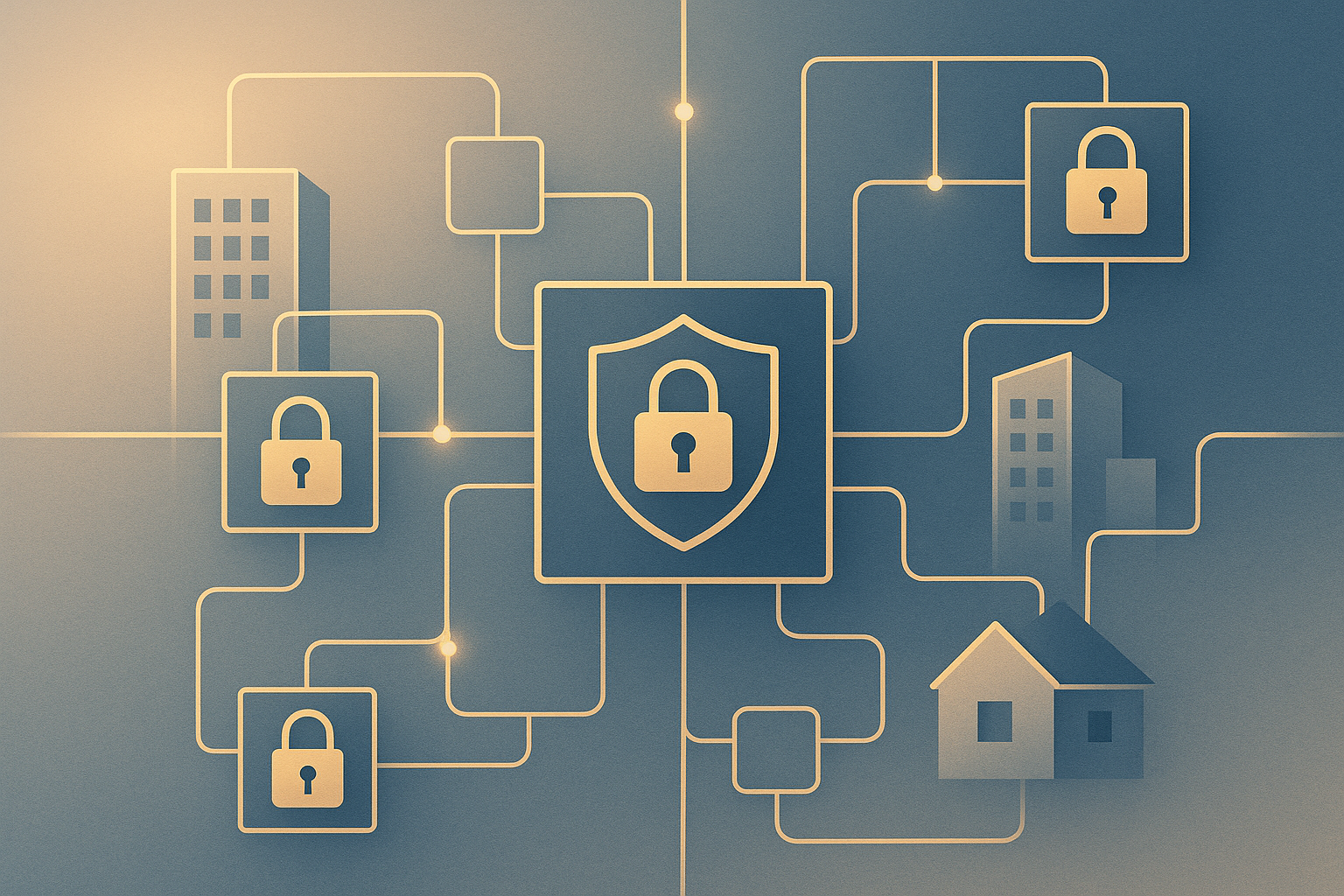
- Encryption>Encryption: Protects data during storage and transmission using methods like AES-256, TLS, and RSA.
- Encryption>Authentication & Access Control: Ensures only authorized users can access systems with tools like multi-factor authentication (MFA) and role-based access control (RBAC).
- Encryption>Secure API Integration: Safeguards data flow between systems with techniques like signature verification, rate limiting, and mutual TLS.
What Are The Best Practices For Property Data API Integration?
1. Encryption Methods
Encryption is the process of converting sensitive real estate data into a coded format that only authorized individuals or systems can decipher. When integrating CRM systems, MLS databases, e-signature platforms, and accounting software, every connection point introduces potential vulnerabilities. Strong encryption safeguards client information, financial records, and legal documents both during transmission and while stored. Real estate platforms rely on different encryption techniques depending on whether the data is being transmitted or stored. For instance, Encryption>TLS encryption secures data exchanged via APIs and webhooks. Encryption>AES 256-bit encryption protects stored data with unparalleled cryptographic strength. Encryption>RSA encryption, which uses asymmetric keys, is ideal for establishing secure channels between systems, while Encryption>SHA-256 Encryption>hashing ensures the integrity of transmitted data by detecting any alterations. End-to-end encryption further secures data from the moment it is entered until it reaches its final storage destination. A layered approach combining these methods offers the most comprehensive protection. For example, using TLS for API communications, AES 256-bit for data storage, and SHA-256 for integrity checks helps address vulnerabilities throughout the integration process.Security Strength
Among encryption methods, Encryption>AES 256-bit encryption stands out as the gold standard for safeguarding sensitive client data, financial records, and signed documents. Its strength makes it a reliable choice for protecting stored information. Encryption>RSA encryption, while computationally intensive, excels at secure key exchanges, making it less suited for large-scale data encryption. Encryption>TLS encryption is critical for protecting API and webhook communications from man-in-the-middle attacks, while Encryption>SHA-256 hashing ensures data integrity, even though it doesn’t allow for decryption. Together, these methods form a robust, multi-layered security framework.Implementation Complexity
Setting up basic encryption is relatively straightforward. Enabling TLS for API connections and activating built-in database encryption are features provided by most modern platforms with minimal setup. However, more advanced configurations, like end-to-end encryption, require a sophisticated key management system and secure storage for encryption keys. Implementing encryption at the API level adds complexity, as developers must ensure proper error handling and retries to prevent exposing sensitive data during connection failures. Key management is often the trickiest part. It involves securely generating, storing, rotating, and retiring keys while ensuring secrets are never hard-coded into applications. Compliance with regulations such as GDPR and HIPAA adds another layer of responsibility, requiring regular audits to verify encryption practices meet legal and industry standards. Additionally, integrating systems with varying encryption standards may require translation layers or standardized protocols to maintain consistent security.Scalability
For real estate platforms handling large transaction volumes, scalability is a key concern. Encryption>TLS encryption operates at the transport layer and scales efficiently with modern servers and load balancers. Similarly, Encryption>AES 256-bit encryption integrates seamlessly with databases, as many systems handle encryption transparently. However, end-to-end encryption can strain scalability due to the additional CPU workload from encryption and decryption. High-volume platforms may need hardware acceleration to maintain performance. Other challenges include automating key rotation for thousands of encrypted records and balancing performance with security through rate limiting, throttling, and isolated staging environments. Cloud-based solutions can help address these scalability demands.Real Estate Use Cases
Different types of real estate data require tailored encryption strategies:- Encryption>Client PII: Personal information like Social Security numbers, driver’s license details, and contact data should be protected with end-to-end encryption to ensure security from entry to storage.
- Encryption>Financial Records and Payments: Financial data, often targeted by cybercriminals and subject to regulatory standards (e.g., PCI DSS), is best secured using AES 256-bit encryption.
- Encryption>Signed Documents and E-Signatures: Combining encryption with SHA-256 hashing ensures documents remain unaltered during transmission.
- Encryption>MLS/IDX Data Transfers: TLS encryption protects property listings and market data as they move between systems.
- Encryption>Escrow and Payout Systems: High-value transactions benefit from mutual TLS and allow-listed IPs to ensure only authorized systems can send or receive funds.
- Encryption>Analytics and Reporting: Encrypting data and masking PII in non-production environments enables insights without exposing sensitive details.
- Encryption>Remote Access: Encrypting communications for agents working outside the office helps prevent credential theft.
- Encryption>Multi-System Integrations & Secure Messaging: Consistent encryption across platforms such as CRM, accounting software, and transaction management systems ensures secure client communications, offering a safer alternative to traditional email.
2. Authentication and Access Control
Authentication confirms identities, while access control ensures that only authorized individuals can perform specific actions within real estate systems. Together with encryption, these measures form a strong security foundation. While encryption safeguards data both in transit and at rest, authentication and access control prevent unauthorized access to sensitive details like client information, financial records, and transaction documents. Real estate platforms often integrate multiple systems, CRM software, MLS/IDX databases, e-signature tools, accounting platforms, and transaction management systems. Each connection point introduces a potential vulnerability. Weak authentication can expose all interconnected systems to unauthorized access, making robust measures crucial. When combined with encryption, effective authentication and access control strengthen every integration point within the system.Security Strength
Encryption>Multi-factor authentication (MFA) is among the most effective tools for securing access. It requires users to verify their identity with both a password and a one-time code sent to a trusted device. Even if a password is compromised, MFA significantly reduces the likelihood of unauthorized access.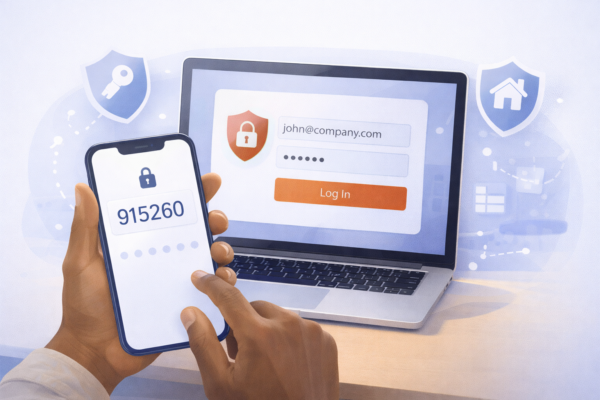 Encryption>Role-based access control (RBAC) adds another layer of security by aligning permissions with organizational roles. For example, agents, brokers, coordinators, and accounting staff are each granted access only to the systems and data necessary for their specific tasks. This approach ensures that a marketing tool doesn’t have access to payment systems, and individual agents can only view their own deals through row-level policies. Encryption>API token scoping further limits access by restricting each token’s permissions. For instance, a CRM token should not provide access to escrow accounts or financial records. For highly sensitive systems like payment processing and escrow services, Encryption>mutual TLS authentication offers an advanced level of security. This method requires both the client and server to verify each other’s identity before establishing a connection, creating a trusted, two-way relationship. In the hierarchy of security measures, MFA and mutual TLS are at the top, followed by OAuth with proper token rotation, RBAC, and strong password policies. Basic authentication with simple passwords is the weakest option and should be avoided.
 Implementation Complexity
Implementing these security measures requires careful planning. For instance, deploying MFA across a brokerage’s integrated systems is moderately complex but provides significant protection. Many modern real estate platforms already include built-in MFA capabilities, minimizing the need for custom development. Setting up MFA typically involves choosing a provider and integrating it with platforms like CRM systems, MLS/IDX databases, accounting software, and transaction management tools. User adoption can be a challenge, as staff need to learn how to use authenticator apps or manage one-time codes. This training process usually takes two to four weeks, with full implementation timelines ranging from two to eight weeks, depending on the organization’s size and system architecture. RBAC implementation involves mapping organizational roles to system permissions. This means defining what agents, brokers, and accounting staff can access and ensuring API tokens are scoped accordingly. Token rotation and management processes must also be established. While enforcing strong password policies is essential, passwords alone won’t protect against phishing or credential theft. That’s why MFA is a necessary complement. Additionally, creating immutable audit trails is critical for compliance and incident investigations, though this requires robust logging infrastructure and adequate storage.Scalability
As a real estate organization grows, authentication and access control systems must scale to handle increased complexity. Managing API keys and OAuth tokens across multiple integration points becomes challenging, as each system requires unique credentials and coordinated token rotation. The number of roles and permission combinations also increases, making manual access management impractical. Row-level policies, which restrict agents to viewing only their own deals, must scale efficiently as the number of agents grows from dozens to thousands. Similarly, database encryption and access logging generate large data volumes, requiring scalable infrastructure to maintain system performance. Centralized identity management systems like LDAP or Active Directory can simplify these challenges by providing single sign-on (SSO) capabilities. For platforms with thousands of concurrent users, implementing rate limiting and circuit breakers can prevent authentication systems from becoming bottlenecks. Cloud-based identity solutions that automatically adjust to demand can also help, though they introduce additional vendor management considerations.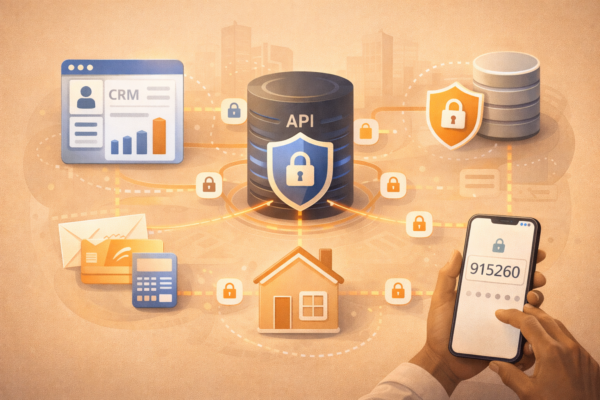
Real Estate Use Cases
Different real estate workflows require tailored approaches to authentication and access control, depending on the specific security needs and operational processes.- Encryption>MLS/IDX integrations and transaction management workflows: Granular row-level access controls ensure agents can’t view competitors’ listings. Time-based and workflow-based access controls allow stakeholders like lenders and title companies to access documents only at specific stages, such as after an offer is accepted or when escrow opens.
- Encryption>Accounting software integrations: Clear separation of access is critical. Accountants need visibility into transaction data and commission structures, while agents should be restricted from accessing detailed financial records to avoid conflicts of interest and reduce fraud risk.
- Encryption>Payment and escrow integrations: These systems demand the highest level of security. Mutual TLS authentication ensures only authorized personnel can access these systems, while row-level policies prevent agents from viewing or altering escrow accounts outside their own transactions.
- Encryption>CRM integrations: Remote agents working from various locations need secure access controls and device verification to protect against credential theft on public networks.
- Encryption>Property management systems: These systems require distinct access patterns. Property managers need ongoing access to tenant and maintenance data, while transaction managers require temporary, deal-specific access. Separate permission structures accommodate these workflows.
- Encryption>Marketing and analytics platforms: Protecting sensitive client data is essential in staging environments. PII masking allows marketing teams to analyze campaign performance without exposing personal details like Social Security numbers.
3. Secure API Integration Strategies
Secure API integration is a critical piece of the puzzle when building a multi-layered defense strategy. It complements encryption and access controls by ensuring that data remains protected as it moves between systems. Real estate platforms depend on various API connections whether for CRM systems, MLS/IDX databases, e-signature tools, accounting software, or payment processors. Each connection introduces potential vulnerabilities. Without proper safeguards, sensitive client data, financial records, and transaction details could be exposed during transmission. The challenge isn’t just about securing individual systems; it’s about protecting data as it flows between platforms, isolating failures, and designing scalable integration architectures. Depending on the use case, different integration patterns like webhooks for real-time updates, ETL/ELT for batch synchronization, and API-first designs for continuous communication require tailored security measures.Security Measures That Work
To secure API integrations, you need strategies that fit the specific integration patterns.- Encryption>Webhooks: Use signature verification to authenticate incoming requests and confirm their origin. Enforce idempotency to avoid duplicate processing, and apply throttling to prevent endpoint overload.
- Encryption>ETL/ELT Processes: Separate staging environments from production to protect live data and avoid interference from test data. Mask personally identifiable information (PII) when syncing with analytics platforms to ensure privacy while maintaining realistic data patterns.
- Encryption>API-First Architectures: Implement retries with exponential backoff to handle temporary failures gracefully. Circuit breakers can halt requests to prevent cascading failures across interconnected systems. Use per-entity rate limits to ensure no single user or account can monopolize resources. For sensitive integrations, like payment processors, add extra layers of security such as mutual TLS authentication and allow-listed IP addresses to block unauthorized access.
Navigating Implementation Challenges
Implementing these strategies requires careful coordination across systems and teams.- Encryption>Webhook Security: Set up signature verification with secure key rotation to keep credentials fresh. Maintain reliable and efficient idempotency by storing request identifiers in a database.
- Encryption>ETL/ELT Setup: Create separate infrastructures for staging and production, complete with isolated networks, duplicated databases, and data masking protocols to protect PII.
- Encryption>Rate Limiting and Circuit Breakers: Fine-tune these controls to balance security and user experience. Overly strict settings could frustrate legitimate users, while lenient ones leave the system exposed.
- Encryption>Secrets Management: Avoid hard-coding API keys or OAuth tokens. Instead, manage them through secure systems with automated rotation.
Scaling Without Compromising Security
As transaction volumes grow, secure API integrations must handle increased demand while maintaining performance.- Encryption>Rate Limits: Per-entity limits allow the platform to scale naturally, ensuring each user operates within their own boundaries without disrupting others.
- Encryption>Failure Handling: Circuit breakers and exponential backoff strategies become essential during high-load situations, preventing temporary issues in one service from spreading platform-wide.
- Encryption>Optimized Performance: Fine-tune encryption and token caching to avoid bottlenecks. Scale ETL/ELT pipelines with robust staging environments that can simulate production conditions without impacting live operations.
- Encryption>Monitoring: Continuously track metrics like request latency, error rates, and throughput to identify and address scaling issues before they affect users.
Real Estate Use Cases
Secure API integrations are vital for automating real estate workflows, from real-time notifications to batch data transfers.- Encryption>MLS/IDX Integrations: Webhooks notify CRM systems about new listings, price changes, or status updates. Signature verification and throttling ensure only legitimate updates are processed, keeping systems efficient and secure.
- Encryption>E-Signature Platforms: Secure integrations ensure reliable notifications about document execution. Idempotency guarantees that each signing event is processed only once, which is critical for accurate commission calculations.
- Encryption>Accounting Software: ETL/ELT patterns synchronize transaction data while masking PII to protect sensitive financial records during analysis.
- Encryption>Payment Processors and Escrow Systems: Advanced security measures like mutual TLS and IP allow-listing safeguard financial transactions.
- Encryption>CRM and Transaction Management: API-first architectures with circuit breakers and retries prevent system-wide outages, ensuring smooth transaction updates even during service disruptions.
- Encryption>KYC/AML Verifications: These integrations require careful handling to securely process identity verification requests. Rate limiting and audit trails help prevent abuse while supporting compliance efforts.
Strengths and Weaknesses
Each security method brings its own set of strengths and challenges when used in real estate integrations. For example, encryption encodes data to keep it safe during both transmission and storage. AES 256-bit encryption, a widely used standard, is particularly effective for securing data across multiple connection points. However, maintaining encryption systems requires ongoing investments in infrastructure and regular updates to ensure reliability. Authentication measures like multi-factor authentication (MFA) and role-based access controls are essential for reducing unauthorized access. These tools help safeguard sensitive customer data, especially when support cases might otherwise be accessed via stolen credentials. Role-based access, in particular, is highly scalable as organizations grow. While these measures may add a few extra steps for users during login, the enhanced security they provide outweighs the minor inconvenience. Secure API strategies are another key piece of the puzzle, ensuring safe data exchanges between systems such as CRMs, MLS databases, accounting software, and e-signature platforms. Techniques like webhook signature verification, circuit breakers, and rate limiting help prevent unauthorized access and cascading failures. A stark reminder of the importance of robust API security is the Real Estate Wealth Network incident, where over 1.5 billion records were exposed due to unprotected folders and weak access controls. However, implementing these strategies requires significant effort and continuous monitoring to remain effective. It’s important to note that no single method can address all potential risks. Encryption, for instance, doesn’t protect against man-in-the-middle attacks or stolen credentials. Tokenization, when used alone, could leave data vulnerable if the tokenization service itself is compromised. Similarly, secure API strategies without additional safeguards like encryption leave systems exposed if an API is breached or if stored data is left unencrypted. A balanced approach that combines these methods is critical to building a strong security framework tailored to real estate needs. Here’s a quick comparison of the key methods:Conclusion
Protecting real estate integrations calls for a multi-faceted security approach. Relying on just one method won’t cut it; combining encryption, authentication controls, and secure API strategies is key to building a strong, layered defense. Each method targets specific vulnerabilities, and together, they create a more resilient shield than any single technique could provide. Tailored security measures play a crucial role here. Different types of data require unique protections. For example, financial records benefit from mutual TLS and AES 256-bit encryption, while client personally identifiable information (PII) demands techniques like data masking in non-production environments and well-defined retention policies. Implementing least-privilege access is another critical step. This strategy reduces the attack surface, ensuring that even if credentials are compromised, the potential damage is limited to the bare minimum permissions granted. Strong security practices do more than just prevent breaches, they empower growth. When leadership knows that data is secure and compliant, they’re more likely to greenlight additional integrations, allowing teams to work with confidence. Organizations that adopt least-privilege access and maintain immutable audit trails often see smoother processes, like fewer failed handoffs, faster settlement times, and lower compliance risks. Transitioning from manual, email-based exception handling to dashboard-driven monitoring can also provide better visibility into data flows, from listings to payouts. This robust security foundation not only streamlines operations but also supports long-term growth. Being prepared for potential incidents is equally important. Create an incident response playbook that outlines key steps like revoking keys, disabling flows, notifying stakeholders, and conducting post-mortems to ensure your team is ready to act swiftly. Regular quarterly security drills can help reinforce these procedures, so your team is always prepared to respond effectively. Ultimately, a vulnerability in just one integration point can ripple across systems like CRM platforms, accounting software, e-signature tools, and analytics services. By adopting a comprehensive, multi-layered security strategy tailored to your organization’s specific data and business needs, you not only protect your systems but also safeguard your clients’ trust and your company’s reputation.FAQs
What are the best practices for securing API integrations in real estate platforms while ensuring scalability and performance?
To ensure secure and efficient API integrations in real estate platforms while keeping scalability and performance in check, several key practices should be followed:- Encryption>Encrypt data: Protect sensitive information by encrypting it both during transmission and storage. Use strong encryption standards like TLS for data in transit and AES for data at rest.
- Encryption>Token-based authentication: Implement systems such as OAuth 2.0 to ensure that only authorized users and systems can access your APIs, adding an essential layer of security.
- Encryption>Rate limiting and throttling: Prevent misuse and maintain performance during high traffic periods by setting limits on the number of requests that can be made in a given timeframe.
- Encryption>Audit and monitor API activity: Regularly review and track API activity to identify and address any potential vulnerabilities or unusual behavior.
- Encryption>Design with scalability in mind: Use cloud-based solutions and adopt microservices architectures to ensure your APIs can handle growth and high demand efficiently.
What are the best practices for managing encryption keys in real estate platforms to ensure compliance with regulations like GDPR and HIPAA?
To manage encryption keys effectively on real estate platforms while staying compliant with regulations like GDPR and HIPAA, it’s crucial to stick to Encryption>key management best practices:- Encryption>Centralize key management: Use a single, secure system to store and control access to encryption keys. This approach helps reduce the chances of unauthorized access.
- Encryption>Schedule regular key rotation: Regularly updating keys limits exposure in case of a breach. Automating this process can make it more efficient.
- Encryption>Enforce strict access controls: Ensure only authorized individuals or systems can access the keys. Adding multi-factor authentication (MFA) provides an extra layer of security.
- Encryption>Securely back up keys: Store backups in a separate, encrypted location to safeguard against data loss from system failures.