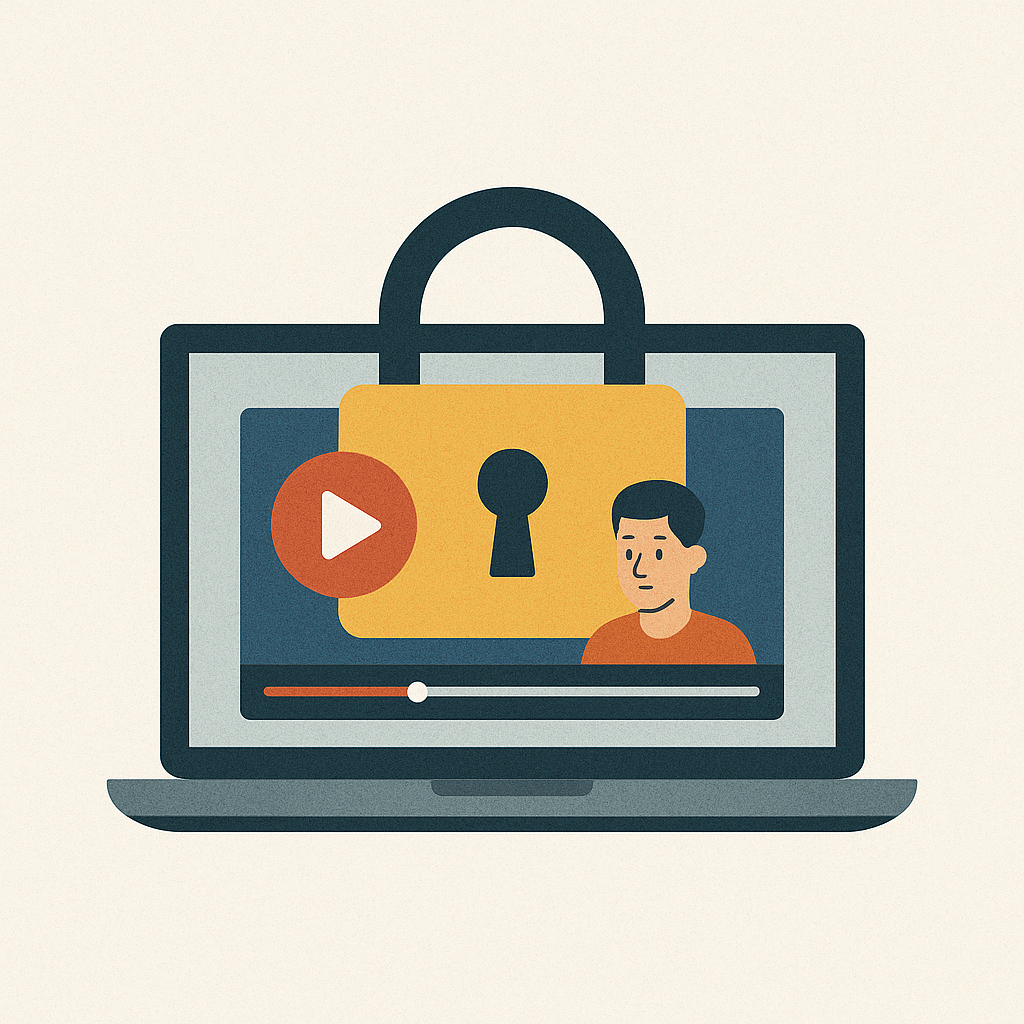
- Key Risks: Breaches due to malware, accidental exposure, insider misuse, and weak network security.
- Legal and Compliance Issues: Regulations like GDPR, HIPAA, and CCPA require strict consent, data handling, and retention policies.
- Best Practices:
- Before Recording: Close sensitive apps, disable notifications, and use selective sharing.
- During Recording: Monitor shared content and avoid multitasking.
- After Recording: Store files securely, set access controls, and delete data when no longer needed.
- Tool Features to Look For: End-to-end encryption, two-factor authentication, watermarking, and granular permissions.
- Team Habits: Train employees on security protocols, enforce strong passwords, and use secure devices.
How to Block Screenshots, Screen Recording, and Remote Access Tools in Android and iOS Apps
Security Risks in Screen Recording for Remote Work
Remote work has opened up new possibilities, but it also brings unique security risks, especially when it comes to screen recordings. Identifying these risks is the first step in protecting sensitive information and ensuring safe practices.Common Security Threats
Unauthorized access is one of the biggest dangers. Screen recordings often include sensitive details like login credentials, financial data, or client information, making them attractive targets for cybercriminals. By 2025, over 76% of intrusion breaches are expected to involve remote access tools. Malware attacks are becoming more sophisticated. In 2024 alone, infostealer malware led to the compromise of more than 330 million credentials, much of it spread via fake or compromised screen-sharing applications. This type of malware can silently capture everything displayed on a screen, including confidential documents and private communications. Accidental exposure during screen sharing is another concern. Many remote workers inadvertently share personal information, notifications, or unrelated applications when recording their screens. As Adrien Nhem, Co-founder and CTO of Screendesk, puts it:“Think of your screen as your digital home. Sharing it is like giving someone a virtual tour, potentially exposing private information.”Weak home network security further amplifies these risks. Unlike corporate systems, home networks often lack robust protections, leaving remote workers’ devices vulnerable to attacks that could compromise screen recordings. Insider threats also loom large. Employees with legitimate access to recordings may misuse the information, whether intentionally or through carelessness. Gaps in security protocols and insufficient training only make this issue worse.
| Security Stage | Action Items | Risk Level if Skipped | Implementation Difficulty |
|---|---|---|---|
| Before | Close sensitive apps/tabs, disable notifications, and use selective sharing | High – accidental exposure of confidential data | Easy |
| During | Monitor shared content, avoid multitasking, and ensure sensitive information isn’t visible | Medium – unintended disclosure | Medium |
| After | Secure recordings, confirm session termination, and check for lingering access | Low – unauthorized access post-session | Easy |
Privacy and Consent Requirements
Beyond technical vulnerabilities, remote teams must navigate legal and privacy challenges tied to screen recordings. Legal obligations regarding consent vary widely depending on location. A 2024 survey found that 65% of organizations admitted to recording sessions, often without proper consent. This exposes companies to significant legal risks. Notification requirements mean participants must be informed before recording begins. The method and timing of this notification can have legal consequences. Active consent – where participants explicitly agree to recording – differs from passive consent, which involves notifying participants and allowing them to opt out. Third-party considerations complicate things further. Screen recordings might capture information about individuals who aren’t direct participants, such as client data or family members visible in a home office. These scenarios often require additional safeguards. Data subject rights under laws like GDPR and CCPA give individuals control over their recorded data. They can request access, corrections, or even deletion of their personal information. Teams need processes to handle these requests within legally mandated timeframes. Addressing these privacy and consent requirements is just as vital as managing technical risks.Meeting Compliance Standards
Compliance with regulations is a non-negotiable aspect of secure screen recording. Failure to meet these standards can result in steep penalties. Regulatory frameworks like GDPR impose strict rules, with fines reaching up to €20 million or 4% of a company’s global revenue, whichever is higher. In the U.S., CCPA violations can cost $2,500 per unintentional violation or $7,500 for intentional ones. Industry-specific requirements add another layer of complexity. For example, healthcare organizations must adhere to HIPAA when handling patient data, while financial services need to comply with PCI DSS for payment card information and SOX for financial reporting. Each industry has unique rules that shape how screen recordings are managed. Data retention policies also come into play. Some regulations require businesses to keep recordings for a minimum period, while others impose limits to protect privacy. Striking a balance between these requirements is critical, especially for legal discovery purposes. Cross-border data transfers present additional challenges for global teams. When recordings containing personal data are stored or accessed internationally, organizations must ensure proper protections are in place. This often involves standard contractual clauses or other mechanisms to meet legal standards. Documentation and audit trails are essential for proving compliance. Companies must maintain detailed records of when recordings were made, who accessed them, what consent was obtained, and how the data was eventually handled. These records can be crucial during audits or legal disputes. Meeting these compliance requirements not only helps avoid legal trouble but also strengthens overall security. The complexity of these regulations highlights the need for clear policies and robust technical measures to protect screen recordings. Without them, even well-meaning teams could face serious financial and legal consequences.How to Choose Secure Screen Recording Tools
Choosing the right screen recording tool is critical in today’s landscape of increasing security challenges and strict compliance requirements. The tool you select plays a key role in safeguarding sensitive information. Below are the essential security features to prioritize when evaluating screen recording tools.Security Features to Look For
To ensure your recordings remain secure, keep an eye out for these key features:- End-to-end encryption: Protects your recordings both during transmission and while stored, using trusted encryption protocols.
- Two-factor authentication (2FA) and single sign-on (SSO): Adds extra security layers, ensuring only authorized users can access recordings, even if credentials are compromised.
- Screen capture protection: Blocks unauthorized screenshots and screen sharing of sensitive data, keeping confidential information secure.
- Granular access controls and permissions: Allows you to control who can view, edit, or share recordings – ideal for protecting private client data or internal discussions.
- Watermarking capabilities: QR code watermarks help trace unauthorized sharing and deter physical screen captures.
- Data loss prevention (DLP) policies: Automated systems detect and prevent the sharing of sensitive information, minimizing accidental exposure risks.
- Disabling clipboard, drive, and printer redirection: Prevents content copying during sessions, securing financial and proprietary data.
Why Zight Works for Secure Screen Recordings
 Zight offers a blend of strong security measures and ease of use, making it an excellent choice for secure screen recordings:
 - Enterprise-grade security: Features like password-protected recordings and secure file sharing ensure you control who can access your content and for how long.
- AI-powered tools: Securely process sensitive data with transcription, summaries, and translations within Zight’s protected infrastructure.
- Multi-platform support: Whether on Mac, Windows, Chrome, or iOS, Zight maintains consistent security across devices.
- Custom data retention policies: Enterprise plans allow you to automate recording lifecycles, ensuring sensitive data isn’t stored longer than necessary for compliance.
- Advanced sharing options: Set expiration dates, require passwords, and track access for complete control over shared recordings.
Integration with Team Collaboration Tools
Zight also strengthens security through seamless integrations with popular collaboration tools. By integrating with platforms like Slack and Microsoft Teams, Zight enables you to share recordings securely within your existing workflows, reducing the risk of insecure sharing. As BrightWork highlights:“A centralized team collaboration platform such as Microsoft Teams can help check off most of these requirements. Collab features from chat messages to video calls to setting up meeting invites can help project teams define their ways of communication and working together.”These integrations also enhance security through role-based access controls, aligning with your organization’s broader policies. Compliance with regulations like GDPR and HIPAA becomes easier when screen recording tools integrate into a unified collaboration ecosystem. Plus, streamlined communication and decision-making reduce the likelihood of insecure workarounds. Zight’s compatibility with tools like Slack, Microsoft Teams, and Jira creates a secure, integrated environment. This ensures your recordings remain protected throughout your team’s workflow, combining robust protection with efficient collaboration.
Best Practices for Secure Screen Recording
Maintaining the security of sensitive data during screen recording requires attention at every stage – from preparation to storage. While selecting secure tools is important, your team’s habits and protocols are just as critical in preventing unauthorized access or accidental exposure.Setting Up a Secure Recording Environment
Before you hit record, take a moment to prepare your workspace. Close any unnecessary apps and disable notifications to avoid interruptions or accidental exposure of sensitive information. Clear your desktop of any private files, and familiarize yourself with your recording tool’s features. For example, you can turn off notifications from email or messaging apps to prevent sensitive pop-ups during the session. Whenever possible, use selective window recording instead of full-screen capture. This method ensures you’re focusing only on relevant content, reducing the chance of capturing unrelated or private information, like taskbars or running applications. Some tools even offer features to automatically blur or mask sensitive details, such as email addresses or confidential data fields, without disrupting your workflow. For instance, Azure Virtual Desktop includes screen capture protection, which prevents sensitive data from being recorded on client devices. Once the recording is complete, your next priority is securing how it’s stored and shared.Safe Storage and Sharing Methods
Store your recordings on encrypted cloud services and control access through role-based permissions. Assign specific permissions based on individual roles – only allowing access to those who truly need it. Always review your recordings for unintended content before sharing them. When sharing, use secure communication channels and avoid public Wi-Fi networks, like those at coffee shops. For added security, set expiration dates on shared recordings, ensuring they’re only accessible for a limited time. This minimizes long-term exposure risks. Encourage your team to use strong, unique passwords for recording platforms and consider implementing password managers to simplify this process. Adding multi-factor authentication (MFA) provides an extra layer of security, protecting recordings even if a password is compromised. Keep track of all activity related to your recordings. Monitoring who accesses them, when they’re viewed, and any sharing actions creates an audit trail, helping your team identify suspicious activity and maintain accountability.Device-Level Security Measures
The devices used for recording are just as important as the recordings themselves. Start by enabling strong authentication methods like PINs, fingerprint scans, or facial recognition on all devices. For local storage, turn on drive encryption tools like BitLocker to protect recordings. Regularly update devices with the latest security patches and use active antivirus programs, such as Microsoft Defender Antivirus, to prevent malware attacks. If you’re using a browser for web-based recordings, make sure it’s up to date. Older browsers often have vulnerabilities that could compromise your session or stored content. To prevent accidental exposure, enable password-protected screen savers that activate after short periods of inactivity. This ensures sensitive information isn’t visible if a device is left unattended. For organizations managing multiple devices, mobile device management (MDM) solutions can help enforce security policies across the board. MDM tools allow you to remotely manage settings, push updates, and even wipe data from lost or compromised devices. Finally, implement systems to continuously assess the health of any device accessing corporate resources. Automated checks can verify operating system versions, endpoint protection status, and encryption compliance before granting access to recording tools or stored content. This ensures that only secure, properly configured devices handle sensitive recordings.sbb-itb-5d91f01
Managing Access, Data Retention, and Compliance
Once recordings are secured, the next step is managing access, retention, and compliance. These measures not only safeguard sensitive information but also help your organization align with data protection laws. Let’s break this down further.Setting Up Access Controls and Permissions
Access control starts with implementing Role-Based Access Control (RBAC), which assigns permissions based on job roles rather than granting blanket access to everyone. For instance, your HR team may need full access to training recordings, while project managers might only require view-only access to specific content. Defining user roles and limiting permissions to what is absolutely necessary is key. This approach, known as the principle of least privilege, ensures employees can only access the data they need to perform their tasks. Why is this important? Consider this: 63% of professionals have accidentally sent sensitive files to the wrong person due to improper access settings. To further secure access, enable multi-factor authentication (MFA). Platforms like Zight offer MFA integration, making it easier to add this extra layer of security. Combine this with audit trails to monitor access and flag any unusual activity. And don’t overlook training – 74% of employees have never received formal training on digital file security, which leaves a significant gap in your defenses. Once access controls are in place, the next step is to enforce strict data retention policies.Data Retention Policies and Secure Deletion
A well-defined data retention policy outlines how long recordings are kept, where they are stored, and how they are securely deleted. This not only minimizes security risks and reduces storage costs but also keeps your organization compliant with legal requirements. Start by classifying the types of recordings you handle. For example, training videos, troubleshooting sessions, and customer support calls may each have different retention requirements based on regulatory or business needs. When recordings are no longer needed, ensure they are permanently deleted by overwriting the data. This includes removing them from backups to prevent recovery. Automation tools can help enforce these policies by automatically deleting recordings once their retention period expires.Regular Updates and Security Audits
Controlled access and retention policies are just part of the equation. Regular security audits are essential for identifying vulnerabilities and adapting to new threats. Conducting audits at least twice a year can verify that your access controls, retention policies, and other safeguards are performing as expected. With cybercrime costs projected to hit $10.5 trillion annually by 2025 and over 75% of targeted attacks starting with an email, staying proactive is critical. Security audits should be performed by experts who can assess your systems thoroughly. In addition to scheduled audits, continuous monitoring can catch unauthorized access attempts or unexpected file transfers in real time. Make sure to regularly update your recording tools, operating systems, and software with the latest security patches. Zight, for example, frequently releases updates that include security improvements to help guard against emerging threats.Advanced Security Features and Options
Beyond basic security practices, advanced features provide an extra shield to ensure remote screen recordings remain protected. These measures go beyond standard encryption and access controls, adding multiple layers of defense.Watermarking and Content Protection
Watermarking is a critical tool to prevent unauthorized sharing of sensitive recordings. Not only does it deter leaks, but it also helps trace the source if a breach occurs.“Watermarking is a powerful data protection tool that helps prevent unauthorized use, secure intellectual property, and track digital assets.” – DataPatrolFor watermarking to be effective, it needs to be thoughtfully implemented. Using embedded watermarks rather than simple overlays is key, as embedded watermarks are harder for automated tools to remove. Dynamic watermarks, which can display user-specific details like email addresses, IP addresses, or timestamps, make each recording uniquely identifiable. When combined with screen capture protection, watermarking significantly boosts content security. Take this real-world example: A legal firm used embedded watermarks to trace a leaked report back to the individual responsible.
| Feature | Text Watermark | Image Watermark | Sliding Watermark |
|---|---|---|---|
| Content Type | Text (static or dynamic) | Custom image (logo, QR code, etc.) | Moving text (static or dynamic) |
| Customization | Metadata retrieval, font, size, position | Size, transparency, position | Speed, position, color, motion direction |
| Visibility | Static on screen | Static on screen | Moves across the screen |
| Integration | Active Directory metadata support | Upload custom images | Customizable movement and text |
| Use Case | Ownership identification, session tracking | Branding, security reinforcement | High visibility, prevents screen capture |
Using AI Tools Securely
Once content is secured with watermarking, the next step is to ensure AI tools are managed securely. AI-powered features like transcription and summarization are becoming essential for remote teams, with 85% of professionals identifying these tools as crucial to their workflow. However, these tools need to be safeguarded to prevent exposing sensitive data. Secure AI platforms operate within a company’s network, keeping sensitive data internal. In contrast, unsecured platforms that process data on external servers can introduce vulnerabilities. When choosing AI-enabled tools, look for solutions offering on-premises deployment, strong encryption, and robust access controls. Zight’s AI-powered transcription and summarization tools, for example, include enterprise-grade protections. The platform’s auto-redaction feature can automatically remove personally identifiable information (PII) from transcripts, offering an added layer of compliance for organizations handling sensitive data.“AI-powered transcription and summarization reduce post-recording tasks.” – Expert, AI StudiosTo enhance AI security, limit the data collected by AI tools to only what’s absolutely necessary. Use strong authentication methods like Two-Factor Authentication (2FA), and ensure all AI-processed content is encrypted both during transmission and storage. Regular monitoring for unusual activity – such as unauthorized access attempts or unexpected data transfers – can help catch potential issues early.
Security Feature Comparison Guide
Advanced security features work best as part of a layered defense strategy. Each tool addresses specific vulnerabilities, and combining them creates a more comprehensive protection plan. Encryption forms the backbone, ensuring data remains unreadable to unauthorized users. Access controls regulate who can view recordings, while watermarking adds accountability and traceability. AI security features protect sensitive content during automated processing, and audit trails provide visibility into system usage. The numbers are sobering: hackers attack every 39 seconds, and 33 billion accounts are projected to be breached this year alone. No single measure can cover all vulnerabilities. The best approach combines preventive measures (encryption, access controls), detective measures (audit trails, monitoring), and responsive measures (incident response, secure deletion). This layered approach ensures protection even if one layer is compromised. For organizations handling highly sensitive information, implementing all available security features is often the safest path. The cost of adding these measures is typically far lower than the financial and reputational damage caused by a data breach, including regulatory fines and legal fees.Conclusion: Building Security-First Remote Teams
Creating a security-first remote team requires more than just picking the right tools – it’s about embedding a culture of data protection into every aspect of work. With remote work now accounting for about 30% of the workforce and 60% of companies experiencing security breaches during virtual meetings, the stakes couldn’t be higher. These numbers highlight the pressing need to balance growth with strong security practices. The rapid growth of the screen sharing software market shows just how indispensable these tools have become. However, their quick adoption often leaves security considerations playing catch-up. Companies that prioritize security from the outset are better equipped to safeguard their most critical assets. In this evolving landscape, platforms like Zight stand out. Zight takes a security-first approach by offering enterprise-grade protections while maintaining ease of use. Its features include SSO integration, content-level controls, and compliance with GDPR, CCPA, and SOC II Type 2 standards – all while supporting the collaboration remote teams rely on. Karen Goeller of biBerk Business Insurance emphasizes this balance:“It has excellent security features. First, it was simple to set up storage on our company servers instead of the Zight cloud, meaning that all of our captures remain under our control. This allows for capturing more sensitive information securely. Second, it’s possible to set security on ANY capture to password-protect or otherwise restrict access to it.”But tools alone aren’t enough. A well-trained, security-conscious team is essential. Human error remains one of the biggest vulnerabilities, making regular training and clear security protocols vital. Together, these elements transform individual tools into a unified defense system. Looking ahead, trends like AI-powered monitoring, zero trust models, and expanding remote access will likely make robust security measures the norm. Adopting these practices now strengthens the security culture that every successful remote team needs.