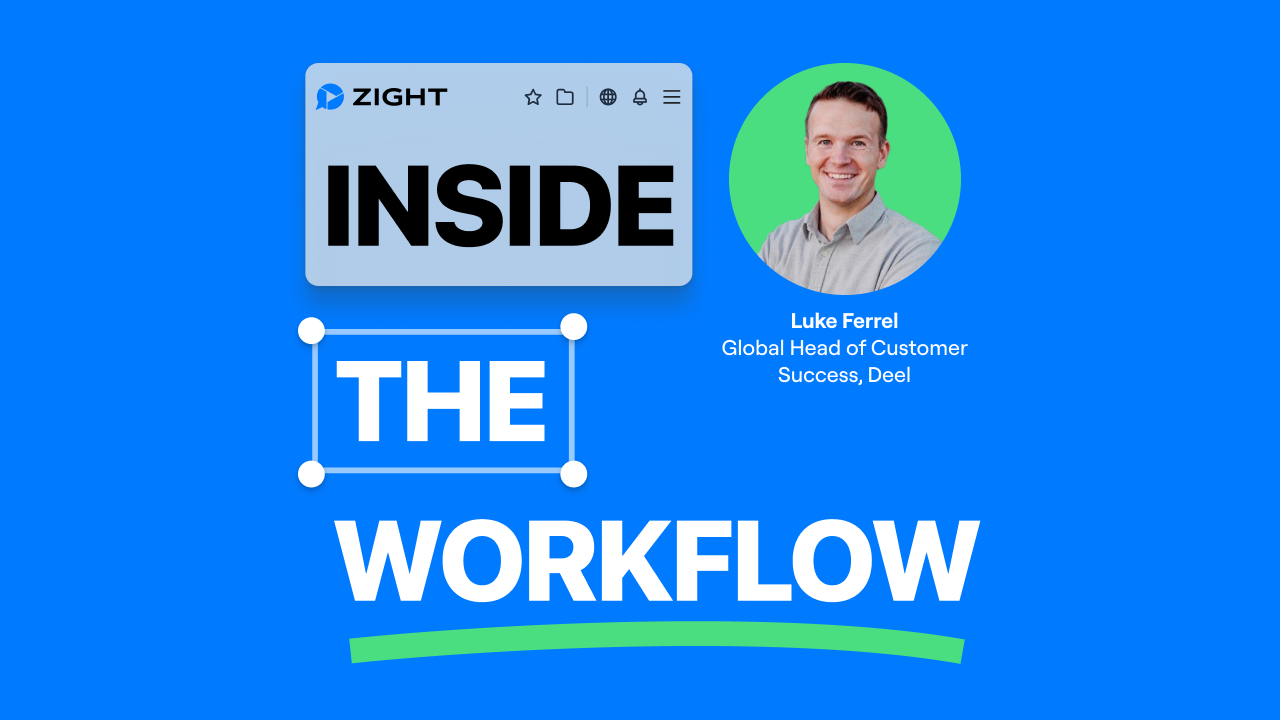
Episode Summary
In this episode of Inside the Workflow, we dive deep into the experiences and insights of Luke Ferrel, Global Head of Customer Success at Deel. With a career spanning the military, SaaS leadership, and global customer success, Luke shares invaluable lessons on leadership, scaling customer success teams, and embracing the human side of business in a rapidly evolving industry.
From Military Missions to SaaS Leadership
Luke’s journey began with his service in the military, where he developed his skills in open-source intelligence and linguistic expertise in Mandarin, Cantonese, and Japanese. Reflecting on this period, Luke shared:
“The coolest job I ever had was adjudicating visas and talking to people. It was super fun!”
After transitioning out of the military, Luke’s passion for optimizing processes led him to roles in industrial supply and eventually SaaS. At Qualtrics, he honed his analytical skills, which laid the foundation for his move into customer success.
“Early in your career, you focus on opening doors. Eventually, you have to pick which one to walk through.”
Leadership Style: Tiger Mom Principles and Data-Driven Insights
Luke’s leadership approach blends structured analytics with personalized mentorship. He emphasizes clear communication and accountability, helping his teams succeed in high-pressure environments.
A notable principle Luke follows is rewarding team efforts through measurable outcomes. At Deel, he implemented a program called the “Golden Deal Framework”:
“We bonus our CSMs based on how many customers achieve key milestones. It motivates them to actively push for customer success.”
Despite his focus on structure, Luke values the human aspect of leadership. He likened his philosophy to his upbringing with a “tiger mom” who maintained a system of ranked shelves for her children:
“It’s not important, but she cared about financial and business success, number of children, and educational achievements. My brother with a physics PhD and four kids makes it tough for me!”
Industry Insights: Challenges and Emerging Trends
Luke’s tenure at Qualtrics, Outreach, and Deel gave him a unique vantage point to observe trends in customer success. A key takeaway was the importance of balancing customer retention with scalability:
“You can’t scale too early without understanding what your customers need. Otherwise, you create a system of garbage in, garbage out.”
At Deel, a fully remote company that supports global workforces, Luke has embraced AI and automation to streamline communication and customer interactions. He shared his thoughts on the future of AI in CS:
“AI can help aggregate insights and make communication faster. For example, we use AI to identify customers upset about a feature, fix it, and let them know. That creates trust.”
Luke also emphasized the need for urgency in today’s fast-paced SaaS market:
“Speed matters. You often have one day to win or lose a customer in a consolidation play.”
The Future of Customer Success
Luke believes the future of customer success lies in its ability to adapt to global and technological shifts while keeping the human connection intact. Deel’s remote-first model has taught him that overcommunication is essential:
“Overcommunicate your outcomes and check in frequently. It may feel micromanage-y at first, but it builds trust.”
He also sees AI as a tool to empower teams rather than replace them:
“AI can handle repetitive tasks, freeing CSMs to focus on high-value interactions and strategic thinking.”
A Vision for the Future: Building a Coaching Legacy
For Luke, success isn’t just about the companies he’s worked for; it’s about the lives he’s impacted:
“If I could have anything in my career, I’d want an Andy Reid coaching tree. I want 10 other heads of CS who say they learned something meaningful from me.”
His work at Deel, which hires globally, aligns with this vision:
“I can hire someone in the Philippines and change their life and their kids’ lives. That’s meaningful.”
Luke Ferrel’s story is one of adaptation, leadership, and a relentless drive to make a meaningful impact—both for customers and his teams. Whether optimizing processes or mentoring future leaders, his insights are a masterclass in balancing data with humanity in customer success.
“If I could have anything in my career, I want an Andy Reid coaching tree—I want 10 other heads of CS. Because if I can help someone go from where they are to where they want to be, that’s meaningful to me.” – Luke Ferell

Key Takeaways
Leadership Style: How Luke empowers his team through clear goals, consistent feedback, and an innovative “Golden Deal” framework.
Energizing Work: Why Luke is passionate about building scalable systems that align customer outcomes with measurable success.
Industry Challenges & Trends: The evolving role of customer success, managing remote teams effectively, and leveraging AI to enhance efficiency and communication.
The Future of Customer Success: Luke’s vision for scaling teams without sacrificing quality and how AI will redefine customer engagement.
Personal Growth: Luke’s reflections on mentorship, adaptability, and his commitment to creating opportunities for others in his career.
Episode Highlights
0:00 – Welcome & Introduction
Scott welcomes Luke Ferrel, who shares his journey from military linguist to SaaS leader.
3:45 – From Ops to Customer Success
How Luke transitioned into CS, learning the ropes and driving outcomes early in his career.
7:30 – Leadership Insights & The Golden Deal Framework
Luke’s approach to motivating his team and aligning goals with measurable success.
12:15 – Scaling Smart: Challenges in CS
Why scaling too early can backfire and how Deel balances automation with human connection.
18:30 – AI’s Role in Customer Success
How AI tools are helping Deel deliver better customer outcomes and improve communication.
22:45 – Leading Remote Teams
Overcoming the challenges of remote work with clear goals and proactive communication.
28:00 – Mentorship and Legacy
Luke’s vision for developing future leaders and making an impact on a global scale.
I’m excited to welcome Luke Ferell Global head of customer success at deal to our podcast today uh Luke it’s
awesome to have you thanks for joining yeah thanks for having me love it well uh we’ve got a lot of different topics
that I wanted to kind of chat through um one of the things that you and I had talked about was your experience
learning cantones where you picked that up and what you’ve been using it for
nowadays if anything can you tell me some of the the experiences you had developing those skills yeah I I learned Mandarin as a missionary for the Church
of Jesus Christ L of saints and then also in the military so I used to work in the embassy um coolest job I ever
well don’t tell my boss now but that was the coolest job I ever had I I basically what I do is I adjudicate visas and then
do like open source intelligence go talk to people see what they would tell me super fun and then picked up Cantonese
and Japanese along the way they’re pretty close um and then in military um
use that for a while and then eventually uh the Air Force wanted me to learn Arabic so it was time to get out
and then I’ve been in I’ve been in the SF space ever since what’s fun in like a really Global role like I have now is
oftentimes I’ll get on calls with customers in China where I’m the only non-native speaker and people have no
idea that I speak Chinese and then everybody’s going and then I just chip in and it’s I don’t know if it I I think
people humor me and they tell me I’m good uh because the conversation usually switches to English eventually which
probably means I’m not as good as I think I am I think I think one of the things I’ve noticed with uh you know
your your friend or your family like my wife she speaks a lot of Spanish at her her job but it seems like everybody
always wants to practice the language that they’re learning so like you want to speak Chinese or Cantonese and then the other folks want to speak English so
it’s sort of like who is gonna push the hardest yeah so I think sometimes that that probably also drives it a lot yeah
well and like depend like the customer wants to speak English like I will speak English yeah yeah exactly you’re you’re
not going to take a detour just for the sake of your your cantones um so what you know given that
you you’ve had this sort of uh string of really cool customer Journey customer
success customer experience um both at qualtrix and deal uh it sounds like
you’re working with you know basically customers um with uh the military State Department that kind of stuff um how how
did you figure out the path like when did that start was it a a serendipitous thing or did it was it challenging what
was that like yeah I mean it’s a great thought a little bit of everything right like um when I started out like I joined
you know I was in the military and didn’t know exactly what I wanted to do but I wanted to have an impact and I was
like you know what I’m going to do math and stats because that opens up doors and I I I think early in your career in
your life you’re thinking how do I open up more and more doors and then eventually you have to pick which one of those doors you want to walk through and
so did that for a while and then I got real I kind of fell in love after the military with like optimizing processes
I loved it so I worked at an industrial supply distributor and so so like it’s all about like how do I take 9 minutes
and 27 seconds down to 9 minutes and 22 seconds loved that and then that was
like the heart of the fight like that’s what really mattered to the business and so then serendipitously like I got a
call from qualtrix and they were like Hey we’re looking for someone with like your math background to run our support team so I moved over to to qualtrix very
quickly though I realized like in the software world and no offense to anybody who like loves support but to me that
wasn’t the fight the fight is revenue and product and everybody else is supporting revenue and product and so I
thought you know what I want to get closer to the customer or I need to go learn how to code better and I didn’t
want to do that so so so I I talked to our nvp of Cs and I was like Hey like I
will build you an Ops Team if you go teach me how to CS because I didn’t want to start at the beginning I I think lots
of us don’t and so went and did that and he you know having that champion early
in my career really helped me I also the nice thing was I got to see what really good looked like like I got to go see
like someone that I really admire and got to work really closely with and I think that really acceler accelerated my
career there what was the uh seeing good is that like see sitting next to them in
slack is this like running webinars is this like going ons sits like tell us a little bit about what that meant yeah I
mean I think it was a little bit of going on ons sits I remember the first time I tried to save a customer gosh it was a train wreck like I was sweating it
was terrible and my boss was sitting next to me and he was like just log off like just like like it was so painful
for him that he was like I don’t want to watch this anymore so like sometimes it’s reps right like you got to get
those reps and then it’s also um because I was running the Ops Team it was such a
good way to see the whole team so I could see like what my vpcs cared about
and I could see what like the head of America is and what the head of APAC and what everybody cared about and I see like deeply like who was doing well and
who wasn’t because I think sometimes in the business World anyway like confidence beats competence and so we
see someone really confident and we just assume that they’re great at their job and it’s like they’re actually not like
I’m looking at the numbers and they’re actually terrible at their job but they present really well and so it like helped me be able to say like okay this
is a person who’s actually good at their job and I want to learn from okay that makes a lot of sense I I
I love that confidence beats competence obviously at a certain stage you know
like uh Kobe Bryant for example his confidence is going to be so high from all the Reps and practice he’s put in
but you can kind of fake it uh early on for sure yeah yeah yeah I mean I tell my kids all the time I’m like I would much
rather you go o of 20 when you’re playing basketball than 0 of three like just keep shooting yeah absolutely right um so so
like you were you’re at you’re at qual Trix you started in support started to move towards Cs and and like with with
that initial experience was that you know I I I’ve always I ask a lot of different CS folks that I’ve worked with
was the approach for qualtrix like customer happiness or was it like customer Revenue like how how did you
guys approach those conversations Revenue like Revenue all day every day
like and and we just had that beat into us which I I honestly love because I think sometimes CS has a tendency to get
a little bit fluffy and at the end of the day you’re as valuable as you can show you are and if you’re just like hey
we moved our seap from 4.6 to 4.7 like I don’t I mean you’re a CEO
maybe like I you probably care about that but you probably care a lot more of
like what that 4.6 to 4.7 means for your top line and your bottom line and so I need to be able to articulate that and
so I’m a big believer in like I need to show exactly how what I’m doing affects churn but then I also need to show how
it affects upsell because then I can go and for every dollar that my CFO gives me I can say I’m giving you $150 back or
$2 back and then that gives not only me but also the department a larger seat at
the table right yeah I I 100% agree I like doing activities that lead to
customer retention and expansion for sure and I think a byproduct hopefully of that is like a great product you know
the customer is genuinely like enthusiastic about your product but uh yeah you just make them happy and
they’re not willing to you know pay you you can’t have much of a business there yeah well and I think like eventually
you can do a lot lot to cover up a bad product with manual effort but if you don’t have like that product Loop
feedback and you’re not continually driving like you’re gonna stall out eventually and i’ i’ like and I’m not
saying I’m great at that like I’ve done that before where it’s like we just work really hard but but we don’t go make the
product better and go force that and then like you’re you’ve got a really hardworking CS team but like what does
that mean so so like once you kind of transition to CS like at what point did you start I guess managing a a team
small team big team and what was that like to have to maybe change the mindset of I’m working with the customer
directly all the time to I’m kind of managing this team and helping them be effective and like what what were some of the initial things that you learned
along the way yeah well I I mean I think I’ll I’ll back up a little bit so I started out in Ops and then I’m a big
believer in like play where you can win right and so if I had gone and said like
I’m going to go lead an Enterprise CS team and I’m going to go be really polished I’m going to go do the on-site with the $10 million contract like I
don’t think I would have won there because that’s not where my skill base is I talk to a lot of veterans getting out of the Air Force and they’re like oh
I want to go do Ai and I’m like you’re 35 you have a degree in history and like
they’re like well I’m gonna go learn AI I’m like cool but there’s a grad student who’s been doing it for the last 10
years who’s gonna kick your butt and he’s gonna cost half of what you cost like you you just don’t you don’t have value there and so for me I was like I’m
going to win in analytics because I’m deeper than any other CS person person there when I was at qualx now I’m
terrible at it it’s been a long time but so I was I started out in scale and I just said like I’m going to go build
scale programs I’m gonna be really analytical and I’m going to drive there and so what was nice is I had a little
bit of expertise to lean on and then I was able to build a program instead of having to jump into something like that
I didn’t know and so that’s where like I started out being able to offer a little bit of that expertise and then as I grew
it was more of like how do I get other people to go and build their career instead of being like as Hands-On but
that’s something I’ve had to learn over the last SE five seven years so so on the scale side of things if I understand
that correctly that’s presumably smaller customers but many of them and you’re building programs to communicate them
more or less because what like you just don’t have enough ability to staff people to those such small accounts more
or less yeah and it’s hard like it’s hard to make it make sense financially right like if you have a bunch of customer you have a customer who’s
spending $3,000 and you have thousands and thousands of them right like a qual tricks at the time it’s much bigger now
but it was like 110 to $150 million so it meant something but it wasn’t big
enough that like this $3,000 customer you’re GNA go do qbrs all the time with right did did you find like of the
activities you know the Paro like did you find one thing that most often was most effective to getting them to renew
or expand yeah yeah um I love maybe this is just because I grew up with a tiger
mom but I love telling people like where they’re not good and and being like hey
you right now people I feel like love to be evaluated so I love to come in and I say right now on the platform you are
doing a C+ level job and then where you can get to a B+ is ABC because now like
I know I if somebody tells me I’m not getting an a I want to know how to get an A and I’m gonna go do it I look at
LinkedIn all the time um and they have like you’re a LinkedIn Allstar you’re not and they’re doing things that like
you know don’t matter to you they’re like put your address in or do this but I’m going to do it because I want that little badge that tells me I’m an
All-Star maybe I’m just easily manipulated but sounds like maybe maybe a little bit of both but I mean if it
works it works right like like you said um yeah that’s pretty interesting okay so and then and then like as as you
figured out these scale programs uh were they really sophisticated or you know I
think some people think man like like you pointed out before like behind the scenes it’s like it’s like a crap show right like what what was it like on your
end yeah I mean it was super simple at first like we were just like let’s email
people and see like first we want to know can we get people to pay attention and then if we get them to pay attention
will they do what we want and then if they do what we want will it affect the outcomes so those are like the three
things that we’re always thinking about and so just trying a bunch of different things and first time I did it I learned
a lot there’s a lot that I would do differently because I blasted so many emails and people got so sick of me and
like I probably got our domains but you know shut down by Google all sorts of bad stuff um but like as as long as it
goes back to those three things all the time like will they look at it will they do something will they them doing
something affect what you want to affect and if it does that like you’re probably pretty good yeah and I think to just to
kind of echo your point about communicating with customers I feel like if your customers are not at least
occasionally complaining that you’re trying too hard then you’re not trying hard enough yeah you want them to say
something like hey man could you could you dial it back a little bit or you know click the unsubscribe but sort of either way like you you need to have that signal I think yeah I I mean I look
at uh right now at deal we have a ton of customers that don’t you know they have one or two contractors they’re very
small customers um but I’ve found a big indicator of future nrr is are those
customers engaged or disengaged and you can Define engaged how you want like do they talk to you once every 30 days 60
days 90 days whatever but I think you do have to be the voice in the back of their head that says if you have a
problem you know where to go and if you don’t have that then they’re going to go somewhere
else so after you after you mastered some of the communication Styles the scaled Outreach uh moving from an Ops to
maybe customer leader type thing um and you’re starting to I I don’t know
starting to think about your next thing or like what what was the evolution of your time from Ops to CS to leadership
at quadric and like you you kind of start wanting to move over to uh to deal what was that yeah that was that was
super interesting because uh I had a good leader uh name’s donica he’s great uh an Irish good good Irish name um but
he basically was like Hey at some point you’re going to have to choose because I was living in both worlds I was like I like doing Cs and I like doing Ops and
he was like look you can be a great leader in either one of these but you gotta pick and so I I looked at it and I
said you know what I want to be I want to go be in CS and so did that pushed
really hard on that and got to grow my team grow into more of like the Enterprise motion but then what I want
wanted was uh and maybe this is just like overly ambitious of me but I I wanted to be able to
run not just like my team which I view as very core CS but I also wanted to run
a department where I could run um programs and so after I felt like I’d
seen some of that I I was like okay it’s time to start looking and so that’s when I went and looked I ended up at Outreach
and and was there for a couple years and I feel like I really learned a lot there tons of stuff I could have done better
but that was for me I wanted to be able to marry those two things back together and so that’s where I thought like leadership was important and the next
step for me so you’re at qualtrix which you mentioned Grew From like 100 million
so I think now it’s over a billion for sure easily yeah I think it’s like 1.5 or something yeah it’s big yeah and then
Outreach was a sales automation product we’re a customer asite um that also grew
fantastically over you know quite uh very very quickly and so at this point now you’re you’re at Outreach in your
managing team now of folks and when you mentioned programs like what what does that mean tell me more like I I I’m a
big believer in CS like the system should be the hero not the CSM because CSM will work really hard but it’s like
you have an operating Rhythm where people should talk to the customer at this point and they should do these things I love and maybe my csms hate it
you’d have to ask them but like I love like having a call to action I don’t want to have to think about it I just
want it to happen and then the CSM to go do it I think I think it would be hilar ious if like I was like actually I did
and they’re going to join the call now and US shows guess who we’ve got backstage
yeah exactly uh so so like with even with uh your maybe now you’re developing
a leadership style it sounds like you know it’s push to communicate set up operating rhythms use analytics like
what what are some of your top I guess methodologies or leadership principles that you followed or sought to develop
when you were at quri uh Outreach um I think one thing is like what should I be
doing when i’m doing nothing because otherwise I think it’s really easy for customer success like when you think
about uh I don’t remember whose Matrix it is it’s like the urgency versus importance you end up doing like low
important but urgent things because customers are going to come to you people who are hired in the customer success definitely are the type that
want to satisfy customers but people are gonna come to you and your day will be all reactive and you won’t do the high
value things and so you need things of like okay when I’m not doing something what should I be doing so I love to one
thing that I’ve done at deal that I really love is we have a framework I call it golden deal because I’m not a marketer and I can’t come up with great
names but it’s uh it’s essentially what do how do we want the customer using the
platform and then I give csms points based on how their customers use plat the platform and then I bonus the csms
based on how many of their customers are golden and so they have now an incentive so if they’re not doing anything they
should be thinking like okay 25% of my portfolio is golden how do I want to get it to 50 so I get the next tier of
bonus I’m gonna go reach out to those customers and get those customers golden so so it’s sort of like a continuation
of this tiger mom philosophy that you grew up with that’s all um this is not important at all but I’ll tell you I
have two brothers and my mom in her office has three shelves and she puts
one of us on each shelf and she puts us on different heights of shelves basic on how we’re doing in
life is there like a qualification Matrix for this or you guys just have to figure out how it works yeah the most
important thing uh she cares about like financial and business success she cares
about number of children and she cares about educational level so my brother
finishing up his physics PhD with four children is making it tough for me very
interesting I love that uh I think I might have to have a Christmas project where I have a shelf for my kids I tried
to get my my mom to do it for daughters-in-law and my wife did not think that was
funny oh my gosh yeah definitely do not do that uh interesting okay um now what
about like uh what else did you learn at Outreach so you you’ve developed all these sort of operating Rhythm how you
communicate with customers like what what was the biggest difference between your experience with like development and learning from Outreach to qualtrix
um you know like at qualtrix I saw a lot of like get good be advisory with
customers at Outreach I learned more commercials especially because I was at Outreach when the tech kind of recession
hit you know we had all free money for a long time and then all of a sudden it was consolidation and you know license
cutting all of that and I learned like speed matters more than almost anything
because what we would have is you know Outreach and sales loft or someone would say uh you know I love Outreach it’s a
nine out of 10 on Tech but Salesforce offering me their engagement tool for
free and it’s a five out of whatever and you have literally like a day maybe to
go and get in deep with someone and change their mind because it’s so people want to move fast especially when you’re
talking to salespeople they want to sign a deal and they want to move and so I I just I learned that it it had to be done
and it had to be done right now uh the uh I I think the I definitely resonate with that the the CEO of snowflake he he
often talk or I guess the previous CEO of stuff like he always talks about like creating urgency with your team how how did you create the urgency with your
team did you help them understand that that deal deal cycle whatever you want to call it that one day was like it was
a make or break and they wouldn’t hit their number without that understanding or how know I I didn’t being completely
transparent and and self uh being honest with myself like I didn’t do a great job of it at Outreach I learned it at
Outreach I think like I learned how important it was because sometimes we would lose these consolidation plays and
I had been in a place before qualtrix where things moved a little bit slower not the pace of business but like the
like a consolidation play or it or maybe it was the time because it was free money time but it got tight while I was
there and so that’s something that I brought with me to deal is I said like I’m never gonna lose because I’m going
back to a customer and I’m like hey we’ll see what we can do we’ll figure this out I would rather I’m a big
believer in errors of commission are fine but errors of omission are not and
so if I go to my CEO and I’m like look I offered this customer a sweet deal and
this is what I felt like I had to do to retain them I’m never going to get in trouble but if it’s like hey I had to go
back to deal desk and I had to go do these things that and I lost the customer because I wasn’t moving I can’t live
with that yeah I think another great aspect of your philosophy here is just
that CEOs don’t want to have to be the decision maker I mean most managers don’t want to have to be the decision
maker you you much prefer somebody coming to you and saying I did this or I’ve got this idea what do you think as
opposed to tell me what to do I don’t know what to do you know it’s sort of a very different approach but I think a lot of people missed that yeah and I
think like that’s also how you grow in your career because um I think early in your career you’re gonna be wrong a lot
yeah um but if you’re not taking those shots you know going back to Kobe Bryant taking 20 shots and missing them if you’re not taking the shots then you
never know that you’re wrong and then when the high value shots come you’re not going to be confident in taking them
and so like over time I’ve just like I’m still making the same decisions I’m just right more often than I’m wrong whereas
earlier in my career I was wrong more what what about uh presumably and I’m I’m guessing based on the geography but
you know qualtrix is based in Utah which I think you know it’s where you currently live and then Outreach is
based in Seattle primarily right so did you transition from an in office guy to
a remote guy or what happened there yeah it it was actually really scary because I was at qualtrix when Co hit and then I
moved to outreach and kind of the like the talk with Outreach was like hey I don’t want to move during covid we’ll
reassess when Co ends um and you know we expected covid to be six months and it
just it took forever uh and so when when Outreach was coming back in office I was
a little bit concerned about it because like you don’t want to be the one guy that’s not in office um
luckily by that point it was it was for me it was kind of time to move on anyway and and I landed a wonderful opportunity
with deal and so deal is 100% remote and always will be because that’s what we
sell and so I I I feel like I wouldn’t have been ready for deal if it weren’t
for outreach me being remote that whole time because I wouldn’t have known how to manage in a remote environment and I wouldn’t have felt comfortable myself
have you found okay so now you’re at deal you’re man you’re like deep into this remote company man like literally
the product is built for remote teams your your company’s remote you’re you know you’re away from the office now um
are you starting or are you way past the point where you’re figuring out how to manage a remote team is it like is it a big challenge do you find it pretty
similar to what it used to be like you know with you know I I I’m I certainly wouldn’t say I have 100% mastered it but
I feel pretty comfortable and I think the biggest things are like you have to overcommunication on like what the outcome is that you want and then it
feels micromanaging and again this is where should have someone hiding and then say like we actually asked them but
like I feel like you just have to follow up with people more often and have super clear communication like what did we do
this week what were our accomplishments and it’ll feel microman Agy at first but I’ve found that people actually enjoy it
like they want to know that you see them like remember when you’re in office and your boss comes and sees you how good
that feels I think the same is on a slack DM when you’re like hey that project you’re working on how is it
going I need an update like that I it’s kind of the same mental feeling yeah I I
definitely resonate with that as well I remember my first job I was in New Hampshire I worked for this tiny little company it was like two millionaire R
and the CEO would always walk by my desk and a lot of the time I was there early or around the same time he was and he
would like drop a Harvard Business Review magazine on my desk and I my job was to like find potential customers so
I’d use that to Prospect and then we would just like chat about it and and it we didn’t even have much of a
conversation we didn’t get to know each other but he was just like hey that that felt great I loved it yeah like just you
we all want someone to just like pay attention to us yep yeah absolutely right um there’s there’s a couple more
things that I I’m I’m curious about on the customer uh customer success side you know from qual tricks to outreach to
deal you you kind of talked about on LinkedIn a couple different places where you know not scaling CS too early um and
kind of having some patience what does that mean and why is that important yeah it’s so tempting because you’re like you
look at your financial kpis and you’re like okay right now we have $3 million per head
and we could get to $6 million if we cut the bottom half of Cs off and we send out emails and talk to people the
problem is like you really don’t know what impact that has on your customers you don’t know what your customers want
and so you can’t really advise them and so it becomes a really garbage in garbage out system and unless you go and
do the due diligence of understanding and tracking everything that you do and understanding and tracking the outcomes
and then AB testing a lot you’re not going to have a framework set up and it’s going to be so messy
unless you’re like the greatest data scientist in the world which most of us aren’t then you’re just going to have
noise and maybe you’ll even get false noise where you’ll be like oh this one campaign we sent out about like peanut
butter and jelly or whatever it is is the campaign and then you start sending it to all your customers and you’re not
really driving revenue and then your team is just spinning its wheels so I I’m a I come from the scale side of the
business and so I’m a huge proponent of don’t scale too early like get your operation in in in check before you go
scale and then be advisory and then scale um there’s a lot of really interesting stuff that’s coming out as
far as AI um customer Bots customer success and how you know you could
partner with these tools so for example I interviewed the CEO of gain site he talks a lot about how cs plus AI could
be a great combo yeah how are you seeing some of these tools that are either new or been around for a while helping your
teams be great or better yeah I I love it like we’re looking at a lot of things like I love like superum where you can
go and make your email really efficient I think you can go even deeper like we have an AI within deal where we can just
plug that into people’s emails and have suggested responses like that’s so much easier so I love that kind of stuff I
also love being able to Aggregate and share information like right we have phone calls we have slack we have email
there’s a plethora of information in there but one not everybody sees it and then two you’re not able to pull all the
insights out so being able to see see all that I think is huge and then I think it’s a big deal for product as
well because I need to know why customers are upset and so let’s say I have a bunch of customers who are upset
about terminations and then we go fix something in our termination flow then I in the past I haven’t known
who to follow up with and so these customers who are giving me all this feedback and they’re upset they just
they don’t know that we’ve actually improved the thing that they’re upset about but now with AI I can say tell me everybody who is upset about this pull
it into a list and then I can shoot them an email and say hey that thing you’re upset about guess what now it’s great
yeah that’s that’s amazing uh one thing that you you mentioned was just this idea of like going faster in email I
feel like as a young employee sitting next to somebody or my boss if I had a question I could just be like hey can
you help me with and with remote it becomes a little scary you know you’re like who who do you ask am I gonna be
annoying and potentially now you have this AI who can be that person to just quickly tap on their shoulder and ask
them a quick question you answer your email faster summarize the information um it it kind of breaks it down a little
bit Yeah I think that makes a big difference I think it’s also like setting up the culture I know my my boss does a great job he’ll just he huddles
me all the time just randomly which is like At first you’re like oh man what did I do but it’s great because it
creates a culture where now my csms will just huddle me I like that uh friend of
mine CEO of a company called Alto and they hired the I think it the former CEO of chbani And he as a CEO was not
accustomed to phone calls he’s more of a slack guy whatever and the new CEO would like call him all the time and he was
like what is going on and then later he’s like I love it it’s it’s so great so actually that that that’s kind of a
segue into my next question which is you know high pressure environments you’ve worked at three companies that are
moving fast doing great things how how do you like make sure people are doing the right thing in this high stress
environment without falling apart like can you help with that or you just have to hire people who want to be there what’s that like I think I think you
have to hire people who want to who like want it and then you have to constantly remind them that it’s okay to feel crappy there’s uh I think it’s Alexi
papis she always talk she’s an Olympian and she talks about the rule of thirds where like anytime you’re trying to
achieve something great a third of the time you should feel great a third of the time you should feel okay and a third of the time you should feel crappy
and like if those numbers are out of whack you probably have a problem so if you feel crappy all the time like maybe
you’re pushing a little bit too hard but if you feel great all the time like you’re probably not pushing hard enough I also constantly hang on my first head
of Cs Brian stooky he’s the president of qual trick right now um when I came over to CS he probably doesn’t remember this
but it had a huge impact on me he basically said look no job is going to make you feel more like you’ve got it all together one way and then you’re
gonna cry on the way home and so I recognize that when like I feel crappy
or when other people have a bad day I’m like you know what like sometimes you’re not going to feel like you have it together and that’s okay
I think it’s great advice in the workplace and at home I’m a parent and I feel like I’m definitely following into
that a third a third a third mayy like the third most of the time on the bad stuff but um final question for you you know
um obviously you’re far from being done with your career but Le let’s say you transition from you know X to Y customer
success into something else what what’s kind of like the most important Legacy type stuff that when you think about
people that worked with you or the programs that you built what do you think people or what do you want them to feel or or know or think about what you
did um you know I I want I I would say if I could have anything in my career I
want like a Andy Reid coaching tree like
I want like I want 10 other heads of Cs because then I feel like when I when
I was in the military I felt like I was doing something good in the world like I felt like I was making the world a better place and PE people can debate
that but I felt that way uh and then when I moved into the commercial world I was like I sell nuts and bolts or I sell
surveys or I sell sales and like like does that change the world probably not no offense to experience management um
but if I can go and change people’s lives like if I can go and get someone
to go and become a VP or have an opportunity that they wouldn’t have had
in the past like that’s meaningful to me and that’s one reason that I really love deal is like we hire globally I can hire
someone in the Philippines and change their life and change their kids’ lives and that is Meaningful I love that
sounds like a very cool Legacy of helping people change their lives hey well Luke it’s been awesome talking to
you and thanks for joining us today on our podcast thanks
About Our Guest
Luke Ferrel, Global Head of Customer Success at Deel, combines military precision with SaaS expertise to scale high-performing teams. He emphasizes data-driven leadership, AI-powered efficiency, and overcommunication to build trust in remote teams. At Deel, he incentivizes CSMs based on customer milestones, ensuring measurable impact. Passionate about mentorship, Luke’s goal is to develop the next generation of CS leaders, leaving a lasting mark on the industry.
Subscribe and Stay Ahead
Don't miss an episode! Subscribe to Inside the Workflow on your favorite podcast platform and join the community of professionals committed to achieving excellence in their work.





Connect with Us
Be part of our community.
Follow Zight on Social Media
Stay connected and get the latest updates on upcoming episodes, behind-the-scenes content, and more.
Contact us
Have questions, suggestions, or want to be a guest on the show? Reach out to us at contact@zight.com.