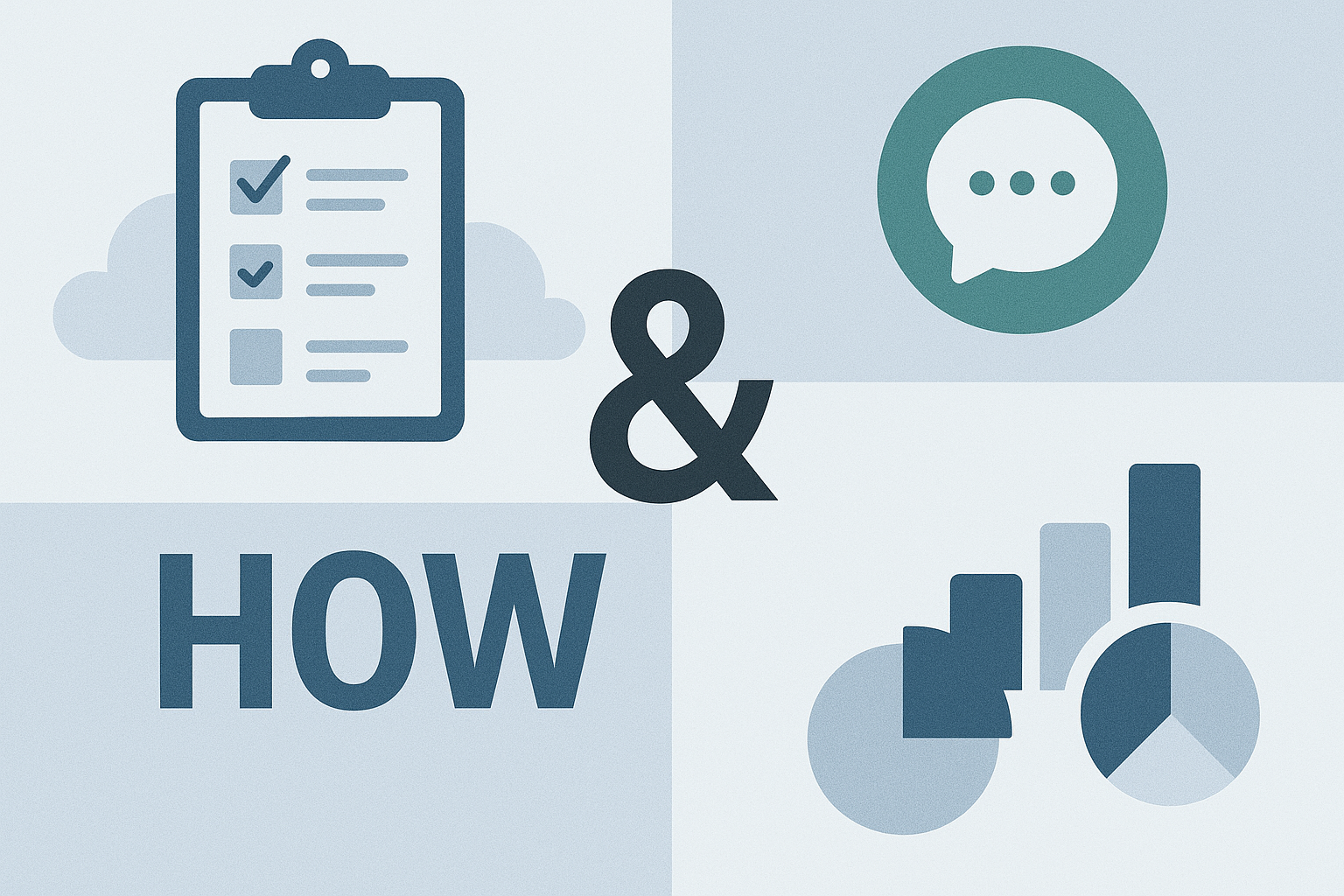
To make smarter decisions and improve customer experience, you need both quantitative feedback (numbers and metrics) and qualitative feedback (comments and stories). Quantitative data shows what’s happening, while qualitative insights explain why. Together, they help you spot trends, understand customer pain points, and prioritize improvements effectively.
Key Takeaways:
- Quantitative Feedback: Includes survey ratings, NPS, CSAT scores, and analytics. It’s scalable and objective but lacks context.
- Qualitative Feedback: Includes comments, interviews, and reviews. It provides depth and context but isn’t as scalable.
- Why Combine Them: Quantitative data identifies patterns, and qualitative feedback explains them. This approach reduces guesswork and helps you make informed decisions.
How to Collect:
- Quantitative: Use surveys, analytics, and feedback widgets.
- Qualitative: Conduct interviews, review support logs, and analyze open-ended survey responses.
How to Use:
- Start with numbers to find trends.
- Add context with stories and comments.
- Create visual reports blending both types of feedback.
- Share findings with your team for actionable steps.
Combining both types of feedback ensures you focus on what matters most to your customers and business.
Quantify the Qualitative Data and Use the Right Quantitative Data
Methods for Collecting Quantitative and Qualitative Feedback
Gathering feedback effectively requires approaches that align with your team’s workflow and customer needs. The goal is to collect both measurable data and valuable insights without overwhelming your resources – or your customers.
Collecting Quantitative Feedback
Surveys with rating scales are a cornerstone of quantitative feedback. Tools like CSAT surveys, NPS questionnaires, and feature satisfaction ratings provide consistent data that’s easy to compare across your customer base. To encourage participation, keep these surveys short and focused.
Analytics tools are another key resource for quantitative insights. Metrics such as session duration, click-through rates, feature adoption rates, and conversion funnels help you spot patterns in user behavior. Performance dashboards can track important indicators in real time, like support ticket volume, resolution times, feature usage, and retention rates.
Embedded feedback widgets within your product interface offer a quick and efficient way to capture sentiment. Simple prompts like thumbs-up/down or star ratings collect immediate reactions during the user experience.
While numbers reveal trends, qualitative methods help you understand the “why” behind them.
Collecting Qualitative Feedback
Open-ended survey questions allow you to dive deeper into customer experiences. For example, instead of just asking, “How satisfied are you?” follow up with questions like, “What stood out to you about this experience?” or “What could we improve?” These questions uncover details that numbers alone can’t provide.
Customer interviews and focus groups offer even more depth. Speaking directly with a small, diverse group of customers can highlight recurring themes, pain points, and opportunities that surveys might miss.
You can also enrich your understanding by reviewing support logs, social media comments, app reviews, and sales notes. These sources offer unfiltered customer sentiment. For instance, 98% of consumers rely on online reviews when evaluating local businesses, showcasing how these platforms reflect genuine opinions.
Session recordings and user behavior observations provide another layer of insight. Watching how users interact with your product – where they pause, struggle, or abandon tasks – can reveal friction points that aren’t always mentioned in surveys or interviews.
To streamline the process of collecting both types of feedback, consider leveraging specialized tools.
Using Tools for Feedback Collection
Platforms like Zight make it easier to gather and analyze both numerical and narrative feedback. For example, when customers record their screens to explain an issue or demonstrate how they use your product, you gain both visual context and verbal explanations.
Zight’s AI-powered transcription features turn these recordings into searchable text, helping you quickly identify recurring themes. Customers can also highlight specific concerns directly on screenshots or within recordings using annotation tools, reducing the chances of miscommunication.
With integrations into platforms like Slack, Microsoft Teams, and Jira, Zight ensures that feedback flows seamlessly into your existing workflow. Insights can automatically populate support tickets or be shared during product roadmap discussions, ensuring that customer feedback directly influences development.
Strategies for Feedback Integration
Once you’ve collected feedback, the next step is turning it into clear, actionable insights. Start by analyzing your quantitative data to uncover key patterns, then layer in qualitative feedback to provide context and depth.
Start with Quantitative Data to Find Patterns
Numbers often tell the first part of the story. Quantitative data helps you understand what’s happening in your product or service. Begin by examining your metrics to identify trends or anomalies.
Look for patterns in metrics that show notable changes over time. For example, a drop in user engagement, lower CSAT scores, or a spike in support tickets can highlight areas needing attention. On the flip side, positive trends – like increased feature usage or higher conversion rates – can reveal what’s working well.
To dig deeper, segment your data. Break it down by demographics, user behavior, or other relevant categories to identify group-specific trends. This segmentation can uncover insights you might miss when looking at the data as a whole.
Set clear thresholds for what constitutes a meaningful change. Minor fluctuations may just be noise, but significant shifts – whether positive or negative – warrant further investigation. These benchmarks help you prioritize which patterns to explore in more detail through qualitative feedback.
Add Context with Qualitative Feedback
After identifying trends in your quantitative data, use qualitative feedback to understand the “why” behind the numbers. This step helps you uncover root causes and specific pain points.
Focus your qualitative analysis on feedback tied to the areas highlighted by your quantitative findings. For instance, if mobile app ratings are dropping, dive into user reviews and comments about the mobile experience. Are users frustrated by performance issues or struggling with navigation on smaller screens?
Look for common themes and recurring language in customer feedback. Even when users describe issues differently, similar frustrations often point to a larger problem. Pay attention to the tone of the feedback as well – emotional language, especially frustration, can signal problems that numbers alone might not fully capture.
Timing is another important factor. Align feedback with specific changes or updates to understand how customer experiences correlate with your actions. This can help you distinguish between temporary disruptions caused by new updates and genuine usability issues.
Qualitative feedback also serves as a reality check for your quantitative findings. For example, a dip in engagement numbers might seem negative at first glance, but user interviews could reveal that customers are simply adjusting to a new, improved workflow rather than facing real problems.
Create Visual Reports
Once you’ve combined quantitative and qualitative insights, consolidate your findings into a clear and visually engaging report. These reports should seamlessly blend numerical trends with customer narratives to provide a full picture.
Use charts to illustrate key metrics and pair them with customer quotes or themes that explain the data. For example, a graph showing a decline in user engagement could be accompanied by a quote from a customer describing their frustration with a specific feature. This approach helps stakeholders grasp both the scale of the issue and its human impact.
Enhance your visual reports with tools like Zight. Record yourself walking through data visualizations, annotate key points, or highlight customer quotes directly on screenshots. This makes your findings more accessible and easier to understand.
Structure your reports to flow logically, starting with the quantitative patterns that caught your attention, followed by qualitative insights that explain those patterns. Wrap up with specific, actionable recommendations based on your analysis.
Whenever possible, include concrete examples, such as screenshots of user interfaces or direct customer quotes. These details make your recommendations more compelling by showing exactly how customers experience the issues you’re addressing.
Finally, share your visual reports through your team’s preferred communication tools. With Zight’s integrations for Slack, Microsoft Teams, and Jira, you can ensure your insights reach the right people in the formats they already use. This increases the chances that your analysis will lead to meaningful improvements.
sbb-itb-5d91f01
Best Practices for Team Feedback Integration
Turning feedback into actionable steps for your team requires a clear process and effective communication. Without structure, valuable insights can easily get lost. These strategies can help your team stay organized and make feedback integration a seamless part of your workflow.
Plan Your Data Collection Process
Start by setting up a feedback system ahead of time. Waiting until issues arise often leads to missing essential data or gathering inconsistent information that’s hard to interpret later.
Identify all your feedback sources – things like customer support tickets, surveys, user interviews, app store reviews, social media mentions, and analytics. Then, create a centralized repository where all this data can be stored and accessed. This could be a shared folder, a database, or a project management tool.
Consistency is key. Establish regular collection schedules instead of gathering feedback sporadically. For example, you could review analytics weekly, hold customer interviews monthly, and run comprehensive surveys quarterly. These routines make it easier to identify trends and compare data over time.
Assign clear roles for collecting each type of feedback. For instance, customer success teams might handle surveys, while product managers focus on analytics. Clear ownership prevents gaps in the process.
Also, standardize your methods – use consistent survey formats, interview scripts, and data categorization systems. This way, feedback from different sources and team members can be combined more effectively.
With a consistent and organized approach to data collection, your team will be better prepared to act on meaningful insights.
Address Gaps in Each Feedback Type
Once your collection process is in place, focus on bridging the gaps between different types of feedback. Each type has its strengths and weaknesses, so combining them creates a fuller picture of customer experiences.
For example, if metrics show a drop in user engagement or satisfaction, use qualitative feedback – like customer interviews or support ticket details – to uncover the underlying causes. On the flip side, use quantitative data to validate whether specific qualitative insights reflect broader trends. This ensures you’re not overreacting to a few vocal outliers.
Pay attention to contradictions between data types. Customers might say one thing in surveys but behave differently when using your product. These inconsistencies often highlight gaps between user expectations and actual experiences.
Create feedback loops to refine your process. For instance, if analytics reveal drop-offs at a specific step, conduct targeted interviews to understand why. Similarly, if interviews highlight confusion about a feature, track how users interact with it through analytics.
Share Feedback Insights with Your Team
For feedback to drive action, it needs to be presented in ways that resonate with your team. Tailor your insights to fit each audience’s needs.
Executives may prefer a high-level summary of trends and their business impact, while developers might need detailed user stories or technical specifics. Adjust your reports to ensure each group gets the information they need to take action.
Use visual tools to make feedback easier to digest. Platforms like Zight let you annotate screenshots, record walkthroughs of key findings, or create step-by-step guides to illustrate customer experiences. Visual formats are often quicker and more effective than lengthy written reports.
Hold regular feedback review sessions to discuss insights as a team. These meetings should focus on specific decisions rather than just sharing data. Come prepared with clear recommendations based on your analysis, so the team knows what steps to take next.
Finally, close the loop by following up on feedback-driven actions. Show how changes based on customer feedback have impacted metrics or improved user experiences. This reinforces the importance of the process and encourages ongoing participation from the team.
Key Takeaways for Combining Feedback
Blending quantitative and qualitative feedback offers a deeper understanding of your customers. It not only sheds light on what is happening but also uncovers the why, paving the way for smarter product improvements and stronger connections with your audience.
Why Combining Feedback Matters
When you bring together numbers and narratives, the advantages become clear. Quantitative data, like feature usage stats or support ticket trends, highlights shifts in behavior. But it’s the qualitative feedback – comments about confusing designs or missing features – that explains those shifts.
This combined approach eliminates guesswork. Instead of speculating why certain metrics spike or drop, you get direct insights from your users. That clarity boosts team confidence and leads to better decisions.
It also helps close the gaps that each method leaves on its own. Numbers can’t capture emotions or context, while qualitative insights might miss broader trends. Together, they create a complete picture, validating each other and offering a richer understanding.
By addressing both the data and the frustrations behind it, you can focus on changes that truly improve the user experience. This balanced view not only enhances customer satisfaction but also delivers meaningful business results.
How to Put This Into Practice
Here’s a quick recap of tools and strategies to help you combine feedback effectively.
- Start with quantitative data: Use analytics, surveys, and performance metrics to identify trends or problem areas.
- Add qualitative insights: Conduct user interviews, review support tickets, or analyze open-ended survey responses to understand the “why” behind the numbers.
- Use visual tools: Platforms like Zight can simplify feedback by providing annotated screenshots, screen recordings, or step-by-step guides. These visuals make it easier for teams to grasp user pain points and act on them.
Consistency is key. Set up regular schedules for gathering feedback – weekly for analytics, monthly for interviews, and quarterly for surveys. Over time, this steady flow of data will reveal patterns and trends.
Finally, centralize your feedback. Use a shared database or project management tool to store all insights in one place. This makes it easier to connect the dots between different data sources and ensures that no valuable information gets lost.
FAQs
How can I gather both quantitative and qualitative feedback without overwhelming my team or customers?
To gather both quantitative and qualitative feedback effectively – and without annoying your audience – focus on keeping things simple and well-timed. Use short, focused surveys that combine close-ended questions for measurable data with open-ended ones to dig deeper into user insights. Aim for fewer questions to show respect for your audience’s time.
Consider using real-time feedback tools, like in-app prompts, to collect insights exactly when they matter most. Space out your feedback requests thoughtfully to prevent survey fatigue, and make sure your questions are straightforward and easy to follow. A streamlined, user-friendly approach will help you collect valuable data while keeping participants engaged.
What are the best ways to combine feedback from different sources into our product development process?
To bring together feedback from different sources effectively, start by setting up a clear system for gathering both numerical data and descriptive insights. Numbers from surveys or usage stats give measurable results, while open-ended responses or customer interviews provide the story behind the numbers.
Leverage tools that support real-time collaboration to make managing feedback easier and more organized. Group feedback into categories based on themes or urgency, and review it regularly with your team to uncover actionable takeaways. This approach keeps your product development process focused on users and informed by data, ensuring you create solutions that genuinely address their needs.
How can tools like Zight help teams present and understand combined feedback more effectively?
Tools like Zight make it easier to present and understand feedback by turning complex data and comments into clear, visual formats. With features like screen recordings, annotated screenshots, and GIFs, teams can quickly pinpoint key takeaways, making feedback more engaging and easier to digest.
These visual tools also promote real-time collaboration, allowing teams to spot trends, tackle problems, and set priorities more effectively. This approach enhances communication and helps teams make quicker, well-informed decisions.