- Why Mobile Feedback Matters: Mobile users have short attention spans and expect convenience. Poor experiences can lead to customer loss, making effective feedback collection critical.
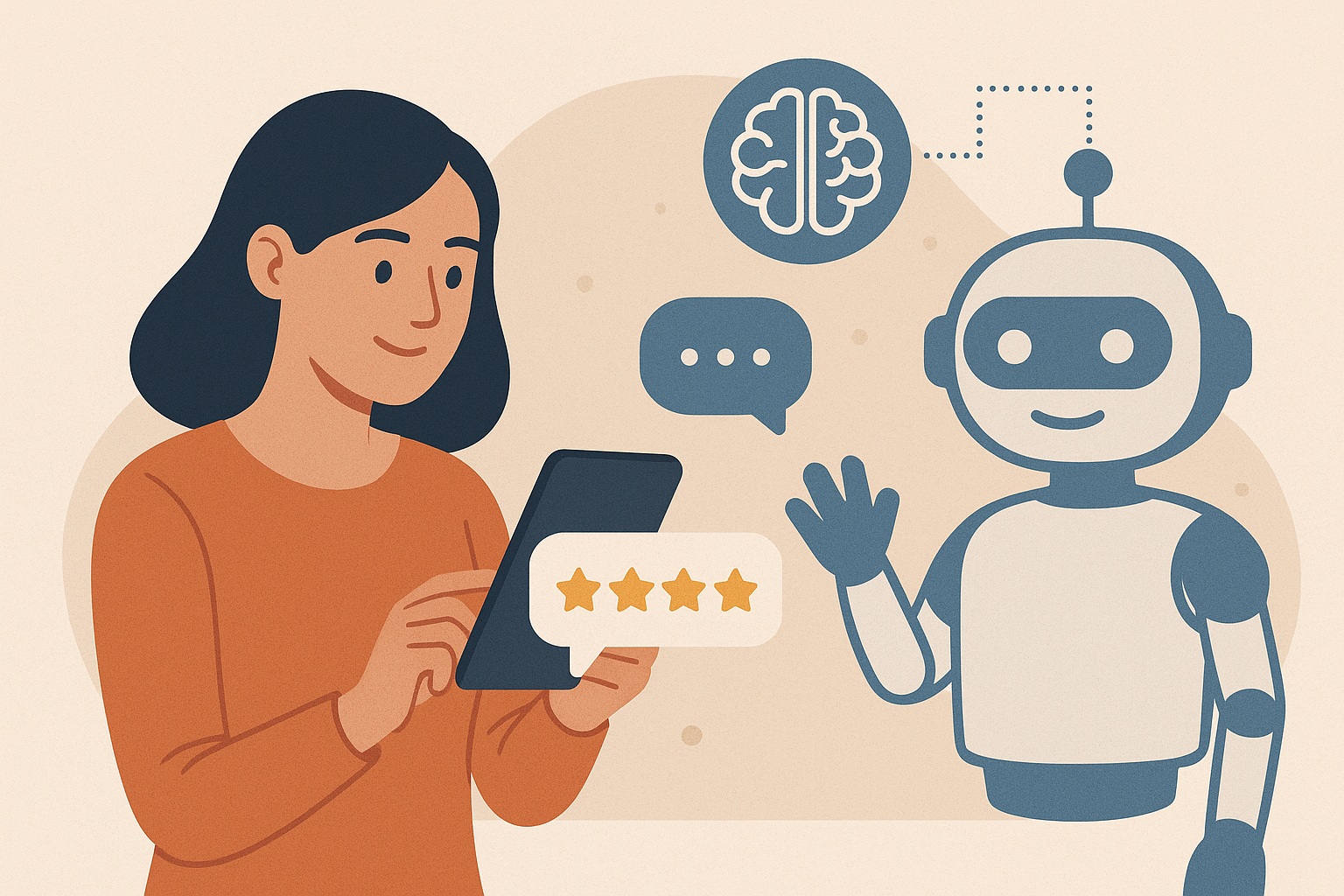
- AI’s Role in Feedback: AI analyzes feedback in real-time, detects sentiment, and customizes surveys to improve response rates. It also integrates data from app reviews, social media, and more to give a complete view of user sentiment.
- Key AI Tools:
- NLP: Processes text feedback to understand sentiment and themes.
- AI Chatbots: Turns surveys into interactive conversations.
- Automated Surveys: Sends feedback requests at optimal times.
- Voice/Image Analysis: Enables users to share feedback through voice notes or screenshots.
- Best Practices: Collect feedback at natural moments in the user journey, use multiple methods (e.g., in-app surveys, chatbots), and ensure data privacy.
How to Create an AI Customer Feedback Analyzer Using AI Agent
AI Technologies That Improve Mobile Feedback Collection
AI has reshaped how feedback is gathered and analyzed, especially on mobile platforms. By leveraging advanced technologies, businesses can create a smoother, more effective system for collecting and understanding user feedback. Here’s a closer look at the tools making this possible.Natural Language Processing (NLP)
Natural Language Processing (NLP) plays a crucial role in analyzing feedback by transforming unstructured text into meaningful insights. Whether it’s app reviews, survey responses, or support tickets, NLP dives beneath the surface to uncover the true sentiment and intent behind user comments. For example, when a user says, “This app is okay but could be better”, NLP identifies this as mild dissatisfaction rather than positive feedback. It also categorizes comments into themes like user interface, performance, or customer service, helping businesses pinpoint specific areas for improvement. Modern NLP systems go beyond simple keyword detection. They understand context, detect sarcasm, and interpret mobile-specific language like slang, abbreviations, and incomplete sentences. This makes NLP especially effective for analyzing the casual, conversational tone often used in mobile feedback.AI-Powered Chatbots
AI chatbots have changed the way users provide feedback by turning rigid surveys into natural, interactive conversations. Instead of filling out lengthy forms, users engage in dynamic chats that adjust based on their responses. These chatbots excel at asking follow-up questions, something static surveys often miss. For instance, if a user mentions frustration with an app feature, the chatbot can immediately ask for more details, like what specifically went wrong and when. This approach captures richer insights without overwhelming users. On mobile devices, where typing can be inconvenient, chatbots offer alternatives like quick response buttons, voice input, or even the option to upload images. They also provide instant acknowledgment, which makes users feel heard and valued. Over time, smart chatbots learn from interactions, tailoring their questions to suit different users. They can even recognize returning users and reference past conversations, making the experience more personal.Automated Survey Distribution
AI takes survey distribution to the next level by sending feedback requests at just the right time. Instead of blasting surveys randomly, AI analyzes user behavior to determine when someone is most likely to respond thoughtfully. For example, it might notice that a user engages more with notifications in the evening and schedule the survey accordingly. AI can also trigger feedback requests after specific actions, like completing a purchase or finishing a tutorial, ensuring the experience is fresh in the user’s mind. Additionally, surveys can be customized based on the user’s profile. A new user might be asked about onboarding, while long-time users could get questions about advanced features or overall satisfaction. This personalized approach not only boosts response rates but also delivers insights that are more relevant.Voice and Image Analysis
Voice and image analysis take feedback collection beyond text, allowing users to submit voice notes, screenshots, or videos to share their experiences. These multimedia options make it easier for users to communicate their thoughts, especially on mobile devices. Voice analysis converts spoken feedback into text while analyzing tone to capture emotions like frustration or excitement. This adds an extra layer of understanding that text alone might miss. Similarly, image and video analysis can identify specific elements like error messages or app screens. For instance, a screenshot of a bug can be automatically categorized and sent to the right development team without manual sorting. These tools make feedback submission faster and more accessible. Users can simply speak into their phone or take a quick screenshot, reducing the effort required to provide detailed feedback. As a result, businesses gain richer, more actionable insights into user experiences.Best Practices for AI-Powered Mobile Feedback Collection
To get the most out of AI-powered feedback collection, it’s important to think strategically about when, how, and where you engage users. The goal is to create experiences that feel natural and unobtrusive, encouraging users to share their thoughts without feeling interrupted.When to Ask for Feedback
Timing makes all the difference in mobile feedback collection. The best time to ask for feedback is immediately after meaningful user actions, while their experience is still fresh. Ideal moments include completing a purchase, finishing a tutorial, reaching a milestone, or trying out a new feature. These natural pauses in the user journey are perfect opportunities to gather detailed and relevant insights. At the same time, avoid interrupting users during critical tasks. Feedback requests should never pop up while someone is filling out a form, making a payment, or navigating a key process. Instead, wait for natural breaks or moments of task completion. For a more tailored approach, adjust the timing based on user activity. For example, new users might be asked for feedback after three days of app use, while more experienced users could be approached after they’ve explored advanced features. This ensures you’re asking meaningful questions to users who are ready to give informed responses. Frequency is just as important as timing. To prevent survey fatigue, space out requests. A good rule of thumb is to limit feedback prompts to once every 30 days per user, unless there’s a pressing reason – like a major new feature or a recent issue that needs immediate attention. Once you’ve nailed the timing, it’s time to think about the methods you’ll use to gather feedback.Using Multiple Collection Methods
Using a variety of feedback channels helps you gather insights from all types of users. Some people prefer quick, anonymous surveys, while others are more likely to share detailed thoughts through conversational tools.- In-app surveys are excellent for capturing quick, specific feedback. Short surveys with no more than three questions can appear right after users interact with a feature, ensuring the feedback is fresh and relevant.
- AI-powered chatbots shine when it comes to gathering detailed insights. Users often feel more comfortable sharing thoughts through a conversational interface, making this method ideal for understanding complex issues or collecting suggestions.
- SMS and push notifications allow you to reach users outside the app. These methods are especially useful for understanding why someone may have stopped using your app or how you can re-engage them.
- Voice and visual feedback options are great for users who find typing on mobile devices inconvenient. These options can also capture emotional context or provide richer explanations of user experiences.
Protecting User Privacy and Data
Collecting feedback only works when users trust that their data is safe. Being transparent about how you handle data is critical for maintaining that trust. Users should always know what you’re collecting, why you’re collecting it, and how it will be used.- Obtain explicit consent before gathering feedback, especially when using AI tools to analyze voice recordings or other personal data. Be clear about what you’re analyzing and how it will improve their experience.
- Minimize data collection. Stick to collecting only the information you need. If you’re asking about a specific feature, avoid requesting unrelated personal details.
- Anonymize and encrypt data to protect user identities. Remove any personally identifiable information and ensure all data is securely stored and transmitted, particularly when using external AI tools.
- Provide opt-out options that are easy to access. Users should be able to stop receiving feedback requests or delete their submitted feedback with minimal effort. Include these options in your app settings.
- Conduct regular data audits to stay compliant with regulations like GDPR and CCPA. Review what data you’re storing, how long you keep it, and whether it still serves a purpose. Delete outdated data that no longer adds value.
Using Zight for Visual and AI-Powered Mobile Feedback
 Traditional feedback methods often rely on text-based surveys and forms, but visual feedback captures details that written responses simply can’t convey. Zight takes this to the next level by combining screen recording, visual tools, and AI analysis into a streamlined system for collecting mobile feedback.
 Collecting Visual Feedback
Visual feedback removes the ambiguity that comes with written descriptions of app issues. Instead of trying to explain a problem, users can show it directly. With Zight’s screen recording feature, users can record their mobile experience in real time. Whether they’re struggling with a checkout process, encountering a bug, or finding a feature they love, they can record their screen and add voice narration to provide context. This approach not only highlights the issue but also offers insight into the situation surrounding it. For pinpointing specific design concerns, screenshot capture with annotations is a powerful tool. Users can mark up screenshots to highlight problems like buttons that are too small, elements that are misaligned, or confusing layouts. This is especially handy for UI feedback, where visual clarity can make all the difference. Need quick feedback on animations or micro-interactions? Zight’s GIF creation feature lets users capture short snippets of interaction. This is perfect for showing how a button behaves, how a transition feels, or where an animation might be causing frustration. When users visually demonstrate their experiences, there’s no room for misinterpretation. You can observe their navigation, finger movements, and natural reactions, gaining a deeper understanding of how they interact with your app. These visual inputs pave the way for AI-powered tools to analyze and summarize the feedback.AI-Powered Transcription and Summarization
Zight’s AI tools turn visual feedback into meaningful insights. AI transcription automatically converts voice narrations from screen recordings into searchable text, making it easy to identify patterns and key themes in user feedback. This feature is especially useful when handling large volumes of feedback. Instead of watching countless recordings, teams can scan through transcripts to spot common issues, feature requests, or recurring pain points. The text format also simplifies sharing insights with stakeholders who may not have time to review videos. AI summarization takes this a step further by condensing lengthy feedback sessions into concise, actionable summaries. These summaries highlight essential points, user emotions, and specific issues, helping product teams prioritize what needs attention most urgently. For apps with global audiences, translation capabilities ensure feedback from users in different languages isn’t overlooked. Feedback can be automatically translated, breaking down language barriers and allowing teams to consider insights from all users. By automating transcription, summarization, and translation, Zight allows teams to spend less time on tedious tasks and more time addressing user needs.Connecting Feedback Workflows with Integrations
Zight doesn’t just collect feedback – it ensures it becomes part of your workflow. Its integrations with tools like Slack, Microsoft Teams, and Jira make it easy to turn insights into action. With Slack integration, teams can share visual feedback directly in dedicated channels. Using the/zight command, team members can create screen recordings or video messages right from Slack, enabling quick responses and follow-ups. Real-time notifications let everyone know when feedback has been viewed, commented on, or reacted to, keeping the process moving smoothly. Microsoft Teams integration offers rich previews of Zight content, so team members can view feedback videos or screenshots without leaving the app. The AI Smart Actions feature can even summarize feedback discussions or meeting replays, making it easy to share concise updates in Teams chats. For development workflows, Jira integration links visual feedback directly to bug reports or feature requests. Screenshots, recordings, and AI-generated summaries can be attached automatically, providing developers with all the context they need to address issues effectively. These integrations speed up feedback loops by cutting out the need for lengthy email exchanges or waiting for meetings. Sharing a quick Zight video or annotated screenshot in Slack or Teams can clarify feedback instantly. To make the most of these integrations, consider setting up dedicated channels for different types of feedback, such as #mobile-bugs, #ui-feedback, or #feature-requests. This organization ensures that the right people see the right insights. Training your team on Zight’s features and workflows can also help maintain consistent practices for visual communication and mobile feedback. sbb-itb-5d91f01
Manual vs. AI-Driven Mobile Feedback Collection
Collecting user feedback manually is often slow and prone to errors, yielding only surface-level insights. By contrast, AI-driven methods bring speed and depth, transforming how we understand mobile user experiences. Manual feedback collection typically involves methods like email surveys, in-app pop-ups, or phone interviews. These approaches demand significant human effort for categorization and analysis, often leading to inconsistencies. On the other hand, AI systems leverage tools like natural language processing (NLP) and sentiment analysis to deliver insights almost instantly. While manual methods struggle with large volumes of feedback, AI systems are built to handle massive datasets with ease.Comparison Table
Here’s a quick look at how manual and AI-driven feedback collection stack up:| Aspect | Manual Collection | AI-Driven Collection |
|---|---|---|
| Processing Speed | Slow and labor-intensive | Delivers insights almost instantly |
| Scalability | Limited by human resources | Handles large feedback volumes effortlessly |
| Accuracy | Prone to human error | Consistent, with minimal oversight needed |
| Cost Efficiency | Costs rise with feedback volume | Low incremental costs after setup |
| Pattern Recognition | Relies on manual effort, missing subtle trends | Spots complex patterns across datasets |
| Language Support | May need extra resources for translations | Often supports multiple languages natively |
| Sentiment Analysis | Subjective and inconsistent | Provides objective and reliable sentiment scoring |
| Data Integration | Manual transfer between systems | Seamlessly integrates with workflows |
| Availability | Limited to business hours | Operates 24/7 for continuous analysis |
Conclusion: Getting the Most from AI in Mobile Feedback
AI is reshaping how mobile feedback is collected, replacing time-consuming manual processes with fast, insightful solutions that elevate the user experience. These systems process data in real-time, deliver high accuracy, and collect feedback across multiple channels – whether it’s voice recordings or visual screenshots – ensuring consistent and thorough analysis. Advances like Natural Language Processing (NLP), AI chatbots, and visual feedback tools are driving these changes. Natural Language Processing and sentiment analysis allow businesses to grasp not just the content of user feedback but also the emotions behind it. AI chatbots operate around the clock, capturing feedback whenever users are ready to share it. Automated surveys, meanwhile, are sent at the perfect moments, increasing the chances of user engagement. AI also brings predictive power to the table, enabling businesses to anticipate and address issues before they grow, transforming feedback into a proactive tool for improvement.Key Takeaways
These advancements are not just about collecting feedback – they’re about using it to make smarter, more strategic decisions.- Build on a solid foundation. Use AI tools that integrate easily into your existing workflows and support diverse feedback methods. For example, tools like Zight can capture screenshots, screen recordings, and voice inputs while offering AI-driven transcription and summarization to turn raw data into actionable insights.
- Prioritize user privacy and timing. Collect feedback at natural points in the user journey and ensure your AI systems comply with strict data protection standards. Users are more likely to engage when they feel their privacy is respected and their time is valued.
- Blend AI efficiency with human expertise. While AI is excellent at processing large amounts of feedback and spotting trends, human judgment is still essential for interpreting complex situations and making strategic decisions based on the insights provided.
- Streamline with integrations. Connect your AI feedback tools to platforms like Slack, Microsoft Teams, or Jira to ensure insights are shared directly with your teams. This eliminates data silos and speeds up the process of addressing user concerns.